Vibro Hammer Price Comparison 2026 | European vs. Korean vs. Chinese Vibratory Hammer
JH KIM
view : 30
“Why is the price difference so huge?”
That’s the #1 question contractors ask when comparing an excavator-mounted vibro hammer (hydraulic vibratory hammer). You may receive quotes that look “similar on paper,” yet the vibratory hammer price can vary dramatically across countries and brands.
Here’s the reality: vibro hammer price is only the beginning. What matters is the Total Cost of Ownership (TCO)—downtime risk, parts availability, operator control, and whether your vibratory hammer keeps performing when soil conditions change.
In this 2026 comparison guide, we’ll break down European vs. Chinese vs. Korean vibratory hammer brands using the factors buyers care about most—then show why many contractors consider Korea’s engineering the “Goldilocks zone” of value: European quality at a rational price.
Internal resources
Vibro/Vibratory Hammer Features: https://www.powerquip.co.kr/products/vibro-hammer/features-2/
Brochure & Catalogue Hub: https://www.powerquip.co.kr/technical/brochure-catalogue-2/
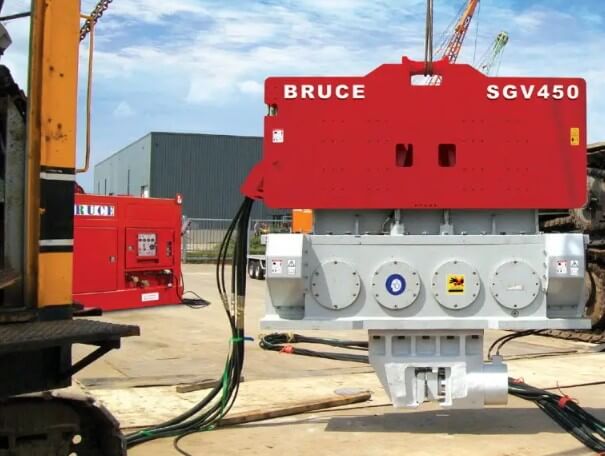
The Truth About Vibro Hammer Pricing (Why “Cheap” Vibratory Hammers Become Expensive)
A low sticker price can hide the costs that destroy your margin:
Downtime: A stopped jobsite burns money every day (labor, crane/rig time, penalties).
Inconsistent vibration performance: A weak vibratory hammer slows driving/extraction and increases re-work.
Poor vibration isolation: More stress transmitted to the carrier can reduce machine life.
Parts lead time: Waiting weeks for vibratory hammer parts can erase “savings” instantly.
Limited control: If you can’t adjust frequency properly, you’re not matching the vibratory hammer to soil layers.
If you want the best ROI, compare vibro hammers by TCO, not just purchase price.
1) European Brands: Top Performance, Premium Price
European vibratory hammer brands are often the “safe choice” for mega infrastructure projects. They’re typically well-engineered, well-documented, and trusted.
Pros
Strong reputation and long track record
Reliable performance consistency across demanding sites
Cons
High CAPEX (you often pay a “brand premium”)
For many buyers outside Europe, vibratory hammer parts shipping and lead time can become a real operational risk
Verdict
Excellent equipment—often the right fit for mega projects with strict procurement rules and large budgets. For general contractors and rental fleets, the ROI can be harder to justify.
2) Chinese Brands: Low Entry Cost, High Hidden Costs
Chinese manufacturers often offer very attractive vibratory hammer price points. That can be tempting for short-term or one-off jobs.
Common risks buyers should evaluate
Faster wear and shorter service intervals under continuous vibro driving cycles
Inconsistent component quality (motors, bearings, eccentrics) across batches
Support/parts availability that can vary widely by supplier
Verdict
If you plan to use the vibratory hammer professionally and repeatedly, the “cheap” purchase can turn expensive through downtime and parts uncertainty.
Practical rule many experienced buyers use: Buying two cheap vibratory hammers can cost more than buying one good one.
3) Korean Brands (Powerquip / BRUCE): The “Goldilocks” Zone for Vibro Hammer ROI
South Korea is globally recognized for heavy industry manufacturing. Many buyers aiming for the best ROI choose a Korean vibratory hammer because it can deliver strong performance without the premium logo price.
Powerquip’s BRUCE vibro hammer positioning is built around two buyer-critical advantages:
Durability (high-quality elastomers + robust structure)
Operator convenience (remote pendant, clamp control, rotation options for excavator-mounted models)
Below is how those strengths connect directly to TCO.
A) Durability That Protects Your Schedule: Elastomers Matter
A vibratory hammer lives and dies by durability—especially parts that isolate vibration and protect the carrier.
If elastomers fail early, you don’t just buy parts—you buy downtime.
What to look for when comparing vibro hammers
Elastomer quality and heat resistance
Replacement accessibility (how long does it take on site?)
Whether the design minimizes vibration transfer to the excavator/crane
B) Operator-Centric Control: Remote Pendant + Frequency Adjustment
On real sites, you need to adapt the vibratory hammer to soil layers and pile type.
A good setup lets the operator:
Start/stop smoothly
Adjust frequency to match ground conditions
Control clamp open/close efficiently
Confirm status quickly and safely
Features page:
C) Uptime Detail Many Buyers Overlook: Hose & Clamp Safety Design
Hydraulic hose damage is a common failure point in harsh environments. A vibratory hammer design that protects hoses and maintains clamp stability can reduce both safety risk and unplanned stoppages.
Internal reference:
D) Excavator-Mounted Convenience: 360° Rotation (and Optional Tilting)
If you run an excavator-mounted vibratory hammer, positioning speed matters.
Rotation and tilting options can reduce:
Excavator repositioning time
Operator fatigue
Pile handling delays
Brochure hub: https://www.powerquip.co.kr/technical/brochure-catalogue-2/
Vibro / Vibratory Hammer Specs That Actually Influence Price (What to Compare)
If you want a fair vibratory hammer price comparison, focus on specs that drive performance and application fit:
Eccentric Moment (EM)
Centrifugal Force (CF)
Frequency (VPM)
Amplitude
Line pull (for extraction)
Model-by-model data reference:
Comparison Summary Table (ROI / TCO View)
| Factor | European Brands | Chinese Brands | Korean Brands (e.g., BRUCE / Powerquip) |
|---|---|---|---|
| Initial price | Very high | Low | Competitive / rational |
| Durability under long cycles | Typically excellent | Varies widely | Strong focus on elastomers & structure |
| Operator control | Usually strong | Varies | Remote pendant + frequency adjust emphasis |
| Excavator-mounted handling | Options vary | Options vary | Rotation/tilting options (model-dependent) |
| Parts/support risk (global) | Can be slower outside EU | Often uncertain | Global inquiry + brochure/spec resources |
| Best for | Mega projects | One-off / budget-limited | Contractors & rental fleets aiming ROI |
Key takeaway: If you plan to use the vibratory hammer for more than a short period, the “best price” is usually the model that protects uptime and reduces downtime risk—not the lowest quote.
FAQ
Q1) What information do I need to get an accurate vibratory hammer price quote?
To receive a reliable vibratory hammer price quote, provide: excavator model/ton class, hydraulic flow & pressure, pile type/size, soil condition, target depth, daily production target, and jobsite location.
Q2) Why do elastomers matter in a vibratory hammer?
Elastomers help absorb shock and isolate vibration. Better elastomers generally mean fewer stoppages, less vibration transfer to the carrier, and lower TCO over time.
Q3) Can I adjust frequency on site for vibro driving?
Yes—many modern vibratory hammer systems allow frequency adjustment to match soil conditions. This improves control and reduces trial-and-error during driving/extraction.
Q4) Do excavator-mounted vibratory hammers support rotation?
Many excavator-mounted vibro hammers offer rotation (and sometimes tilting) options to speed up positioning and reduce excavator movement—confirm by model and configuration.
Stop Overpaying. Start Piling Smart.
Don’t let a cheap vibratory hammer ruin your schedule with downtime. And don’t drain your budget on an overpriced logo.
If you want the right vibro hammer recommendation (and a quote that actually matches your excavator + pile + soil), start here:
✅ Vibro/Vibratory Hammer Features:
https://www.powerquip.co.kr/products/vibro-hammer/features-2/
✅ Download Brochure & Catalogue:
https://www.powerquip.co.kr/technical/brochure-catalogue-2/
✅ Request a Quote / Contact:
https://www.powerquip.co.kr/contact-us/
Email: [email protected]