Vibratory Hammer Manufacturer – Models, Export Orders & Handover
JH KIM
view : 207
BRUCE · Vibratory hammer manufacturing and export
Choose the product route, then define the factory order
A vibratory hammer manufacturer inquiry starts with the equipment needed for the job. BRUCE publishes crane-suspended and excavator-mounted product information; the mounting, clamp and hydraulic source need to be confirmed for the proposed package.
Use the product routes below to start the export inquiry, then keep the agreed configuration, inspection documents and factory handover connected. Testing, services and commercial terms depend on the actual order.
BRUCE vibratory hammer product routes
| Product route | Published information | Define for your order |
|---|---|---|
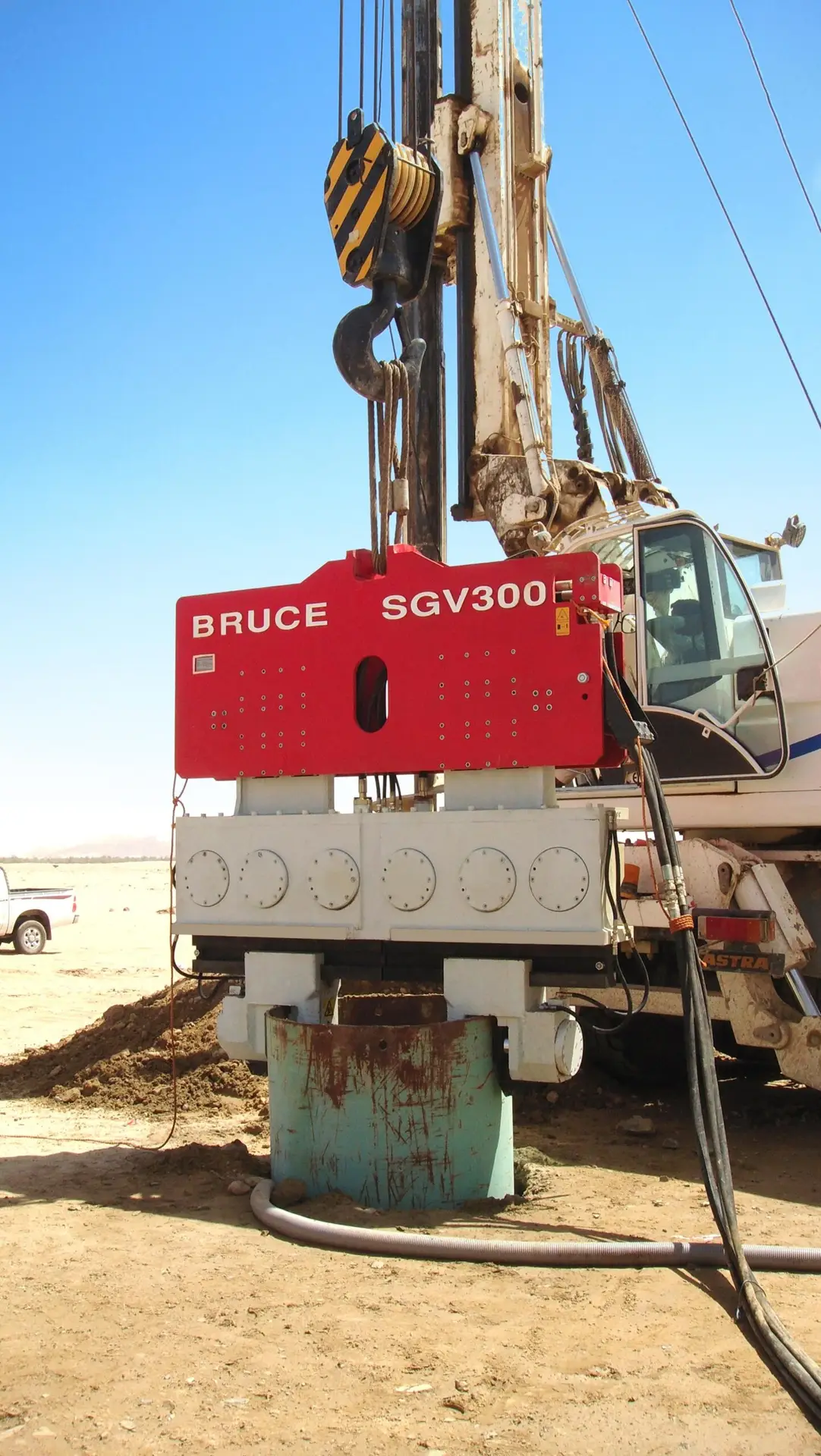
| Crane-suspended SGV | SGV model specifications | Hammer and clamp assembly, suspension, separate hydraulic source and handling information. |
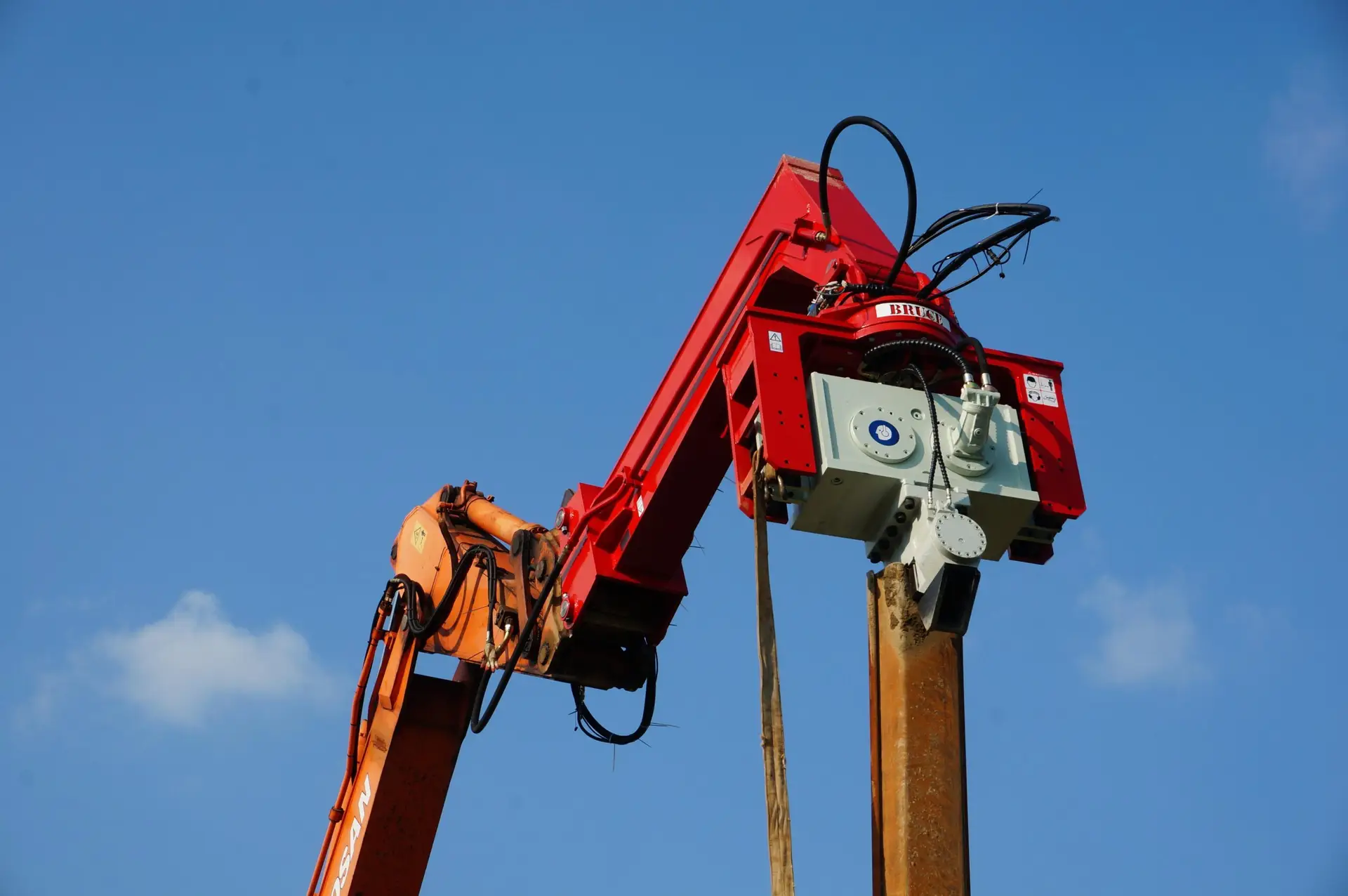
| Excavator-mounted SGV | Excavator vibro hammer features | Carrier model and setup, mounting geometry, hydraulic requirements and pile grip. |
| Supporting equipment | Power packs and accessories | Power supply, controls, connections and any separately ordered parts. |
For a U.S. export inquiry, state the destination, required arrival date, pile drawings, available carrier and ground information. Ask for current model availability and a dated quotation. Compatibility with an excavator brand is not a substitute for reviewing the specific machine and configuration.
Keep manufacture, dispatch and arrival dates separate. The import planning guide covers shipment documentation; the steps below cover equipment identity and handover.
Agree what each stage is meant to establish
01 / Configuration
The proposed system
Identify the hammer, clamp, power source, connections and customer-supplied items. Keep the equipment schedule with the drawing or specification revision used for the order.
02 / Pre-delivery review
The evidence available before shipping
Agree the documents, photographs and any inspection or test records that the purchaser needs to review before the shipment is released.
03 / Receipt
The delivered items
Reconcile the package list, equipment identity and visible condition with the order. Record discrepancies using the agreed reporting route.
04 / Commissioning
The assembled working arrangement
Confirm the applicable instructions, site responsibilities and agreed commissioning scope for the equipment in its actual setup.
Factory checks and site commissioning answer different questions. A factory record relates to the equipment and conditions recorded there. Site readiness also depends on the support machine, connections, work area and project requirements.
Freeze a configuration before using it as the acceptance reference
Use the crane-suspended SGV specifications or excavator-mounted specifications to identify the relevant product route. Then request the information applicable to the actual offered unit.
The order reference should identify
- The complete hammer designation and the agreed configuration revision.
- The clamp, jaws and any beam or mounting components.
- The power unit or customer-supplied hydraulic source.
- Hose lengths, connection specifications, controls and supplied accessories.
- The manuals, drawings, spare parts and services included in the supply.
For BRUCE, the published feature page describes clamp and control arrangements. A feature description helps frame the discussion; the itemized order determines the equipment and options included in your purchase.
When a configuration changes, record the reason, affected components and revised documents. This is particularly useful when the purchaser changes a carrier, pile profile or power-pack requirement after the initial quotation.
Define an inspection request in terms of evidence
If your purchase requires an inspection or factory acceptance test, agree the scope, method, acceptance criteria, recording format and witness arrangements before the event. Ask what can be demonstrated in the available test setup and which questions must be resolved on site.
| Review topic | Useful evidence | Question to settle |
|---|---|---|
| Equipment identity | Model and serial information, identification-plate photos and configuration schedule. | Does the record identify the unit being supplied? |
| Package completeness | Item list and photographs keyed to the purchase scope. | Are separate clamps, hoses, controls and accessories accounted for? |
| Agreed functional checks | Manufacturer-approved procedure and results for the specified checks. | Which functions and conditions were actually evaluated? |
| Measured values, where required | Reading, unit, test condition, method and relevant instrument information. | What requirement does the reading demonstrate? |
| Outstanding items | Exception list with the responsible party, action and closure evidence. | What must be resolved before the agreed release point? |
A no-load demonstration cannot establish a penetration rate in a particular soil profile or the bearing capacity of an installed pile. Request evidence that addresses the requirement you are trying to confirm, and state the limits of the demonstration in the record.
Build a handover file that remains useful after delivery
Identity and supplied scope
Keep the equipment schedule, serial references, packing list and configuration drawing together. Link any separately packed accessories to the main unit.
Applicable technical documents
Request the operating and maintenance information, drawings and parts references that apply to the supplied configuration. Retain revisions and document dates.
Agreed inspection records
Keep the report, supporting photographs and the final disposition of any exceptions. Retain the context of a measured result, including the test setup where relevant.
Service and commercial contacts
Record the applicable warranty terms, parts inquiry route, technical contact and any separately agreed attendance or training arrangements.
The BRUCE brochure catalogue supports initial product review. A general brochure should be kept alongside the unit-specific documents rather than used as a substitute for them.
Use a simple example to test document traceability
Illustrative order review
The hose set changes after the quotation
A buyer revises the equipment layout and requests a different hose length. The change should appear in the agreed scope and applicable connection information, then remain identifiable in the packing and handover records.
Ask who confirms technical suitability, who revises the commercial scope and how the receiving team identifies the supplied hose set. A note in an email is easy to miss if the final equipment schedule still shows the earlier arrangement.
This is a fictional coordination example, not a reported BRUCE order or a recommendation for a particular hose length.
Make remote reviews specific enough to be useful
When travel is impractical, ask whether the agreed review can use a live session, recorded video or photographs. Confirm the format and availability with the supplier. Identify the equipment, date, demonstrated function and document reference in the record.
Separate a general product demonstration from evidence of the ordered unit. If a required item is outside the camera view or a reading cannot be seen, record the gap and agree how it will be resolved. The communication format does not change the acceptance criteria.
Carry the agreed scope into the receiving and site review
Give the receiving team the latest package list and the contact for reporting discrepancies. Keep site assembly and commissioning responsibilities visible, including who provides the support machine, suitable hydraulic supply and required personnel.
FHWA’s driven-piling inspection guidance addresses equipment, procedures, responsible contacts and driving records. The project’s installation and acceptance requirements still need to be reviewed alongside the delivered equipment.
For a U.S. shipment, use the import documentation guide for customs and shipping coordination. This article focuses on equipment identity, order records and the technical handover.
Discuss the order requirements
Request a BRUCE configuration and handover proposal
Provide the intended equipment scope, project location, required receiving date and any purchaser inspection or documentation requirements. Ask which records, review arrangements and services can be included in the quotation.