BRUCE Technical Team
Hydraulic Pile Hammer Selection
Hammer Principles and Selection
Hydraulic Pile Hammer Selection
Select a hydraulic impact pile hammer by reviewing the pile and ground conditions, the permitted driving method and the project acceptance procedure. Compare candidate ram and energy ranges through driveability and driving-stress checks, then confirm the cap, cushions, hydraulic supply and lifting arrangement. A catalog energy rating cannot establish a suitable hammer or verify pile capacity.Review driveability and pile stress, then match the impact hammer, cap, cushions, hydraulics and lifting arrangement to the project requirements.
Define the dutyPile, ground and project acceptance requirementsReview driving responseHammer ratings, driveability and pile stressMatch the packageCap, cushions, hydraulics and lifting arrangement
Technical guide
Article information
Technical review policy. BRUCE prepares this reference from the cited material. Project-specific design and approval remain with the responsible project team.
Planning overview
Project engineers review driveability and pile stress before the supplier recommends a hammer. The equipment review also covers the impact interface, hydraulics and lifting arrangement.
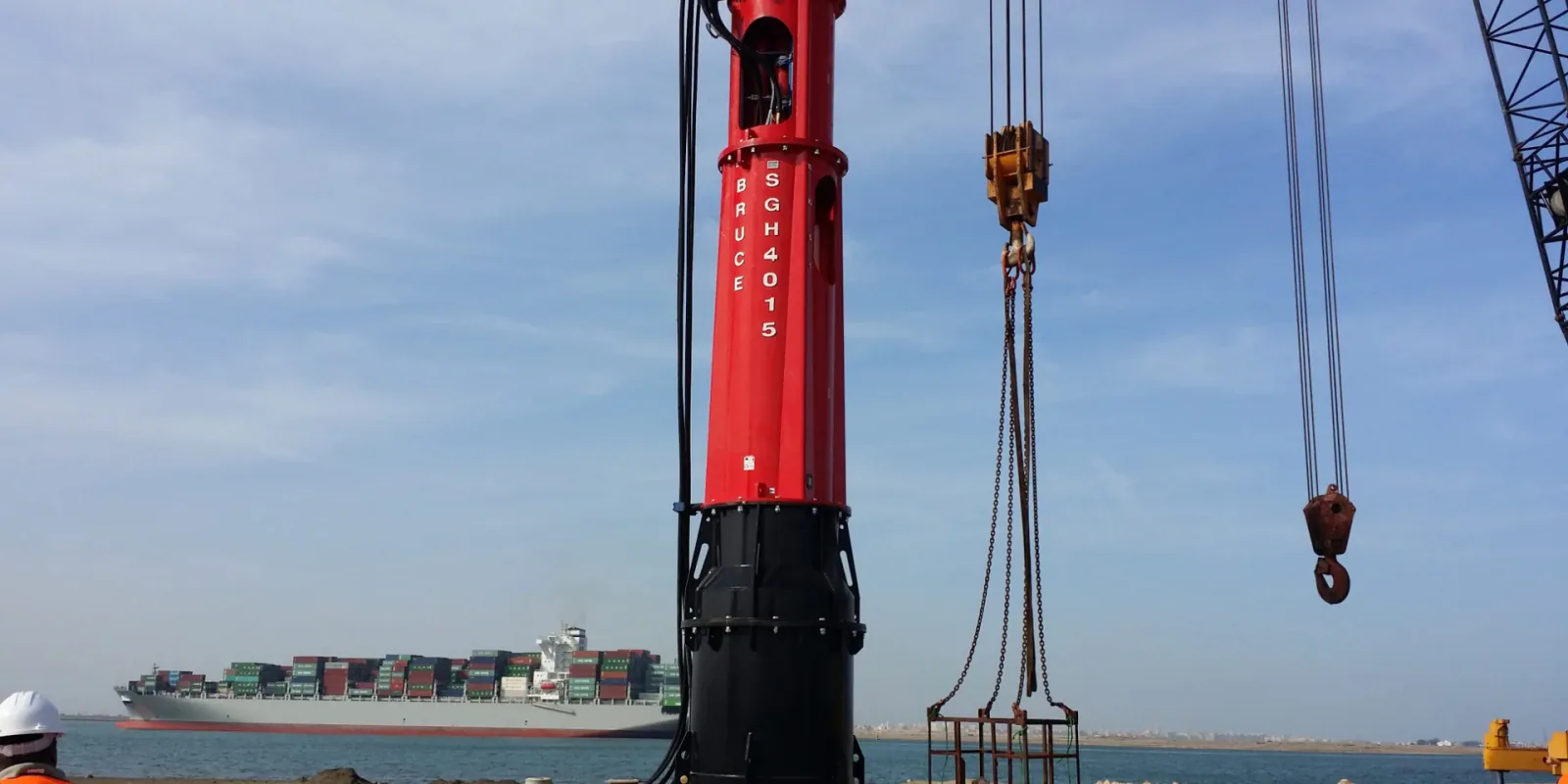
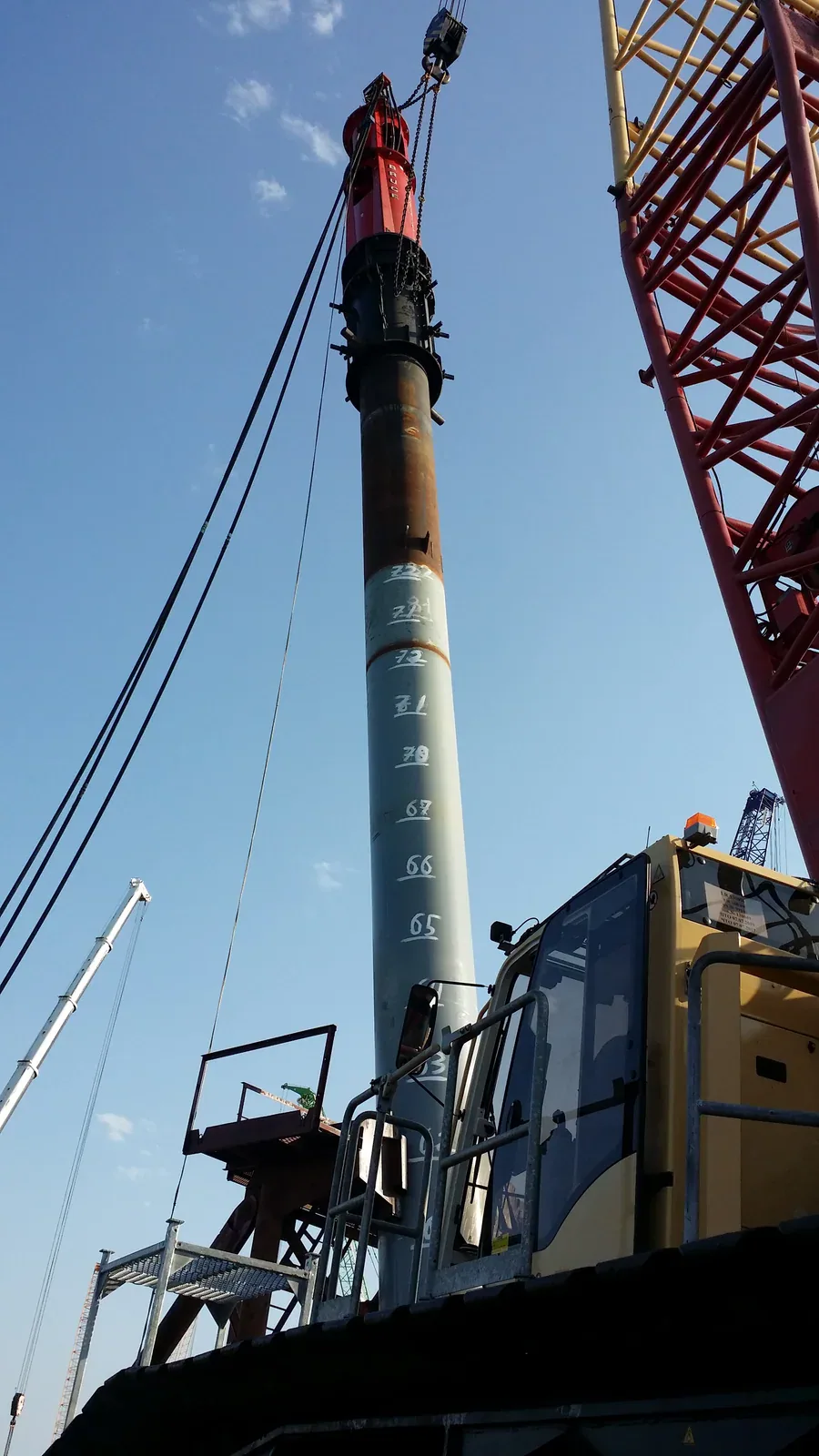
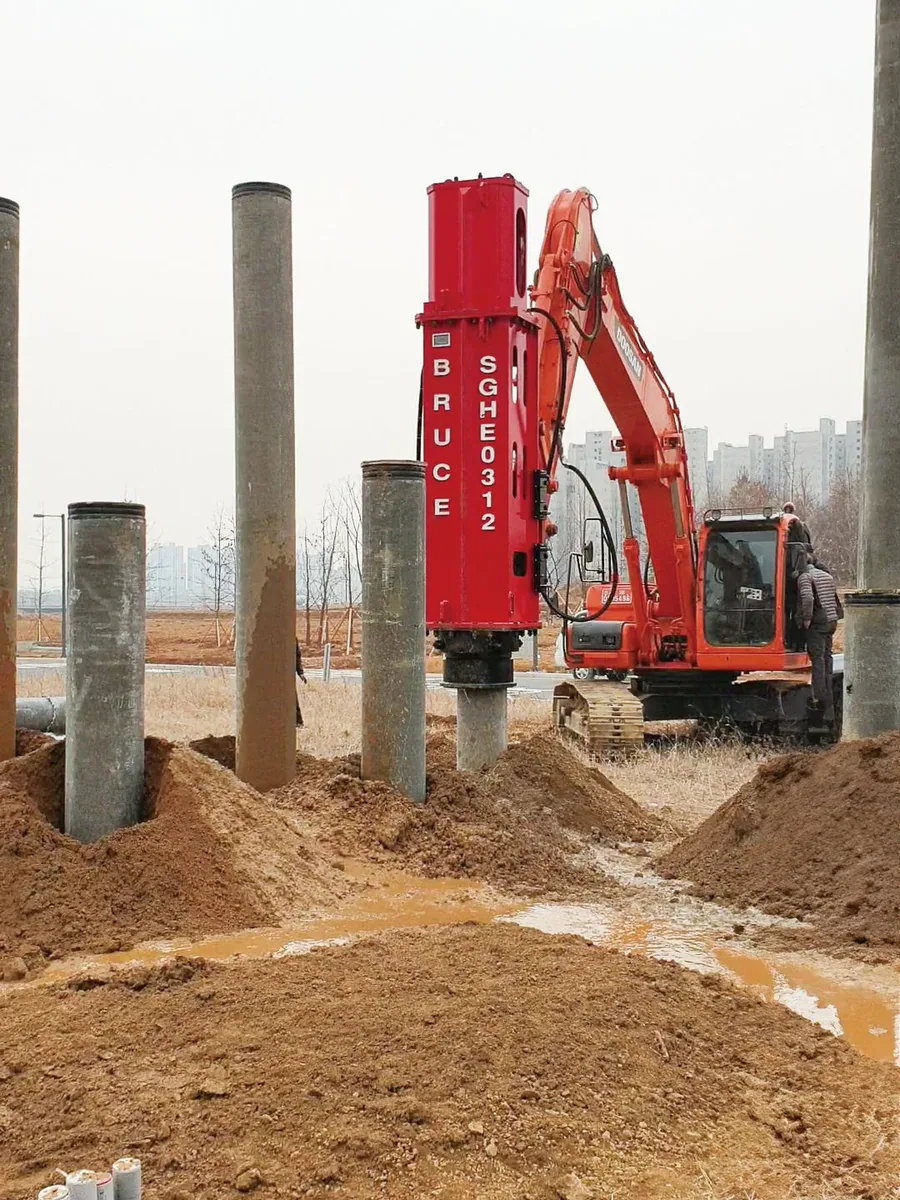
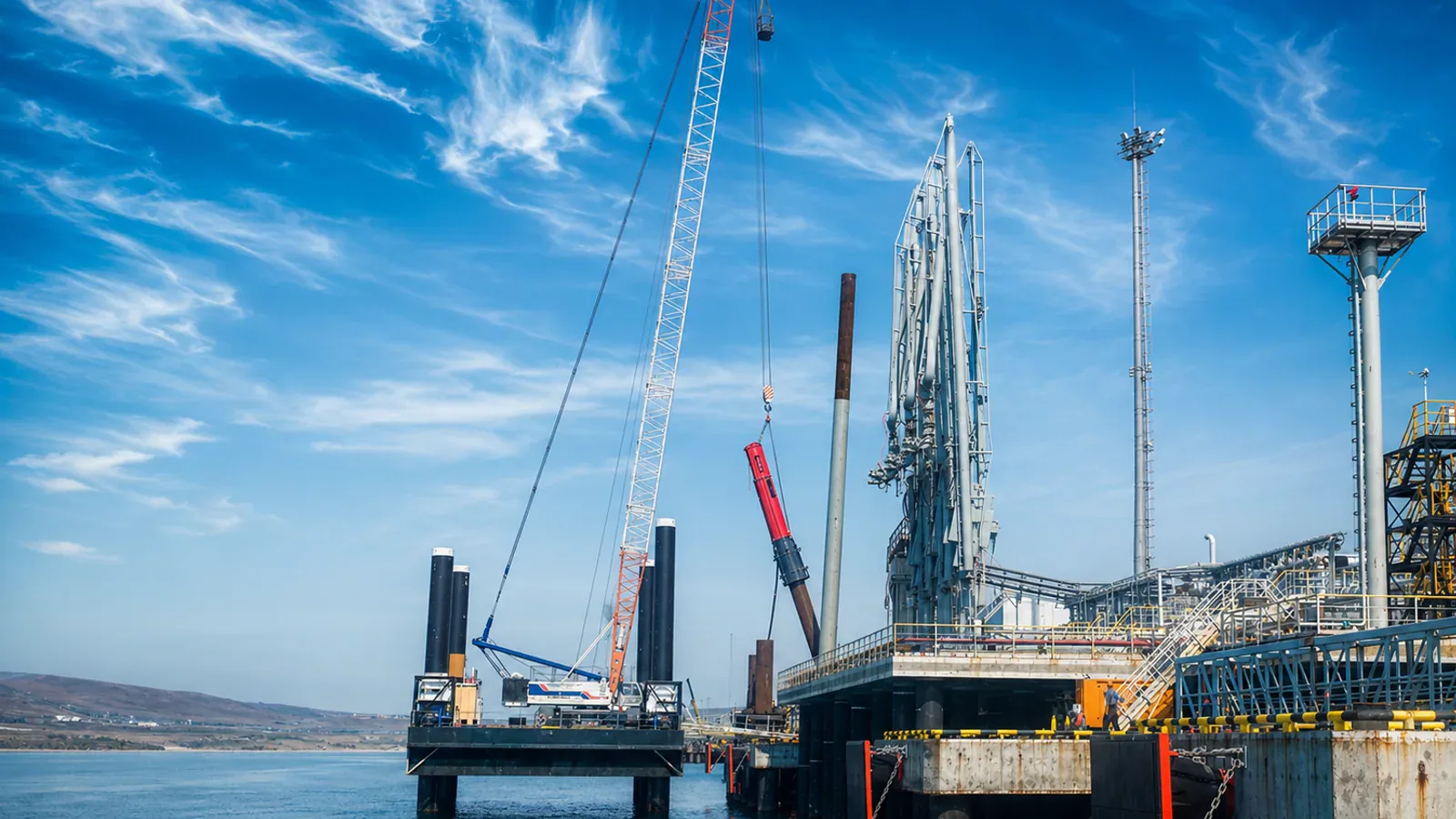
These BRUCE photographs show visible equipment and site arrangements. They do not establish internal condition, transferred energy, pile stress, an approved lift or foundation capacity.
Selection checks
Check the hammer and the complete driving arrangement
Review these inputs with the equipment supplier and responsible project team.
| Review area | Information to check | Decision |
|---|---|---|
| Pile and purpose | Pile drawing, material, dimensions, head and splice details, target depth and driving-stress limits | Confirm the permitted installation and acceptance procedure |
| Ground and driveability | Resistance assumptions by depth, groundwater, plugging, setup or relaxation and obstructions | Review the proposed hammer-pile-soil model and contingencies |
| Hammer ratings | Ram mass, operating range, energy definition, blow rate and hammer configuration | Compare stated rating bases and verify required field measurements |
| Cap and cushions | Cap and insert fit, contact, alignment, separate hammer and pile cushions, inspection and replacement criteria | Approve the assembly and its analysis assumptions |
| Hydraulic supply | Flow, pressure, return limits, hoses, couplers, cooling and controls | Confirm the proposed duty at the hammer |
| Lifting and guide | Actual supported loads, crane chart, radius, rigging, leader or guide and platform support | Approve the lift and piling arrangement |
| Site and acceptance | Noise, vibration and movement limits, records, monitoring and specified tests | Define action levels, stop responsibilities and acceptance evidence |
Field checks
Verify the proposed arrangement before and during driving
Define the pile duty and acceptance requirements
The project team first confirms the foundation role, pile drawing, target toe level or depth, design requirements and permitted installation method. Include the pile material, section, length, wall or flange thickness, mass, head preparation, splice details and any batter. The pile designer must provide the applicable driving-stress and damage limits. A pile family name gives the supplier too little information to select a hammer.
Agree the inspection, records and testing that the project specification requires before comparing models. A final-set criterion must state its measurement interval and associated hammer operating condition. Keep the foundation acceptance procedure separate from the equipment recommendation. A supplier can propose a package, while the responsible project team approves the design, method and acceptance requirements.
Read the energy rating for the exact hammer configuration
Ask the manufacturer for the current model sheet and operating instructions. Confirm the ram mass, permitted stroke or energy range, blow rate, hammer mass and the definition and units of each rating. Different hydraulic hammer designs use different operating and energy conventions. A gravity-drop calculation does not describe the energy input of every hydraulic hammer.
Rated hammer energy and energy transferred into the pile describe different quantities. The hammer, impact components, cap, cushions and pile response affect the energy transfer. Compare candidate hammers on a consistent basis and identify the assumptions in the driveability model. Obtain a test measurement when the specification requires verification of transferred energy; a catalog rating does not supply that measurement.
Check driveability and both compression and tension stress
The geotechnical and piling engineers review the soil investigation by depth, including groundwater, shaft and toe resistance assumptions, dense layers, obstructions and expected changes during driving. Open-ended pipe piles need a stated plugging assumption. Ground setup or relaxation can change the resistance between initial driving and a later restrike. One soil description, SPT value or past project cannot select the hammer for the current pile.
A wave-equation driveability analysis can estimate the relationship between driving resistance, blow count and pile stress for a proposed hammer-pile-soil system. The analyst must represent the hammer, stroke or energy input, cap, cushions, pile and soil response.
Use the project-required analysis and check the sensitivity to uncertain inputs. The calculation supports hammer and operating-range review; it does not remove the need for field checks or the specified testing.
Review compression and tension driving stresses, including easy-driving conditions in precast or prestressed concrete piles. A change in ram mass, stroke or cushion can change the stress pulse. Neither a heavier ram nor a lower stroke establishes a safe arrangement without that review. Define a contingency for difficult penetration or refusal, and obtain approval before changing energy, pile detail, predrilling or installation method.
Confirm the cap, hammer cushion and pile cushion
The manufacturer and pile designer must review the cap or helmet, drive-cap or insert geometry, pile-head contact and alignment for the exact assembly. Confirm the component names and positions on the drawings because suppliers use different terminology. An approved interface must suit the pile section, its head condition and the intended hammer arrangement.
A hammer cushion, where the hammer design uses one, protects the hammer and influences the impact pulse. A pile cushion sits between the helmet and pile head in the applicable concrete-pile arrangement. These components serve different locations and duties; they are not interchangeable. Confirm each material, thickness and replacement criterion with the relevant manufacturer and project requirements.
Inspect cap seating, contact, alignment, cushion condition and pile-head damage during work. Compression, heating and deterioration can change cushion behavior and energy transfer. Concrete-pile work needs particular attention to the specified cushion condition and driving stresses. Stop for cracking, spalling, eccentric contact, damaged caps or other conditions covered by the approved stop criteria. Record replacements and reassess changes that affect the analysis.
Match the hydraulic supply and operating controls
The supplier must confirm the flow and pressure required for the exact hammer configuration and operating condition. Review the power pack, return-pressure limit, hoses, couplers, oil specification, cooling capacity and controls. Include the planned hose length and route in the review. Engine nameplate power does not establish the hydraulic duty available at the hammer.
Check the permitted operating range, emergency controls and the information the operator can read or record. Hoses and connections must suit the stated working conditions and manufacturer instructions. Leaks, abnormal pressure, overheating or damaged hoses require the response set out in the work plan. Secure the equipment and isolate stored energy as the manufacturer requires before inspection or maintenance.
Approve the lifting, guide and site arrangement
The lifting team must check the actual supported load for each operation, including the hammer, cap, attachments, rigging, supported hoses and any pile load carried during that phase. Apply the crane instructions, load-chart deductions and permitted piling duty at the planned radius and configuration. Hammer mass alone does not establish the crane requirement.
Confirm the leader or guide arrangement, alignment, headroom, ground or platform support, access and exclusion zone. Confirm the controls for crane suspension and any guide or leader in the proposed configuration.
The project team must define the applicable noise, vibration and movement criteria, monitoring locations, action levels and stop responsibilities. General source-level guidance cannot predict compliance or a safe separation distance for a BRUCE model. Compare permitted alternatives if the proposed method cannot meet the site requirements.
Verify field response and retain the required records
Use the approved trial or initial-driving procedure and record pile identity, depth, time, hammer configuration, operating setting, blow count and penetration or set over the defined interval. Include interruptions, cushion changes, pile and cap condition and the relevant monitoring. The team needs a consistent record to compare the observed response with the analysis and specified criteria.
A high blow count or low penetration can reflect several conditions, including soil resistance, an obstruction, pile damage, the interface or hammer performance. The responsible engineer must assess an abnormal response before the operator increases energy or changes method. Continue within the approved range, secure the work when necessary and follow the agreed stop and escalation procedure.
High-strain dynamic testing, signal-matching analysis, restrike and static load testing serve different purposes. Perform the tests and analysis that the project specifies, using competent personnel and stated interpretation assumptions. Blow count, penetration rate or a single final-set reading alone does not establish foundation capacity. The responsible project team makes the acceptance decision from the required evidence.
BRUCE can review a candidate SGH hammer and support package from the supplied information. The project and lifting teams retain responsibility for foundation design, driving criteria, work and lift plans, monitoring, testing and acceptance. Confirm the current model instructions and approved configuration before procurement or operation.
Frequently asked questions
Can rated energy select the hammer model?
Rated energy describes one hammer characteristic on a stated basis. Engineers must also check driveability, pile stresses, the cap and cushions, hydraulics and lifting duty. Confirm the exact manufacturer definition and the field verification required by the project.
Is a heavier ram safer for concrete piles?
Ram mass, stroke, cushion behavior, pile properties and soil resistance affect compression and tension driving stresses. The pile designer and piling engineer must review the proposed system and operating range. A heavier ram alone does not establish a safe arrangement.
Does final set prove pile capacity?
The team must interpret final set with the specified hammer condition, measurement interval, analysis and testing. A single reading or blow count alone does not establish foundation capacity. The responsible project team decides acceptance from the required evidence.
What should I send for an impact hammer review?
Start with the pile drawing, available ground information and a site photo. Include the driving and testing requirements you have. BRUCE can identify additional information needed for a candidate hammer, cap, cushion and hydraulic package.
Technical basis
Sources supporting the technical claims above.
- FHWA GEC-12, Design and Construction of Driven Pile Foundations, Volume I
- FHWA GEC-12, Design and Construction of Driven Pile Foundations, Volume II
- FTA Transit Noise and Vibration Impact Assessment Manual
- HSE INDG291, Providing and using work equipment safely: maintenance and isolation
- HSE, Planning and organising lifting operations
Discuss Your Impact Hammer Package
Send a pile drawing, available ground information and a site photo. Tell us the driving and testing requirements so BRUCE can review a candidate hammer and support package.