BRUCE Technical Team
Vibro Hammer vs Hydraulic Pile Hammer
Hammer Principles and Selection
Vibro Hammer vs Hydraulic Pile Hammer
BRUCE SGV vibro hammers and SGH impact hammers both use hydraulic power. The comparison is vibratory action versus individual impact blows. Select the method from the pile, ground, site limits and required acceptance evidence, then check the complete equipment package.Both hammer families use hydraulic power. Compare vibratory action with individual impact blows against the pile, ground, site limits and project acceptance requirements.
Installation actionCyclic vibratory force or individual impact blowsPile and groundInterface fit, ground response and operating limitsProject evidenceRecords, monitoring and specified acceptance tests
Technical guide
Article information
Technical review policy. BRUCE prepares this reference from the cited material. Project-specific design and approval remain with the responsible project team.
Planning overview
Vibratory and impact methods apply different forms of loading to the pile. Engineers compare the proposed installation with the ground investigation, pile design and site constraints before selecting equipment.
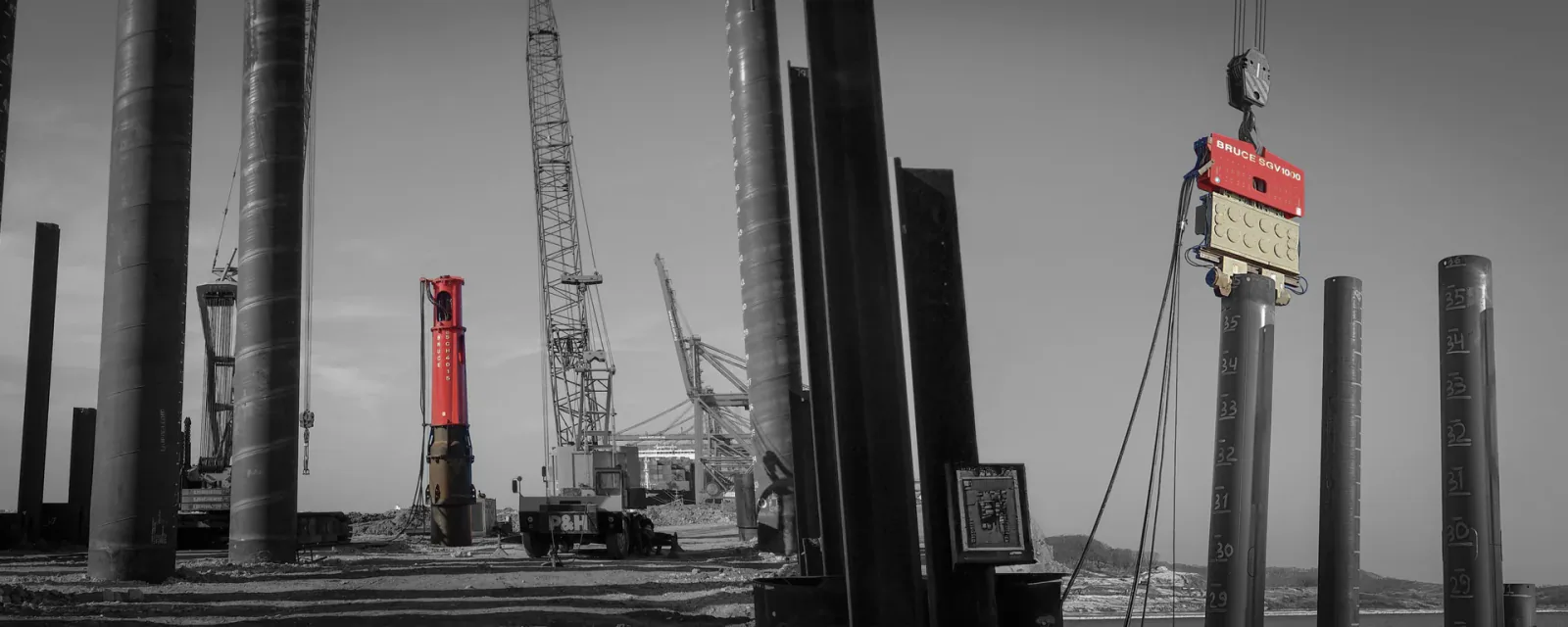
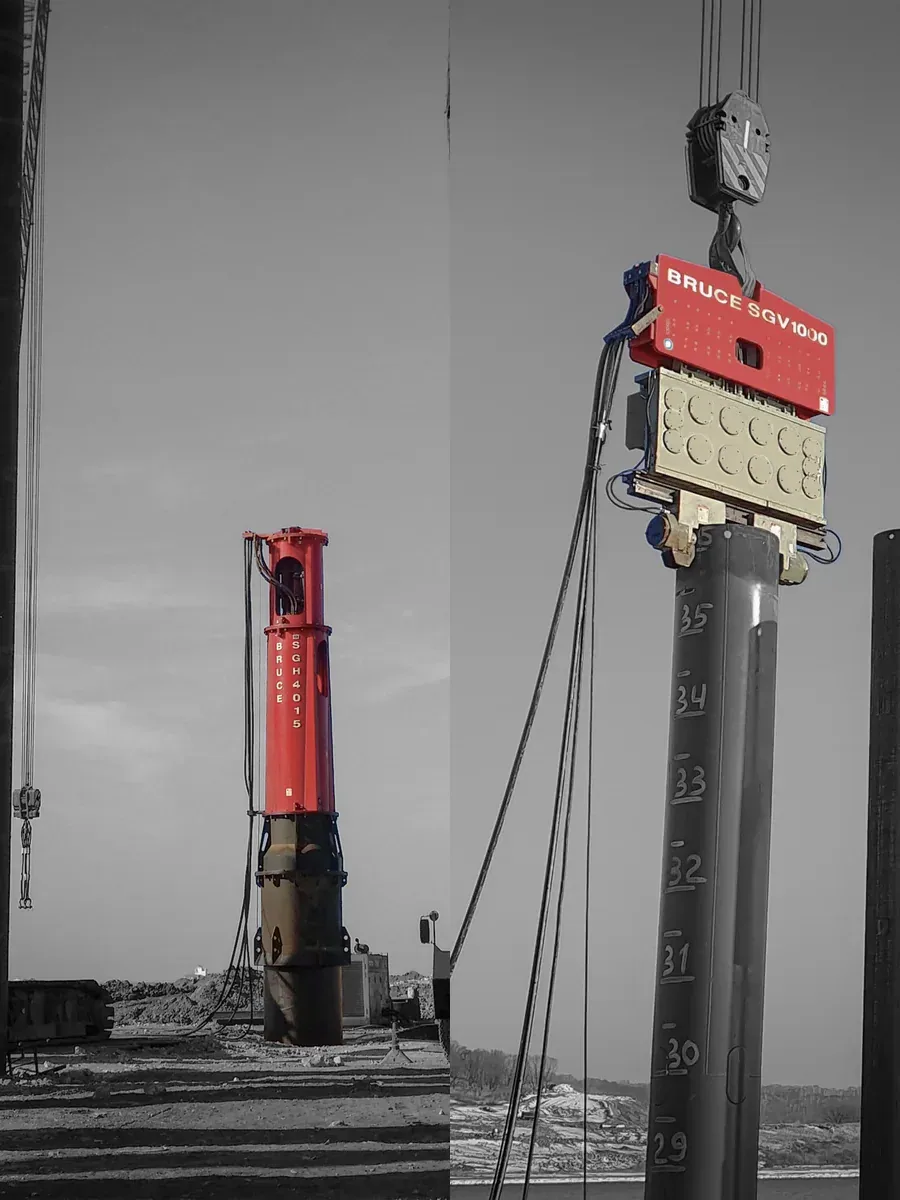
The hero is a stitched comparison of BRUCE SGH and SGV field photographs. It does not document simultaneous work or a controlled performance trial.
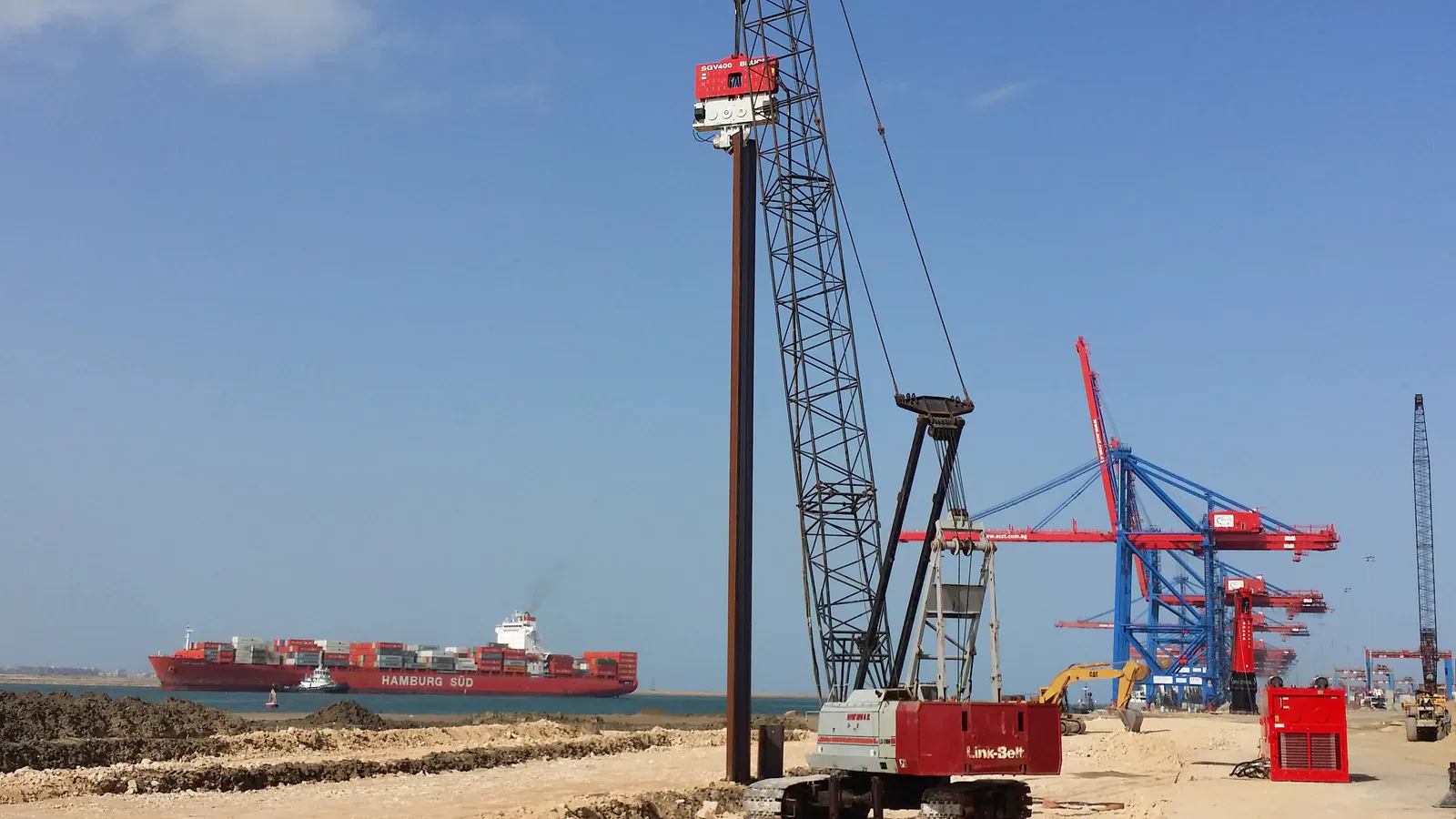
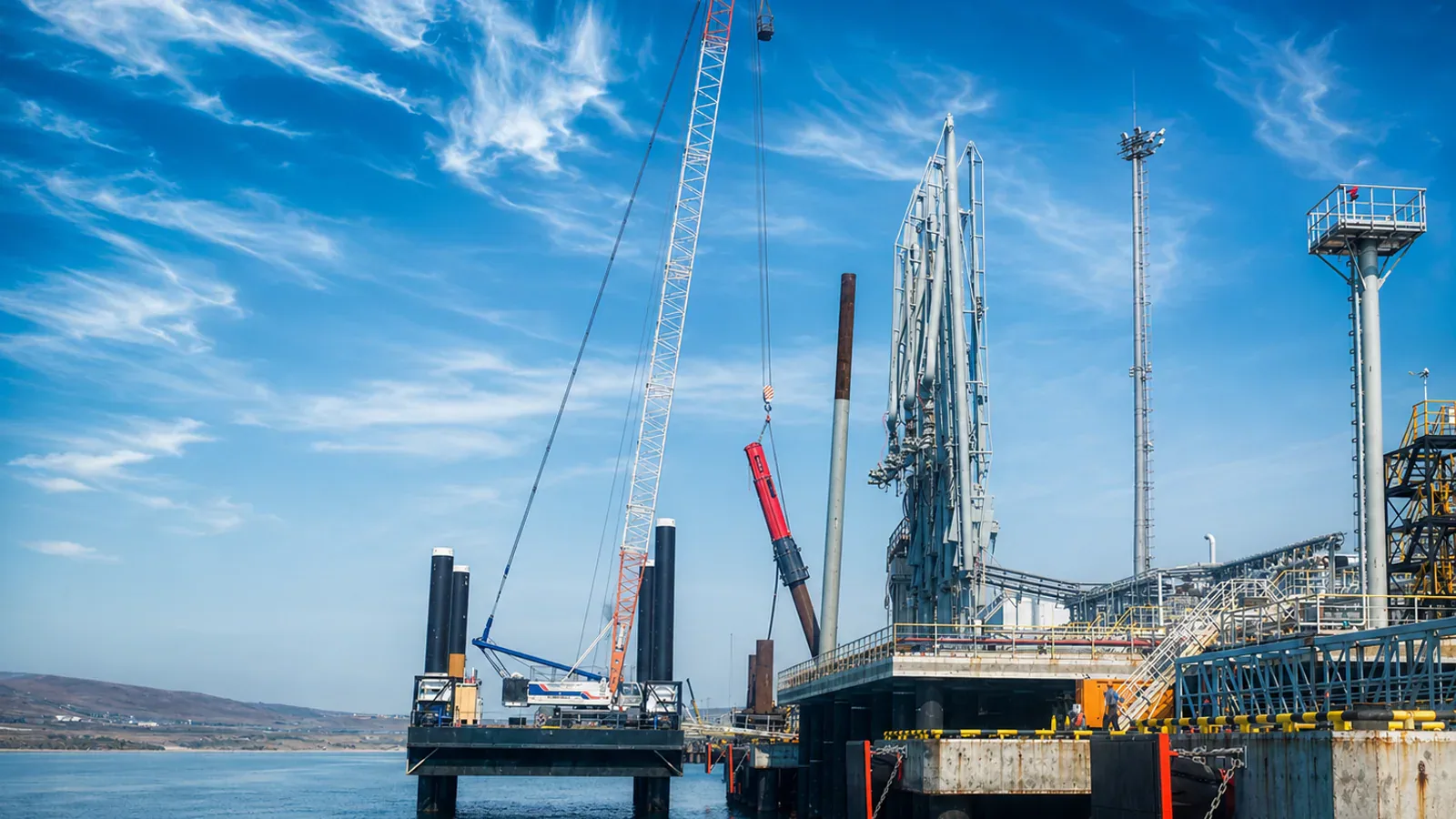
The photographs show visible equipment and site arrangements. They do not establish motion, transferred force or energy, lifting approval or pile capacity.
Method comparison
Compare action, interface and evidence
Use each rating for its stated purpose. Force and energy are different physical quantities, and neither provides a universal method-selection rule.
Vibratory and impact installation
| Review area | Vibratory hammer | Hydraulic impact hammer |
|---|---|---|
| Operating action | Cyclic excitation from rotating eccentric weights | Individual ram impacts through the driving assembly |
| Pile interface | A compatible clamp or approved attachment | A model- and pile-specific driving assembly; cushions where specified |
| Rating basis | Force, eccentric moment, frequency and amplitude under stated conditions | Energy per blow and the specified ram cycle; rated and transferred energy differ |
| Ground and pile checks | Ground response, pile geometry, clamp grip and operating limits | Driveability, driving stress, pile-head protection and operating limits |
| Records | Depth, time, settings, hydraulic condition, interruptions and monitoring | Depth, blow interval, stroke or energy setting, penetration, assembly condition and monitoring |
| Extraction | Possible with compatible equipment and an approved extraction and lifting plan | Confirm any removal duty; a pile-driving hammer is not a general-purpose extractor |
| Acceptance | The project specifies analysis, records and tests for the foundation | The project specifies analysis, records and tests for the foundation |
Method selection
Check the proposed method against the project
Confirm the pile and ground information, compare the operating and site limits, then agree the required installation records and acceptance procedure. If the project permits a combined method, define the transition and inspection requirements before work begins.
Compare the installation action
Both BRUCE SGV vibro hammers and SGH impact hammers use hydraulic power. This guide compares vibratory installation with hydraulic impact driving. A vibro hammer uses paired counter-rotating eccentric weights in the intended balanced arrangement to generate cyclic force and transfers it through a suitable clamp or attachment to the pile. A hydraulic impact hammer cycles a ram and delivers individual blows through the specified driving assembly. The internal ram cycle and impact interface depend on the selected model.
Use the ratings for their stated purpose
Vibro hammer centrifugal force, eccentric moment, frequency and displacement amplitude describe excitation or motion under stated conditions. Impact hammer energy describes work associated with a blow. Force in kilonewtons and energy in kilojoules are different quantities; there is no universal conversion that makes two hammers equivalent. Confirm each rating and its test or calculation basis. Rated impact energy is not the energy transferred into the pile. A larger rating in either family does not establish a suitable match or a faster installation.
Match the pile, interface and ground
Check pile material, section, wall or flange geometry, length, condition and target depth against the ground investigation. Vibratory driving can suit compatible steel profiles and favorable ground response, but dense or cohesive layers, obstructions and changes in pile geometry can restrict movement. Impact driving also requires a driveability and stress assessment. Do not assume a larger hammer can overcome an obstruction without damaging the pile. A vibro clamp must grip the specified section without slip or unacceptable local damage. The impact driving assembly must fit the pile head. Hammer-side cushions, where used, and separate concrete-pile cushions have different locations and roles; use the model and pile drawings.
Check noise, vibration and site limits
Both methods generate noise and ground vibration. Vibratory operation applies cyclic excitation during a run; impact driving produces repeated impulse events. The resulting levels depend on the equipment, pile, ground, operating settings and distance to each receptor. A vibratory method is not vibration-free, and the method name alone cannot establish the quieter option or compliance. The project team must assess nearby structures, utilities and other receptors, then define applicable limits, monitoring and response actions.
Plan extraction and combined methods
Vibratory equipment can assist extraction where the pile, clamp, ground response and approved lifting system permit it. Check extraction demand, line-pull limits, rigging and sudden-release risk. An ordinary lifting chart does not authorize pulling an embedded pile. A hydraulic impact pile-driving hammer is not a general-purpose extractor; confirm any proposed removal duty with the manufacturer. Some projects permit vibratory installation followed by impact driving. The responsible engineer must define the transition, interface changes, inspections and records before crews change methods. This is one possible approved sequence, not a default procedure.
Keep installation records separate from capacity acceptance
For vibratory work, record depth, time, settings, hydraulic condition, interruptions and relevant monitoring. For impact work, add the specified blow-count interval, stroke or energy setting, penetration per blow and driving-assembly condition. Neither vibratory penetration rate nor impact blow count alone establishes pile capacity. Vibratory installation can form part of an approved permanent load-bearing foundation where the design and acceptance procedure allow it. Engineers must define the analysis, restrike or load testing required for the selected foundation. Stop or hold for abnormal response, damage, loss of alignment or a monitoring threshold under the approved procedure.
Review the operating package
Check hydraulic flow and pressure, cooling, hose and coupler ratings, return restrictions, crane configuration and working radius for the actual arrangement. Keep cyclic force, clamp grip, extraction line pull and crane capacity as separate limits. Operators must follow the selected equipment manuals and the approved work and lift plans. Before maintenance, isolate the power source, control stored pressure and secure moving components as the manufacturer requires.
Frequently asked questions
Are vibro hammers different from hydraulic hammers?
Both BRUCE families discussed here use hydraulic power. The distinction is vibratory loading from the SGV family versus individual impact blows from the SGH family.
Can centrifugal force and impact energy be compared as equivalent ratings?
Force and energy are different physical quantities. Compare each rating with its stated basis and assess the complete pile, ground and equipment system; there is no universal conversion between the two ratings.
Is vibratory driving always quieter or lower in vibration?
Noise and ground response depend on the equipment, pile, ground, settings and receptors. Neither method name establishes compliance. Use the project assessment and monitoring requirements.
Can vibratory-installed piles form permanent load-bearing foundations?
Yes, where the design and project specification permit the installation method and define the required acceptance procedure. Penetration rate alone does not establish load-bearing capacity.
Technical basis
Sources supporting the technical claims above.
- FHWA GEC-12, Design and Construction of Driven Pile Foundations, Volume I
- FHWA GEC-12, Design and Construction of Driven Pile Foundations, Volume II
- FTA Transit Noise and Vibration Impact Assessment Manual
- Federation of Piling Specialists, Notes for Guidance on the Extraction of Temporary Casings and Temporary Piles Within the Piling Industry, Edition 1, June 2010
- HSE INDG291, Providing and using work equipment safely: maintenance and isolation
Discuss Your Piling Equipment
Send a pile drawing and the ground information you have. Tell us the planned method and site limits so BRUCE can review the applicable equipment package.