BRUCE Technical Team
What Is Foundation Work?
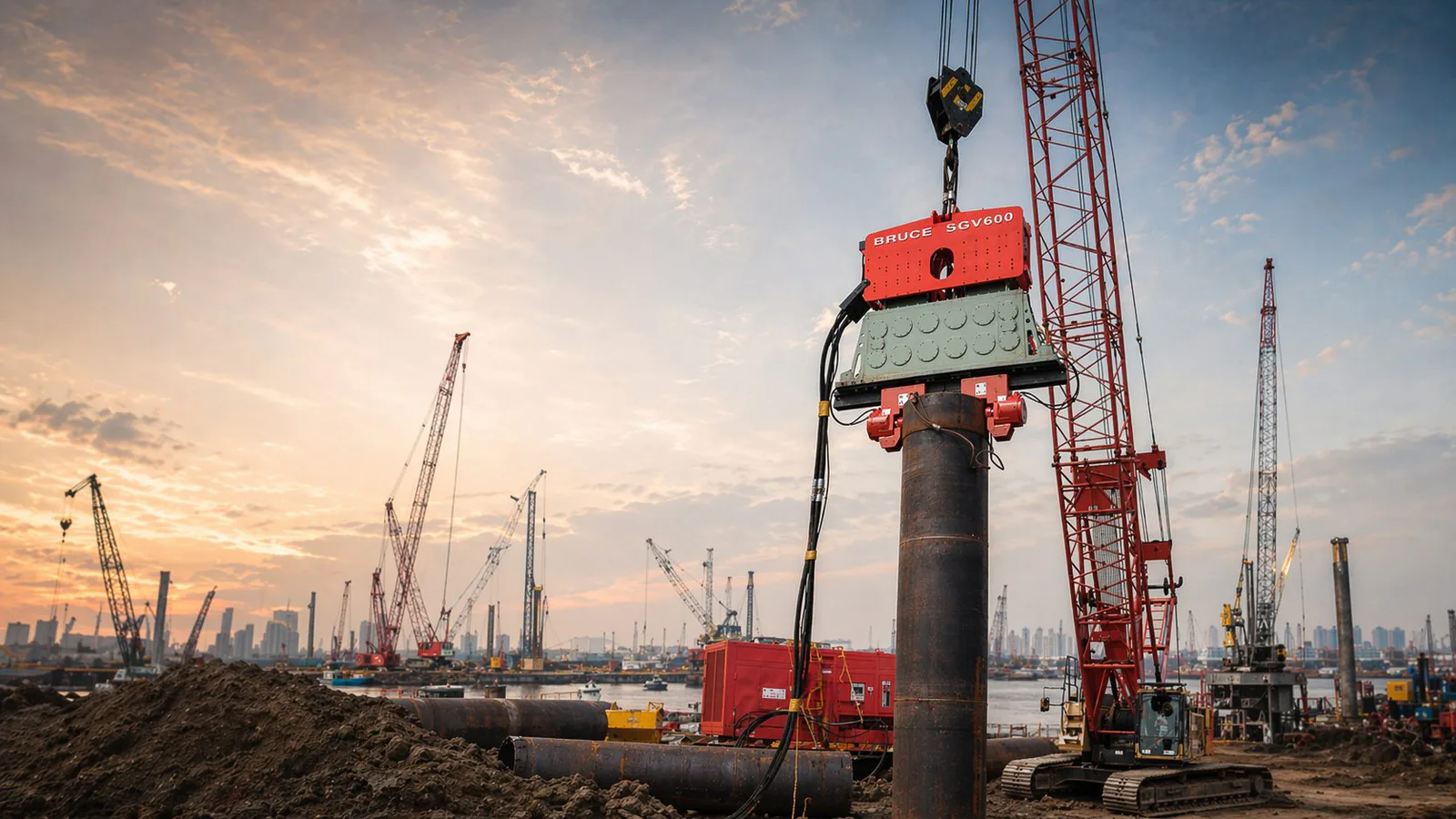
Foundation Work Basics
What Is Foundation Work?
Foundation work creates the load-transfer and ground-support systems required for a structure. Separate shallow and deep foundations from related piling, retaining, casing, cofferdam, and extraction work, then define each element’s temporary or permanent duty before equipment selection.
Retaining worksSheet piles and cofferdamsDriven foundationsPipe, H-beam, and concrete pilesCasing and extractionTemporary and permanent workProject controlsSoil, crane, monitoring, and records
Direct answer
What Is Foundation Work? Engineering brief
- Foundation work includes structural foundation systems such as shallow and deep foundations. Related geotechnical and temporary works include pile driving, sheet-pile walls, casing, cofferdams, retaining works, and marine support works.
- Deep foundations are one part of foundation work. Embedded piles or shafts transfer load through shaft resistance, base resistance, or both when near-surface support cannot meet the project requirements; they do not always terminate on rock or one discrete competent layer.
- BRUCE SGV Series vibro hammers and SGH Series hydraulic impact pile hammers are relevant to driven pile, vibratory pile, sheet pile, casing, pipe pile, and related foundation work where the selected method is suitable.
Article details
Technical review scope:
The BRUCE Technical Team prepares and maintains this reference and cites external sources. The project team retains responsibility for design decisions and approvals.
Planning overview
Foundation work is an umbrella category. Identify the load-transfer or ground-support system first, then confirm the pile profile, soil response, construction method, acceptance record, and equipment package.
Near-surface foundationsFootings, strips, and mats transfer load close to the surface. Pile hammers are not the primary equipment.
Driven deep foundationsPipe piles, H-beams, concrete piles, and selected steel profiles are installed through impact, vibration, pressing, or combined methods.
Bored or drilled foundationsCrews remove soil before installing reinforcement and placing concrete. They use drilling equipment for the main operation; casing work may require BRUCE equipment.
Retaining and temporary worksSheet pile walls, cofferdams, temporary casing, support piles, marine work, and extraction require project-specific installation planning.
BRUCE equipment boundary:
BRUCE SGV vibro hammers apply to suitable vibratory driving and extraction. BRUCE SGH hydraulic impact pile hammers apply to impact driving and final seating.
The responsible project team must check equipment selection against the soil report, pile design, crane capacity, local rules, and manufacturer instructions.
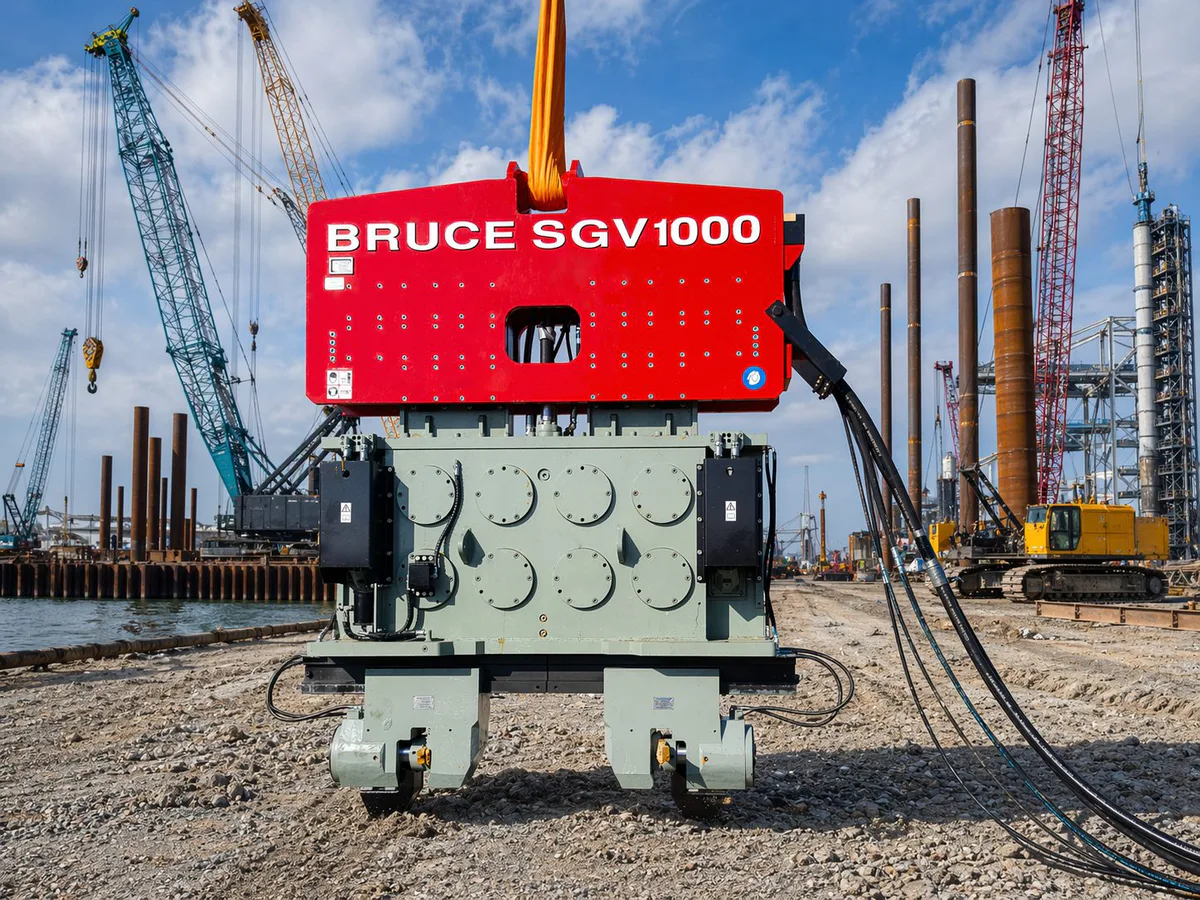
- Foundation work includes shallow and deep foundation construction. Sheet-pile walls, cofferdams, casing installation, and extraction are related retaining or temporary works whose structural role must be stated separately.
- The two most important load-transfer mechanisms are end bearing at a competent layer and shaft resistance along the side of the pile or shaft.
- Displacement piles may be installed by impact driving, vibratory driving, pressing or jacking, or combined methods, while bored or drilled foundations remove soil before concrete or reinforcement is placed.
- BRUCE SGV Series vibro hammers and SGH Series hydraulic impact pile hammers are relevant to driven pile, vibratory pile, sheet pile, casing, pipe pile, and related foundation work where the selected method is suitable.
Decision map
Foundation systems and BRUCE equipment fit
Foundation work is a broad construction category. Define the work purpose, pile or profile, ground condition, installation method, and required acceptance record before selecting a hammer.
Start with
Foundation purpose
Verify with
Pile and ground data
Finish with
Method, equipment, and records
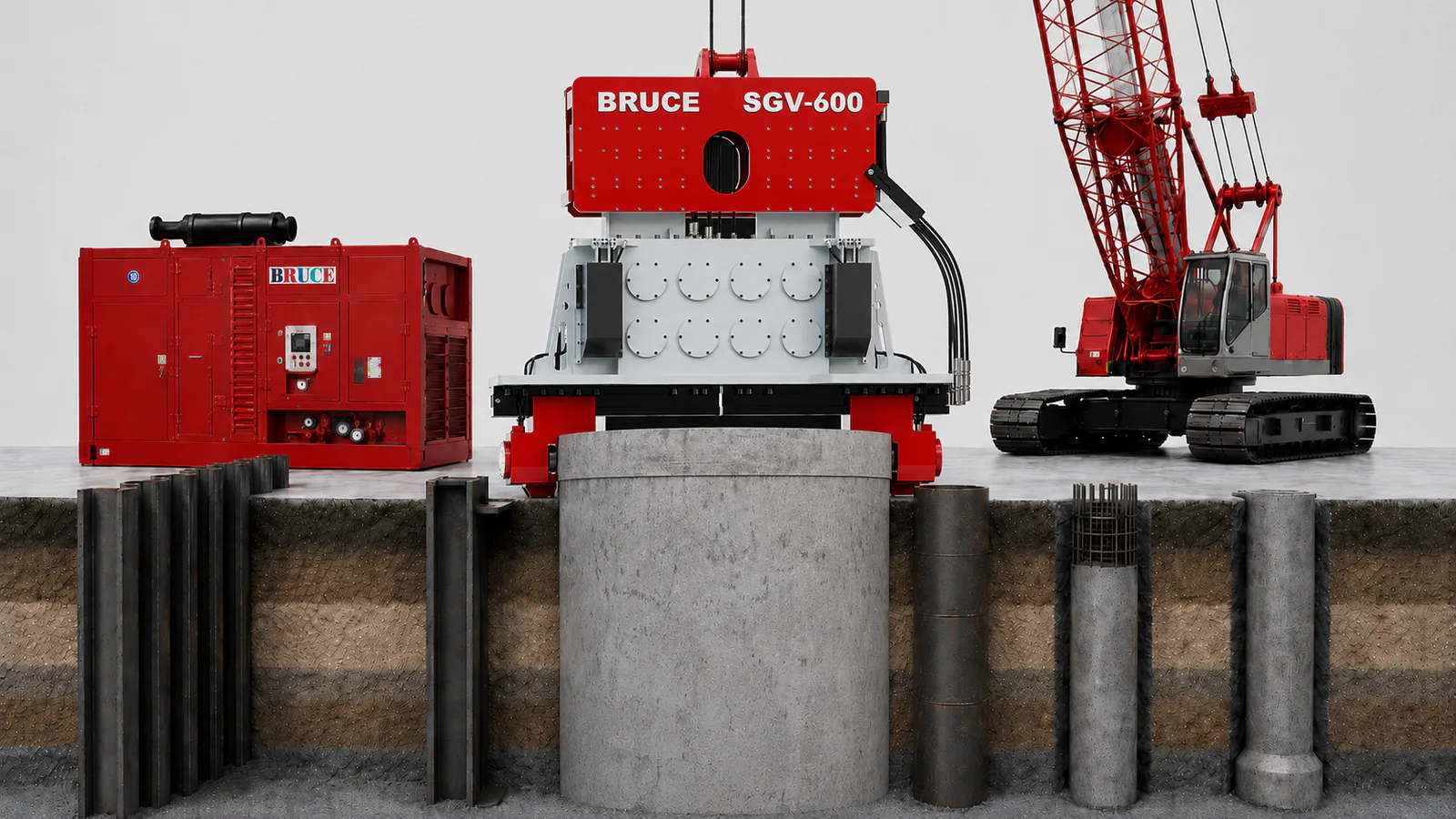
RetainingSheet pile wall / cofferdam for soil and water control.
SupportH-beam or soldier pile profile for retaining or support work.
Vibratory hammerBRUCE SGV Series vibro hammer for suitable driving and extraction work.
Power packHydraulic power pack package selected with flow, pressure, cooling, hose layout, and controls.
CasingCasing or pipe profile where clamp fit, diameter, wall thickness, and target depth matter.
Drilled / bored workBored or drilled piles use drilling equipment first; BRUCE appears when casing, driven auxiliary piles, or extraction is included.
Crane setupCrane capacity, lifting geometry, leader or suspended setup, and site access must be checked.
This visualization does not represent one universal construction method. Sheet piles, casing piles, pipe piles, H-beams, concrete piles, and drilled shafts each require different checks and equipment assumptions.
1. Project purposeTemporary support, permanent load transfer, excavation control, marine work, or extraction.
2. Ground conditionSoil layers, groundwater, dense zones, fill, obstructions, and nearby structures.
3. Pile or profileSheet pile, H-beam, pipe pile, casing, concrete pile, or drilled/bored shaft.
4. Installation methodVibratory driving, impact driving, pressing, predrilling, drilling, or combined method.
5. Equipment packageHammer, power pack, clamp, drive cap, pile cap, hose layout, crane, and records.
| Foundation work item | Main purpose | Equipment logic | BRUCE relevance |
|---|---|---|---|
| Sheet pile wall / cofferdam | Earth retention, water control, temporary works, excavation support | Vibratory driving and extraction are common when vibration limits and soil response are acceptable. | BRUCE SGV Series |
| Casing pile / temporary casing | Casing installation, bore support, casing extraction, temporary or permanent casing work | Vibro is often reviewed for installation or extraction; casing diameter, wall thickness, friction, and timing matter. | BRUCE SGV Series |
| Pipe pile / steel tube pile | Permanent bearing piles, marine piles, industrial foundations, temporary support piles | Vibro may be used for fast installation; impact may be required for final seating, bearing evidence, or driving records. | BRUCE SGV or SGH Series |
| H-beam pile | Temporary bracing, soldier piles, retaining systems, bearing or support members | Vibro or impact selection depends on section stiffness, alignment control, soil resistance, and project acceptance. | BRUCE SGV or SGH Series |
| Bored pile / drilled shaft | Cast-in-place deep foundation after soil removal by drilling | Drilling equipment is primary. BRUCE hammers become relevant when casing, driven auxiliary piles, or extraction work is included. | Conditional relevance |
BRUCE review position by work type
These labels indicate where an SGV or SGH review normally enters the planning process. They are not performance ratings, safe-distance values, or guaranteed method outcomes.
Qualitative planning status
Sheet pile driving and extractionSGV Series
Primary review
Review vibration limits, soil response, interlocks, clamp fit, line pull, crane capacity, and extraction demand.
Casing installation and extractionSGV Series
Primary review
Review casing diameter, wall thickness, friction, concrete timing, clamp system, power pack, and lift geometry.
Pipe pile and H-beam installationSGV or SGH Series
Conditional review
Method depends on soil resistance, profile stiffness, target depth, final seating, pile stress, and acceptance records.
Final seating and driving recordsSGH Series
Primary review
Impact driving is reviewed when controlled energy, blow count, final set, bearing evidence, or dynamic testing governs acceptance.
Bored pile drillingDrilling equipment
Not primary
BRUCE equipment becomes relevant only when the scope also includes casing, driven auxiliary piles, or extraction work.
Technical check matrix
| Check point | Why it matters | Evidence to prepare |
|---|---|---|
| Project purpose | Temporary works, permanent bearing piles, extraction, and acceptance records lead to different equipment choices. | Pile purpose, target depth, production target, acceptance criteria |
| Ground model | Soil layers, groundwater, hard layers, fill, and obstructions are often more important than pile weight. | Boring log, SPT/CPT data, groundwater, obstruction history |
| Method choice | Vibro, impact, combined method, predrilling, and extraction planning should be compared before model selection. | Specification, noise/vibration limits, trial pile plan, contingency method |
| Package match | Hammer, power pack, clamp, drive cap, pile cap, hoses, monitoring, spares, and documents should be reviewed together. | Equipment list, accessory drawings, hose plan, export documents |
Foundation work definition
Foundation work provides the load-transfer system that supports a structure. Shallow and deep foundations are structural foundation systems; sheet-pile walls, casing, cofferdams, extraction, and other retaining or temporary works are related geotechnical operations that may use the same piling equipment but serve a different project role.
Where deep foundations fit inside foundation work
A deep foundation is used when near-surface ground cannot provide enough bearing capacity, settlement control, lateral resistance, uplift resistance, or scour protection. Classify it by how the foundation transfers load to deeper competent ground or mobilizes resistance along an embedded element rather than by depth alone. Typical projects include bridges, port structures, retaining walls, high-rise buildings, industrial plants, transmission structures, offshore facilities, and marine works.
How load is transferred into the ground
A pile or shaft can transfer load through end bearing, shaft resistance, or a mixed behavior. End bearing means the pile toe transfers load to a stronger layer such as dense sand, gravel, very stiff clay, or rock. Shaft resistance means friction or adhesion along the pile surface contributes to capacity. Real projects usually require geotechnical design because soil layering, groundwater, pile material, installation method, and group effects change the result.
Main foundation work families
A foundation-work map includes shallow foundations, driven piles, drilled shafts or bored piles, micropiles, helical piles, earth-retaining systems, cofferdams, temporary casing, sheet-pile walls, and marine or offshore pile foundations. Sheet piles, casing piles, pipe piles, H-beams, and concrete piles are pile types or profiles rather than separate foundation systems. Equipment, quality controls, risks, and site records depend on that distinction.
Where pile driving equipment fits
Pile driving equipment belongs to the installation and extraction side of foundation work. Hydraulic vibro hammers are commonly used for sheet piles, casing piles, H-beams, pipe piles, extraction work, and temporary works where soil responds well to vibration. Hydraulic impact pile hammers are used when controlled blow energy, final set, driveability, pile stress, or driving records are important. Some projects use a combined method: vibro driving for initial penetration and impact driving for final seating or verification.
What buyers should understand before selecting equipment
The phrase foundation work is broad, so it is not enough to select equipment. Buyers should identify the pile type or profile, permanent or temporary purpose, soil layers, groundwater, target depth, acceptance criteria, nearby structures, crane capacity, and whether extraction is required.
Frequently asked questions
Answers to recurring project and equipment questions.
Which project records belong in this review?
Send the available pile, ground, method, crane, and site records before BRUCE reviews the equipment package.
Who approves the final method and equipment selection?
The responsible project engineer and the parties controlling lifting, environmental, asset-owner, and site-safety requirements approve the final method. They must use project calculations, specifications, and manufacturer instructions.
When should BRUCE review the equipment package?
Send the project data before the hammer model or method is fixed. BRUCE can then review the pile interface, hammer and power-pack match, crane and hose constraints, required accessories, and stated monitoring or acceptance requirements.
Technical basis
Sources supporting the technical claims above.
- FHWA GEC-12, Design and Construction of Driven Pile Foundations, Volume I
- FHWA GEC-12, Design and Construction of Driven Pile Foundations, Volume II
- FHWA-NHI-18-024, Drilled Shafts: Construction Procedures and LRFD Design Methods
- USACE EM 1110-2-2906, Design of Pile Foundations
- Caltrans Foundation Manual, Driven Piles chapters
- BRUCE SGV Series vibro hammer specification pages
- BRUCE SGH Series hydraulic pile hammer specification pages
- BRUCE hydraulic impact hammer specifications and SGH Series energy range