Early builders used timber piles to support structures in wet ground. Later crews adopted screw piles, steam pile-drivers, steel, and concrete. Engineers now use driving records and tests to check pile performance.
Period covered5000 BC to modern pile drivingMain developmentsPile materials and driving equipmentModern practiceSite investigation and testing
Early builders drove timber piles for settlements, bridges, and waterfront structures.
Crews later adopted screw piles, powered pile-drivers, steel sections, and reinforced concrete.
Engineers now assess driving response with analysis, field records, and load testing.
●Article information
Technical review policy. BRUCE prepares this reference from the cited material. Project-specific design and approval remain with the responsible project team.
Prepared by
BRUCE Technical Team
Last updatedReference set10 public references and 3 BRUCE equipment pages
●Historical overview
Builders developed new pile materials and driving equipment to work at greater depths and carry larger loads. Engineers added analysis, installation records, and load testing to check performance.
Ground conditionsEarly builders used timber piles in wet and waterside ground.
Materials and machinesCrews adopted steel, concrete, and powered hammers for different pile types.
VerificationEngineers check predictions against driving records and tests.
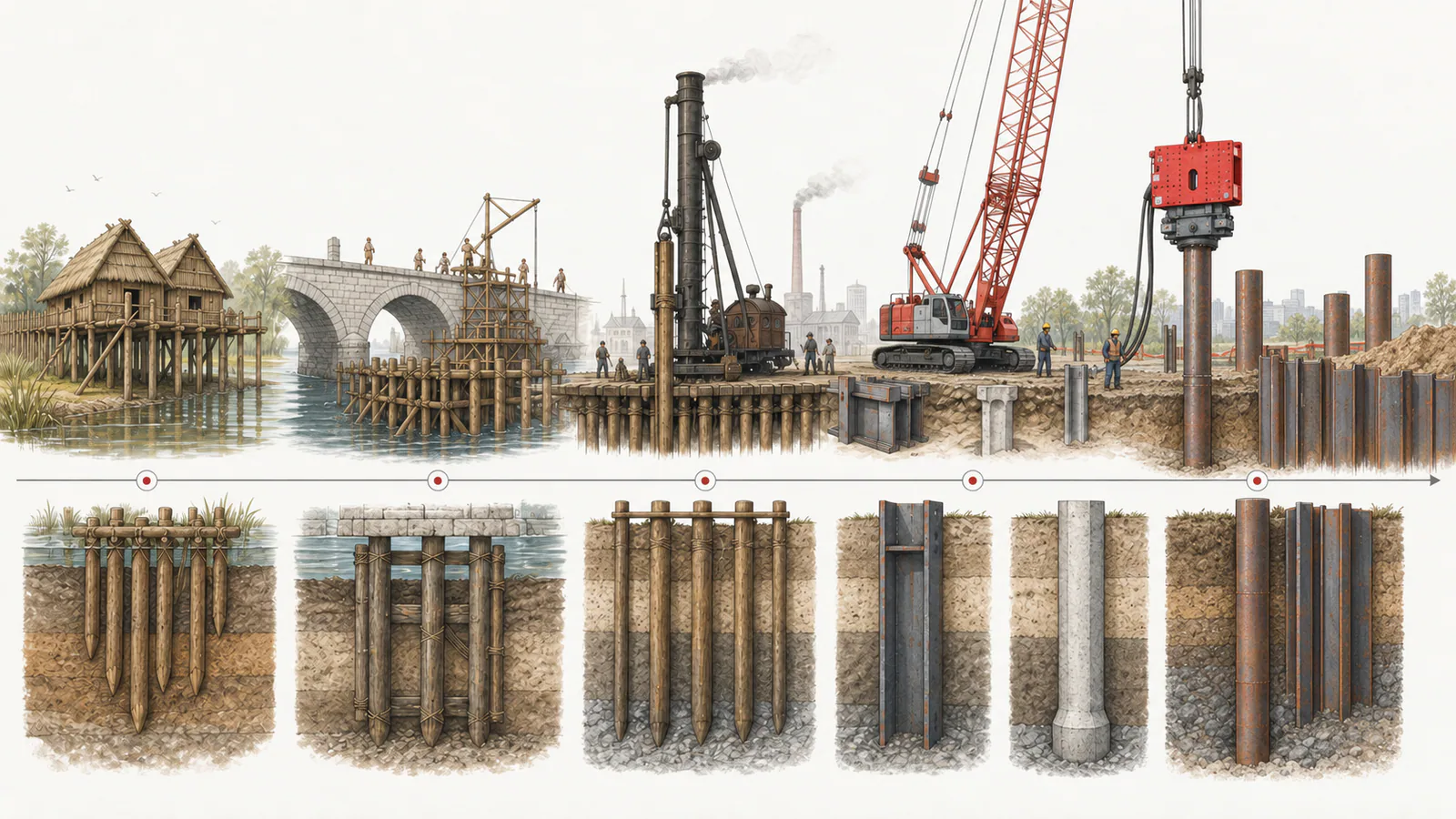
GPT-generated conceptual illustration of pile foundation history, from timber-supported structures to modern steel pipe and sheet pile installation. Scenes and equipment details are schematic.
Historical timeline
●How pile-foundation practice changed
Builders changed pile materials and installation equipment over thousands of years. Engineers later added analysis and testing.
Period5000 BC-present
DevelopmentsPile materials and installation
Modern checksAnalysis, records, and testing
01
Ancient and classical
Timber elements and pile groups
Manual ramming, inclined installation, bridge and waterfront works
02
19th-century mechanization
Screw piles and timber piles
Steam pile-driving and screw installation
03
20th-century expansion
Steel sections, pipe piles, and concrete piles
Diesel, hydraulic, and vibratory driving with field records
04
Present-day installation
Steel pipe, sheet, and concrete piles
Site-specific methods, field records, and load testing
01 Timber settlements
Alpine pile dwellings
Archaeologists have recovered timber remains from settlements near lakes, rivers, and wetlands.
02 Installation geometry
Caesar’s Rhine bridge
Caesar describes inclined paired piles, cross-bracing, ramming, and protective piles against river flow and impact.
03 Waterfront construction
Roman London waterfront
Researchers used tree-ring dating to identify phases of timber quays, a landing stage, revetments, and a probable bridge pier.
04 Screw installation
Mitchell screw-pile patent
Alexander Mitchell patented his screw-pile and screw-mooring system.
05 Mechanized blows
Nasmyth steam pile-driver
James Nasmyth operated direct-acting steam pile-drivers at Devonport by July 1845.
06 Screw-pile application
Brandywine Shoal Light
U.S. lighthouse keepers first lit this screw-pile lighthouse in 1850.
07 New material
Reinforced-concrete piles
Builders used reinforced-concrete piles in Europe.
08 New section
Rolled steel H-sections
Builders adopted rolled steel H-sections for piling.
09 Combustion-driven blows
Diesel pile hammers
Engineers in Germany developed diesel hammers that used fuel combustion to deliver repeated blows.
10 Hydraulic power
Hydraulic pile hammers
Engineers in Scandinavia developed hydraulic pile hammers.
11 Site-specific methods
Modern pile installation
Crews select installation methods for the specified piles and ground conditions. Engineers compare field records and tests with the project criteria.
Historical sources
Documents and archaeological evidence
Technical data table: Case, Date, Documented detail, Source
Case
Date
Documented detail
Source
Alpine pile dwellings
5000-500 BC
UNESCO records timber remains from settlements near lakes, rivers, and wetlands.
Engineers assess ground conditions, pile design, and expected driving resistance.
02
Install
Crews set up the hammer, power pack, pile interface, and crane for the selected method.
03
Record
Crews record pile depth and driving response, together with the measurements required by the project.
04
Check
Engineers compare the records and test results with the project criteria.
Modern equipment
BRUCE equipment in modern pile installation
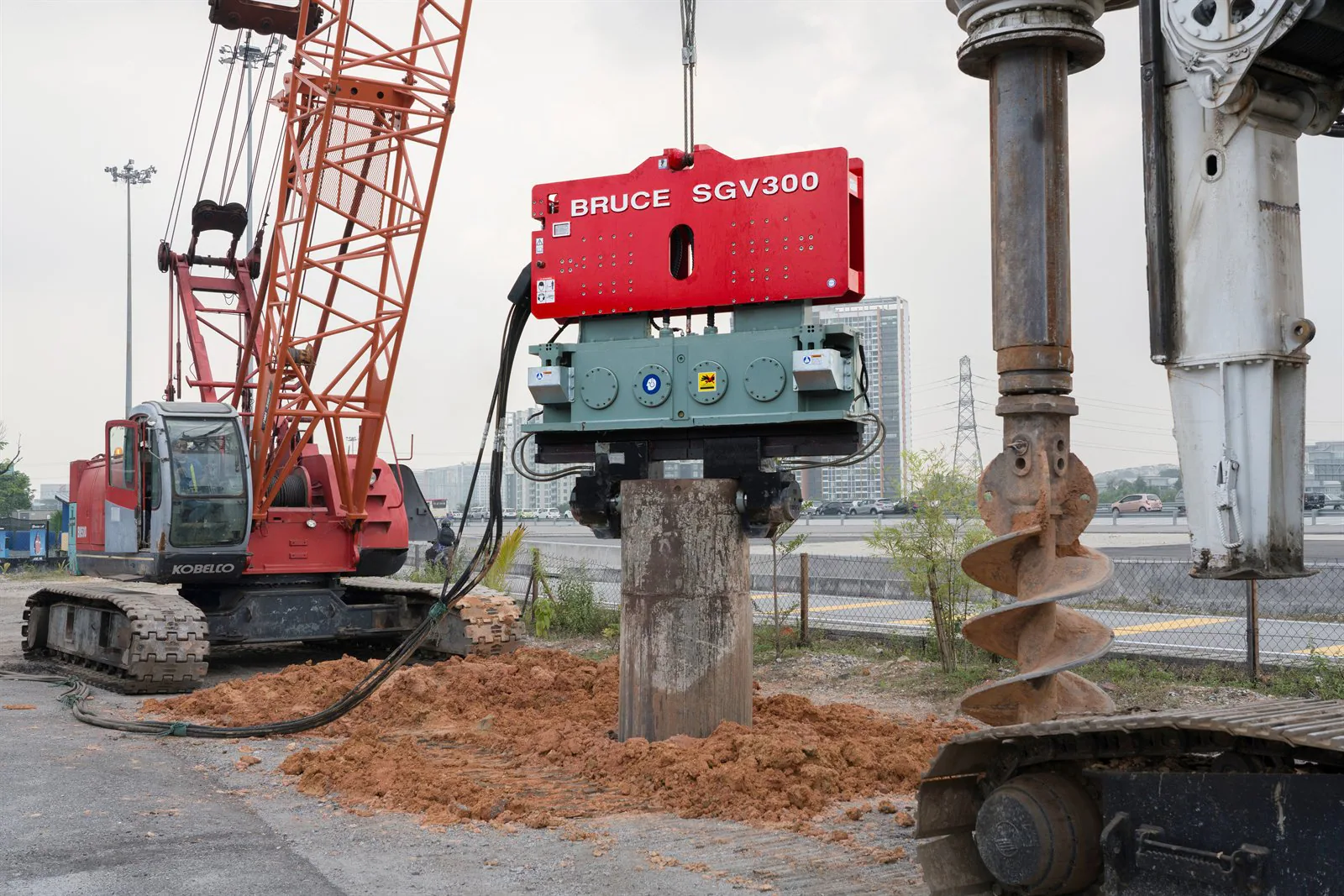
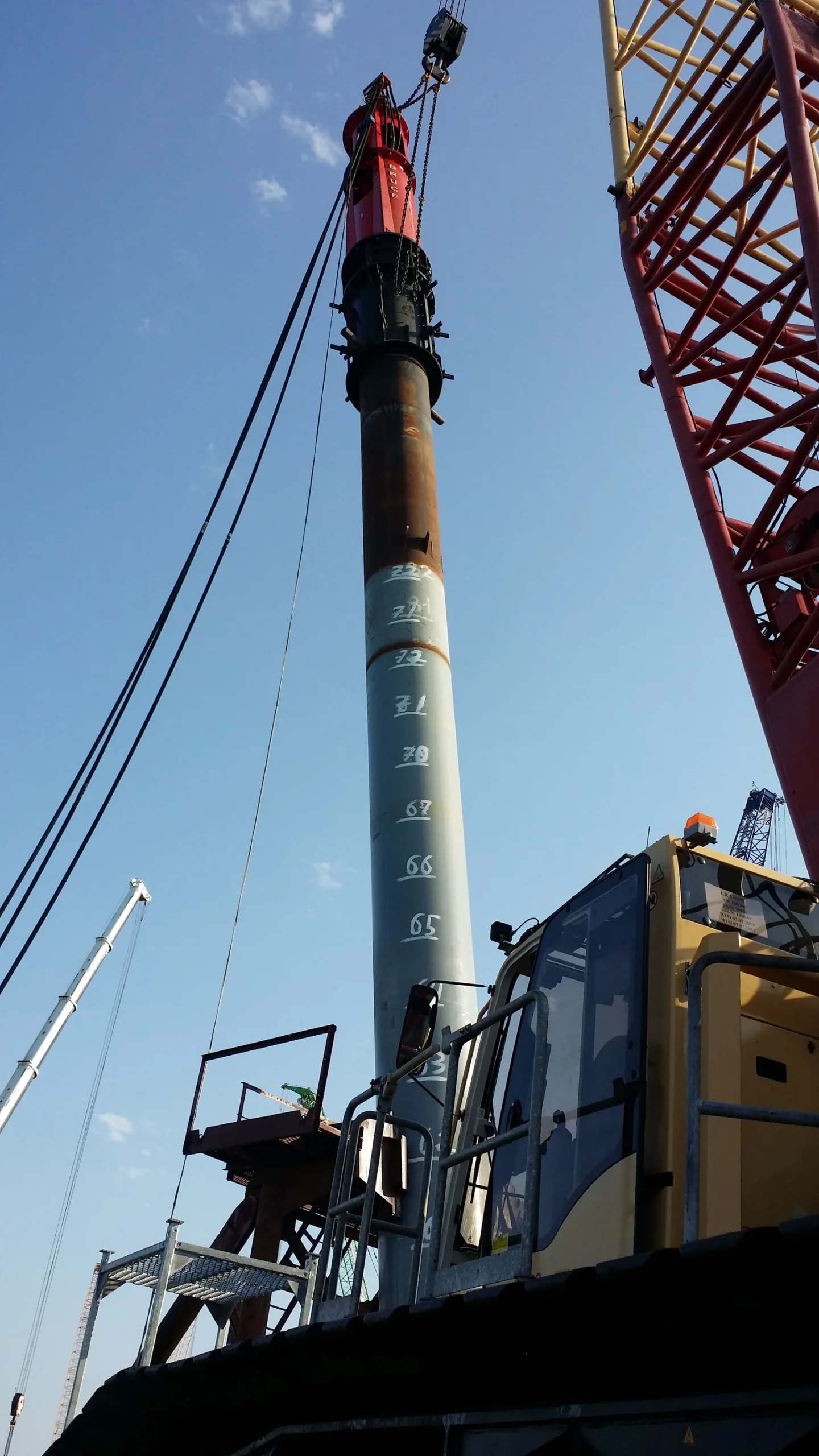
Crews use BRUCE SGV vibratory hammers and SGH hydraulic impact hammers for different installation methods. The photographs show BRUCE equipment in present-day use.
BRUCE SGV300 vibratory hammer. The photograph shows a pipe or casing pile, the crane, and hydraulic hoses.View BRUCE SGV specifications ●BRUCE SGH2815 hydraulic impact hammer. The photograph shows a steel-pile driving setup.View BRUCE SGH specifications ●
●Prehistoric and classical evidence
UNESCO lists Alpine pile-dwelling sites dating from about 5000 to 500 BC near lakes, rivers, and wetlands. Archaeologists have recovered timber remains that survived in waterlogged ground. In his account of the 55 BC Rhine bridge, Caesar describes paired timbers driven at opposing inclinations, cross-bracing, and protective piles against river flow and impact.
●Roman waterfront construction
Researchers used tree-ring dating to identify several phases of Roman London’s timber quays, landing stage, revetments, and probable bridge pier. Historic England dates the main harbour development to about AD 60-100.
●Industrialization of pile driving
Alexander Mitchell patented his screw-pile and screw-mooring system in 1833. James Nasmyth operated direct-acting steam pile-drivers at Devonport by July 1845. Builders used reinforced-concrete piles in Europe from 1897 and adopted rolled steel H-sections for piling in the early 20th century.
●Powered hammers and modern verification
Engineers developed diesel pile hammers in Germany in the mid-1920s and hydraulic pile hammers in Scandinavia in the 1960s. Crews gained more driving options. Engineers also adopted wave-equation analysis and instrumentation to assess pile stresses and driving response, then compared their predictions with installation records and load tests.
●Present-day installation
Crews use vibratory and impact equipment for specified pile types and ground conditions. Engineers check installation records and load tests against the project’s requirements.
Offshore-wind developers use large steel monopiles for turbine foundations, a separate application outside BRUCE’s supply scope.
UNESCO lists Alpine pile-dwelling sites dating from about 5000 to 500 BC. Archaeologists have recovered timber remains from settlements near lakes, rivers, and wetlands.
QWhy was timber used for early pile foundations?
Builders could cut and shape timber with the tools they had. Saturated ground with little oxygen can slow fungal decay. Changes in groundwater can expose timber to conditions that encourage decay.
QWhat changed when pile driving became mechanized?
Crews used powered machines to deliver repeated blows or vibration. They could drive a wider range of pile materials and sections, while engineers developed ways to predict driving response and check pile stresses.
QHow do engineers check pile installation today?
Engineers review ground conditions and pile design, assess driveability where needed, and compare driving records and specified tests with the project’s acceptance criteria.