BRUCE Technical Team
Temporary Works vs Permanent Foundations
Foundation Work Basics
Temporary Works vs Permanent Foundations
Temporary works support or protect people, structures, and excavations during construction. Permanent foundations carry the completed structure for its specified design life.
Construction stagePlan support, access, inspection, and completionFinal assetCheck service loads, settlement, and durabilityRemoval or retentionConfirm the intended role in the project design
Technical guide
Direct answer
Temporary Works vs Permanent Foundations: engineering brief
- Temporary works support construction activities, including excavation support, cofferdams, casing, and working platforms. Designers specify the required stages, loads, inspections, and completion plan.
- Permanent foundations carry the completed structure for its specified service life. Engineers check the required loads, settlement limits, durability, and exposure conditions.
- An element left in place does not become an approved permanent foundation by default. The designer must confirm its role and any intended structural contribution.
Article information
Technical review policy. BRUCE Technical Team prepared this reference from the listed sources. The project’s design team remains responsible for foundation design, construction specifications, and acceptance.
Planning overview
Engineers classify each element by its intended role. A sheet pile wall, casing, H-beam, or pipe pile may serve a construction-stage or permanent role, depending on the approved design.
Intended roleTemporary support, permanent structural work, or an approved combination of roles.
Construction checksStability, changing loads, inspections, and an approved removal or retention plan.
Service checksSpecified loads, settlement, durability, exposure, and maintenance requirements.
A field photograph does not establish an element’s design role or approval status.
Lifecycle brief
Plan installation, use, and completion
Confirm the element’s intended role and removal or retention plan. Then specify the construction sequence and the checks during use and at completion.
Start withIntended role
Control withApproved sequence
Finish withApproved completion plan
Define the role
Confirm the construction-stage purpose and any intended role in the completed structure.
Design and approve
Specify loads, ground and water conditions, service period, inspection stages, and change authority.
Install and record
Check the pile interface, lifting plan, hydraulic package, workmanship, monitoring, and installation records.
Use and inspect
Inspect at the specified stages and after changes that could affect stability or performance.
Complete and hand over
Follow the approved removal or retention plan. Record any ground treatment, as-built information, and handover requirements.
Responsibility comparison
Compare the design role, inspection requirements, and completion records for each element.
| Decision item | Temporary works | Permanent foundations |
|---|---|---|
| Purpose | Enable a defined construction stage, excavation, access, retention, water control, or temporary load path. | Carry the completed structure and remain part of the final asset. |
| Design period | Approved construction stages and service period, including changes and the completion plan. | Specified service life, loads, settlement limits, durability, and relevant exposure effects. |
| Inspection | Specified stage inspections and checks after changes in loads, water, excavation, weather, or sequence. | Construction checks, acceptance evidence, as-built records, and the required service inspection or monitoring. |
| Completion | Remove and treat the ground as specified, or document an approved retention plan. Check condition before reuse. | Hand over as-built details, test evidence, protection systems, and maintenance requirements. |
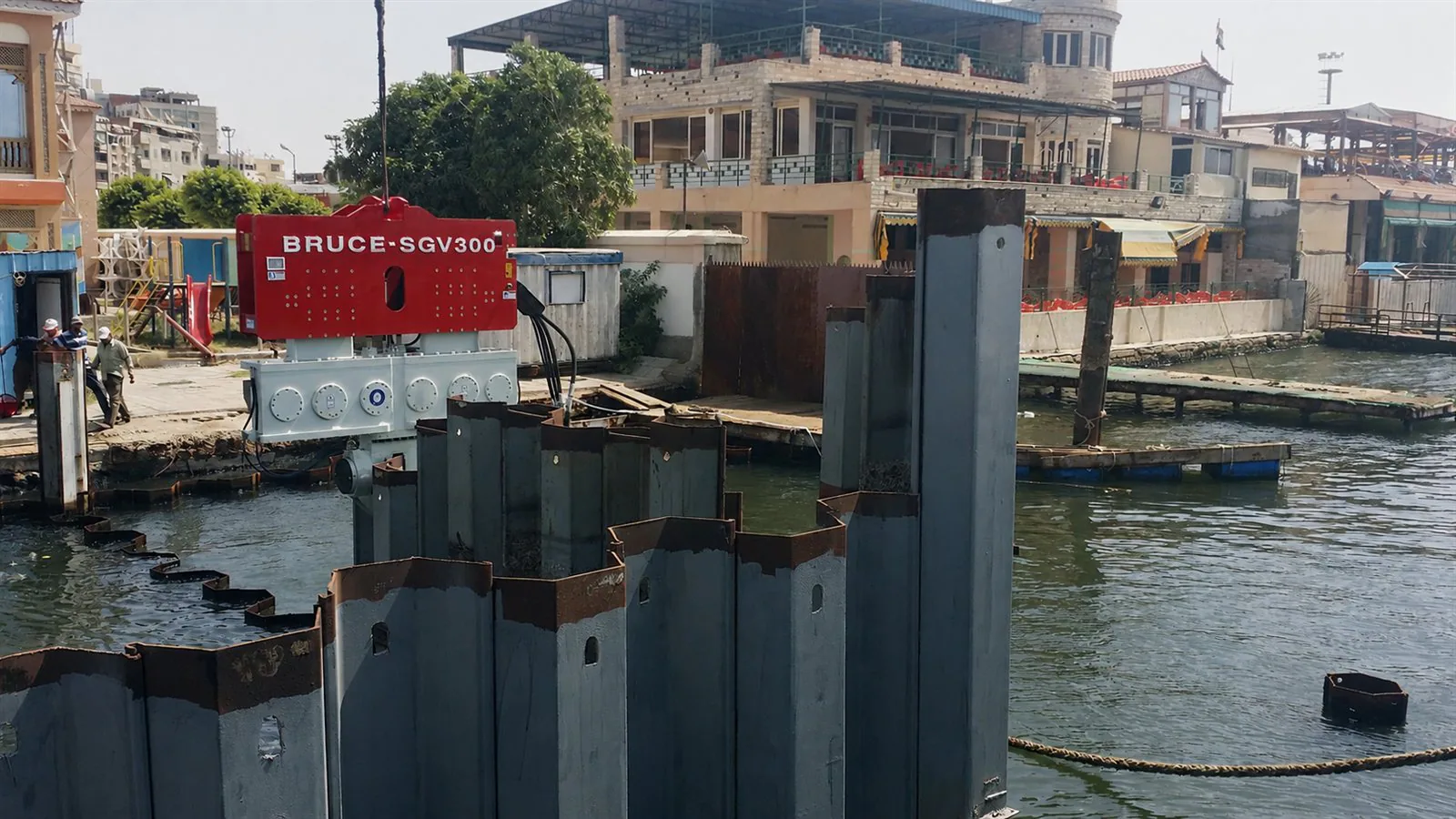
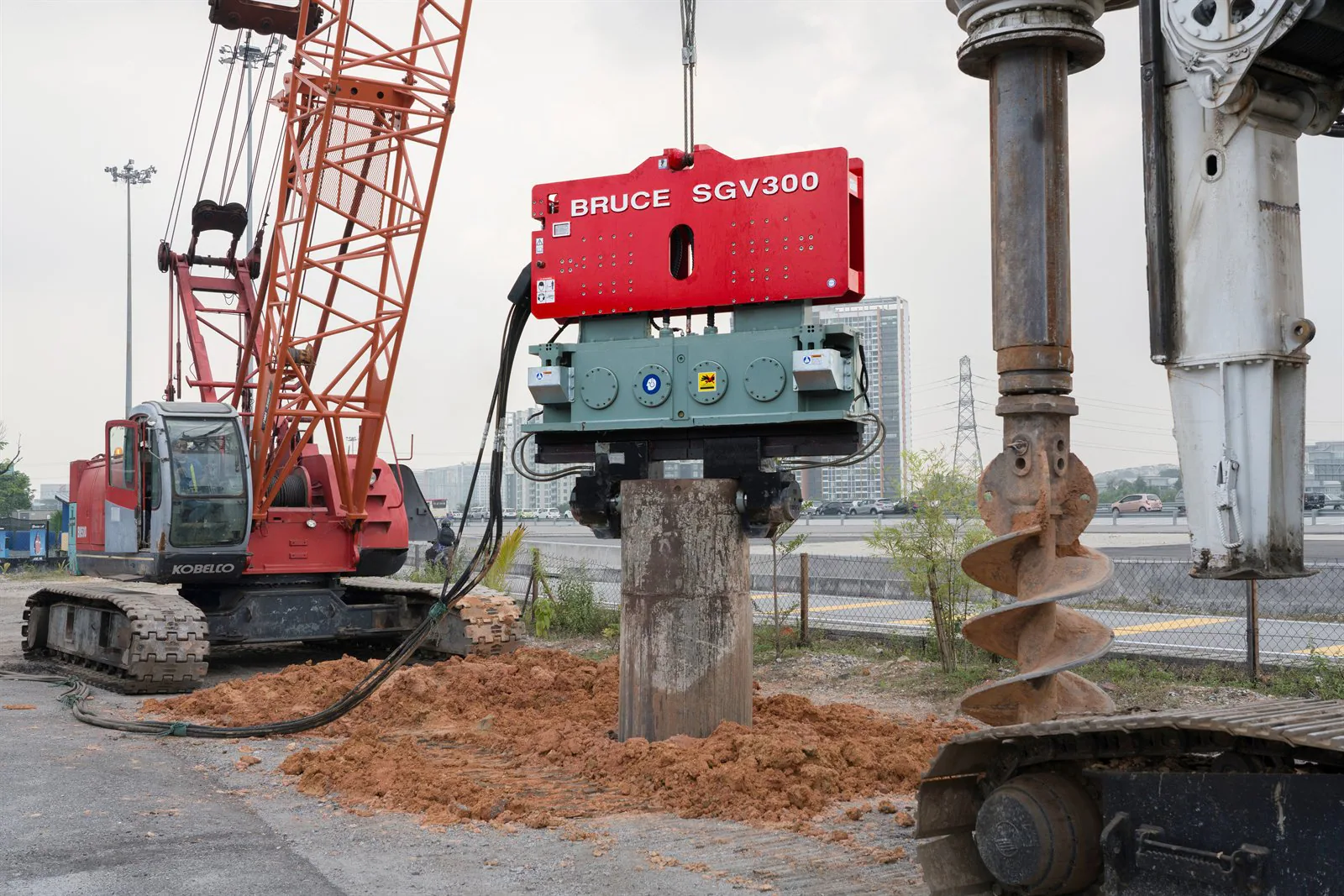
Vibratory driving or extractionBRUCE SGV package review
Review SGV suitability for the steel pile or casing, ground conditions, vibration limits, clamp fit, hydraulic supply, and lifting plan. For extraction, check the hammer’s rated line pull and the crane’s capacity at the working radius. Temporary or permanent status alone does not select the hammer.
Impact pile installationBRUCE SGH driving-system review
Review the SGH hammer, drive cap or helmet, specified cushions, pile stresses, hydraulic supply, and lifting requirements. Engineers assess final set and blow count against the approved driving criteria; these records alone do not prove capacity. The project must define the required testing and acceptance assessment.
The role of the installed element
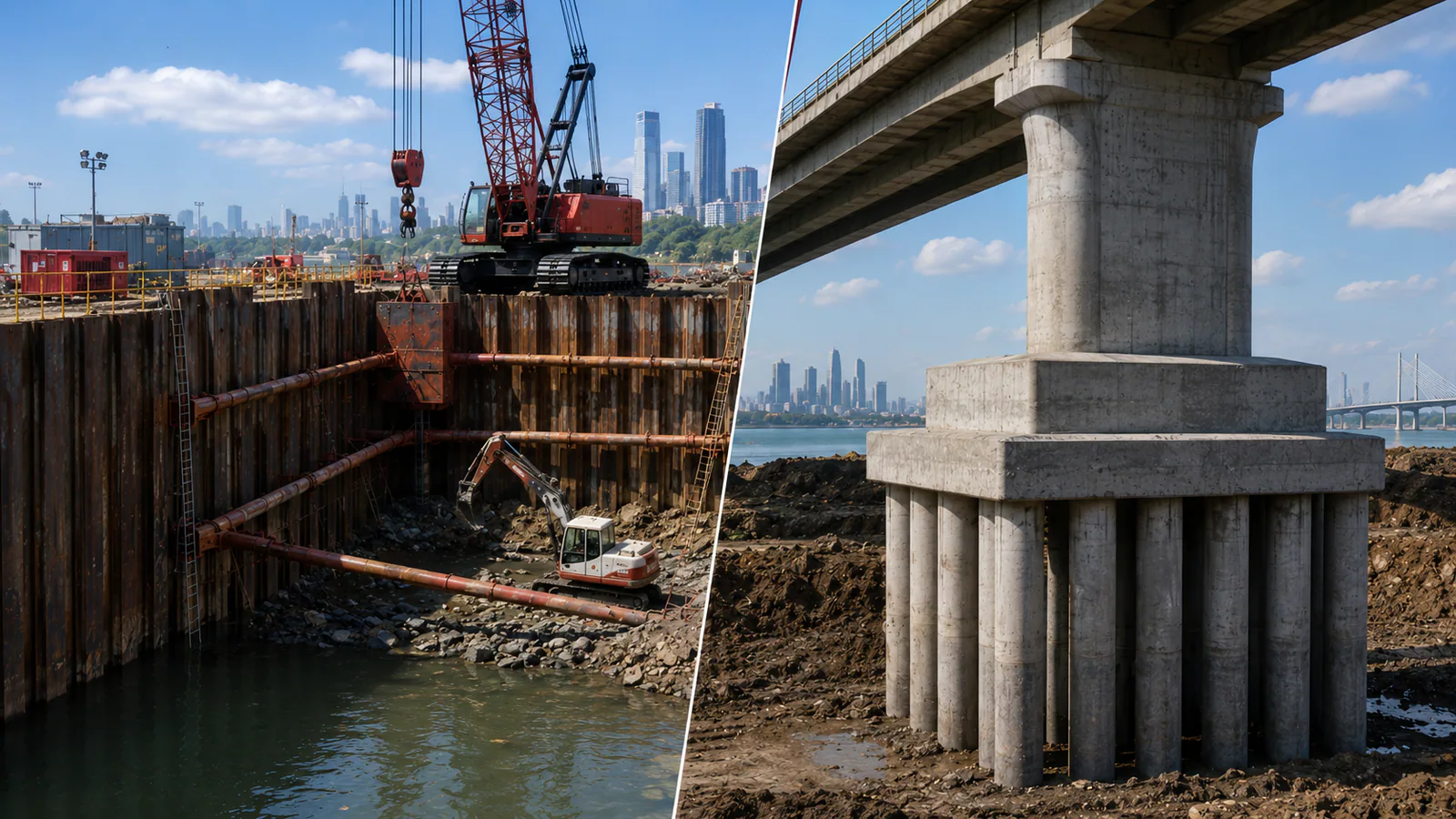
Temporary works cover more than foundations. This guide focuses on pile-related support, casing, and foundation work. A designer may specify a sheet pile wall for excavation support or for permanent retaining work. The design must address the intended loads, exposure, and water control.
Crews may remove temporary casing during concreting or leave it in place with approval. Retention alone does not establish a structural contribution to the completed foundation.
Design period
The project engineer specifies the construction stages and service period for temporary works. The design must cover installation, use, changes, and removal or an approved retention plan. Project documents and applicable standards define each element’s role; a single duration threshold does not establish its status.
Engineers design permanent foundations for the structure’s specified service life. Both categories require care in design and construction, with load, settlement, durability, and exposure checks appropriate to their intended use.
Loads during construction and service
For excavation support and cofferdams, designers check earth and water pressure, equipment surcharge, bracing stages, and the applicable environmental loads. They also check changes during installation and removal. For permanent foundations, designers check the specified service loads and settlement limits, plus uplift, seismic action, scour, or fatigue where these apply.
Cofferdam planning must address seepage and water removal as well as wall stability; sheet piles alone do not establish a dry excavation.
Inspection and risk control
The project team assigns competent people and clear authority for design checks, inspections, changes, and safe removal. The inspection plan must address excavation, water-level, bracing, weather, and equipment changes. A design engineer does not become the temporary works coordinator by default. Permanent-foundation records must include the specified construction checks and acceptance evidence; service inspection and monitoring depend on the structure, exposure, and maintenance plan.
Cost, speed, and reuse
Some steel temporary systems allow extraction and reuse. Confirm the recovered elements’ condition and the handling requirements before planning reuse. Compare installation, inspection, removal, transport, and refurbishment costs with the alternative. Temporary or permanent classification alone does not establish cost or construction speed.
Frequently asked questions
What is the main difference between temporary works and permanent foundations?
Temporary works support construction activities. Permanent foundations carry the completed structure for its specified service life. The designer defines the intended role, loads, required checks, and completion plan for each element.
Can temporary works remain in place?
Yes, when the project approves retention. Some temporary works become part of the permanent works; other elements remain without an intended structural role. The designer must specify the role and any structural contribution. Retention alone does not make a casing or sheet pile an approved permanent foundation.
How does BRUCE equipment fit into temporary works?
Review SGV hammers for suitable vibratory driving or extraction and SGH hammers for suitable impact driving. Confirm the pile interface, ground conditions, hydraulic supply, lifting limits, and site restrictions. The temporary or permanent label does not determine the equipment family.
What information is needed for a BRUCE review?
Start with the pile details and available soil information. Tell BRUCE whether you need installation, extraction, or both, and note any site restrictions. The team can request more detail for the equipment review.
Technical basis
Sources supporting the technical claims above.
Discuss Your Piling Work
Send the pile details and available soil information. Tell us whether you need installation, extraction, or both. BRUCE can review the equipment options.