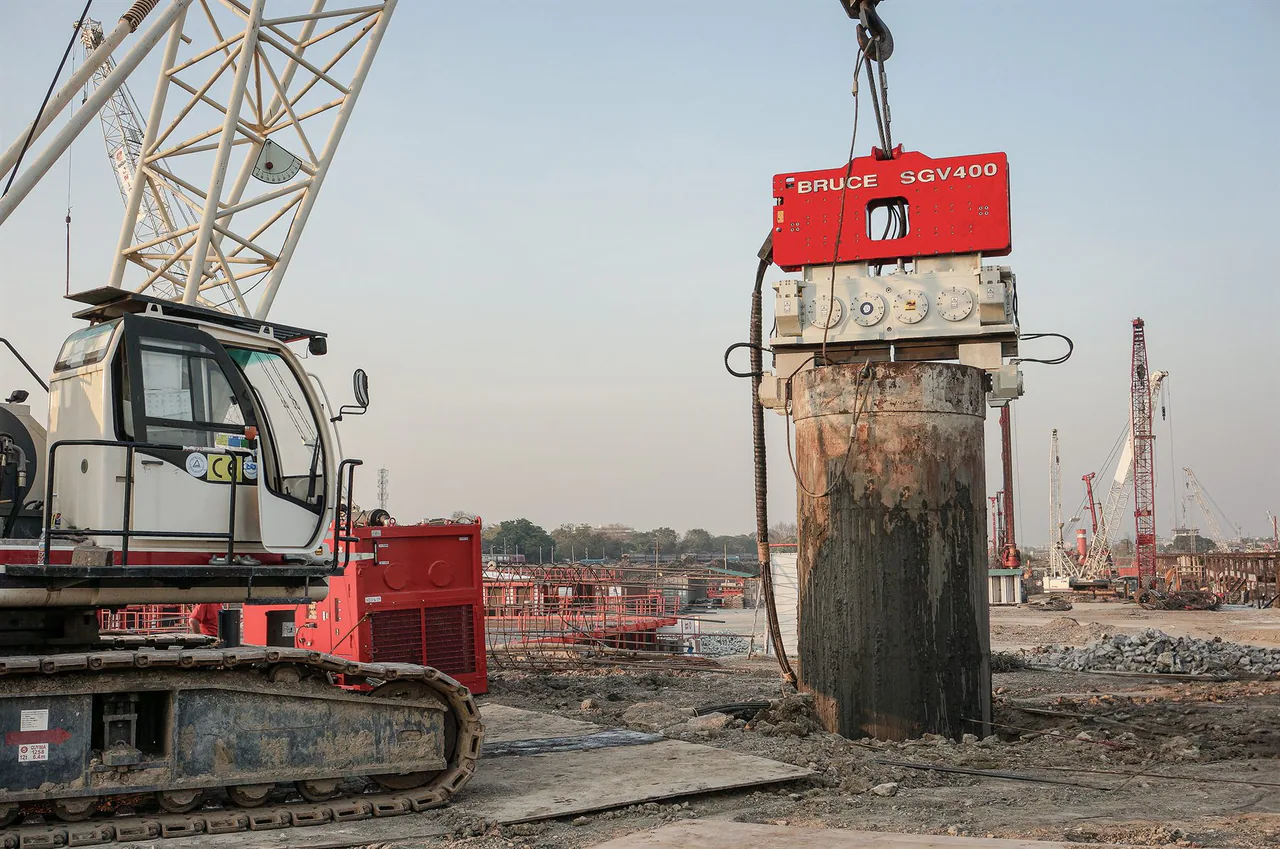
BRUCE SGV400 vibratory hammer on a steel tube beside a crawler crane

Knowledge CenterPile Types

Casing Pile Guide

A drilled shaft may need steel casing for just the first few metres of excavation or for much of its depth. The drawings and ground conditions determine how far the casing runs and whether the crew removes it during construction.

Check casing requirements

Direct answer

What is casing in a drilled shaft?

Casing is a tube that supports the sides of a drilled hole along the cased length. Crews can recover temporary casing as they place concrete. Permanent casing stays in the finished shaft. The foundation designer specifies whether the steel carries service loads and how much resistance the surrounding ground can provide.

Last updated
Prepared byBRUCE Technical Team
ScopeSteel casing for drilled shafts

Casing details to check before drilling

Casing requirements and field checks
Planning item Requirement to review Installation checks
Casing length Loose fill near the surface may need only a starter casing. A deeper unstable layer can require support farther down. Read the casing toe elevation alongside the borehole log and groundwater information. Check how the crew will support the hole below the toe.
Tube and joints The outside diameter, wall thickness and joint detail affect how the casing fits the installation equipment. The clear inside diameter limits what passes through. Check clearance for drilling tools, reinforcement and concrete delivery equipment. Give the supplier the casing drawing before selecting a clamp or rotary attachment.
Water and soil Water or soil can enter through an open casing toe. Pumping inside a casing without a reliable seal can draw material into the excavation. Identify the water-bearing layers and the highest expected groundwater pressure. Follow the project’s wet or dry excavation procedure.
Temporary casing When crews withdraw casing from fresh concrete, the concrete must fill the space the steel leaves and resist pressure from outside the shaft. Plan concrete deliveries and withdrawal together. Track the concrete surface and casing toe as each section comes out.
Permanent casing The completed shaft may use the steel as a form or include it in the structural design. Its exposure and intended service life affect the steel detail. Confirm the specified length, joints, cutoff elevation and corrosion provisions. Record where the casing actually ends.

References: 1, 2, 3

01

Read the casing detail on the foundation drawing

A drawing may show a casing terminating above the shaft base. Below that point the crew still has to keep the excavation stable while drilling, cleaning the base and placing reinforcement. A short surface casing can hold loose material at the top while the crew uses drilling fluid farther down.

On a permanently cased shaft, the engineer may count some of the steel section in the structural design. The resistance available along the outside of the casing depends in part on how the crew installs it and what contact it makes with the ground. A tube placed in an oversized hole can have a gap around it. Check the specified treatment of that gap before using side resistance in design.

A driven steel pipe pile follows a different construction sequence. If the drawing identifies the tube itself as a driven foundation pile, use the driving and acceptance requirements for that pile. Driving a casing to support a drilled hole does not establish the capacity of the finished shaft.
References: 1, 2, 4

02

Check ground and water at the casing toe

A casing can seal into a suitable layer and allow dry excavation. If the seal leaks, or if drilling below the toe opens a water-bearing layer, groundwater can enter the hole. Sand may move with the water. Ground loss can affect nearby pavements and foundations.

For excavation under water or slurry, the installation plan should set the fluid level high enough to maintain the required pressure margin above groundwater pressure and keep the bore stable. Use groundwater information from the layers the excavation will reach. A shallow water-level reading can miss higher pressure at depth.

If inflow increases or soil rises inside the casing, follow the agreed response for the site. Continuing to pump the hole dry can worsen the inflow. The responsible engineer should review the excavation support and water-control method before work proceeds.

References: 1, 2, 3

03

Match the installation equipment to the casing and ground

A vibratory hammer can install or withdraw suitable steel casing. The supplier needs the actual tube dimensions and head condition to check jaw contact and the attachment limits. The lift planner also needs the working radius and the forces the equipment will transmit during extraction. An empty casing’s weight gives only part of the load.

An oscillator turns the casing back and forth. A rotator can turn it continuously while the crew excavates inside. The ground profile, casing shoe and obstructions influence the choice of cutting tools and the depth the equipment can reach.

Some projects allow impact driving to advance casing. Check the driving head and the casing’s ability to withstand the blows before selecting a hammer. Near an existing structure, the contract may limit vibration or require monitoring. Establish those limits before committing to a method.

References: 1, 2, 4

04

Coordinate concrete placement and casing withdrawal

Before concreting, inspect the base to the project’s cleanliness criteria and check cage position and clearance past casing joints. For placement under water or drilling fluid, follow the specified tremie or pump procedure. Keep the discharge embedded in fresh concrete once placement is under way.

When the crew withdraws casing through fresh concrete, the toe must stay below a sufficient head of workable concrete. Pressure from the concrete at the toe must overcome the external water or drilling-fluid pressure so concrete can fill the space that opens. The concrete level inside can drop as it flows outside the casing. Measure it as the crew lifts and places more concrete.

Concrete that has lost workability can rise with the casing and leave a narrowed shaft or void. The reinforcement cage can move too, especially if it catches at a joint. Plan how the crew will check the cage elevation and what to do if the concrete level falls unexpectedly or the casing sticks.

References: 1, 2, 3

05

Keep a record of the casing and the concrete

Log the casing lengths and toe elevations, excavation depth, ground changes and water or slurry observations. Before placement, record the base inspection and reinforcement checks. During the pour, record concrete deliveries, measured concrete levels and the timing and position of each casing withdrawal.

Compare the concrete placed with the volume expected at each measured elevation. Excess volume can reflect an enlarged excavation. An unexpected shortfall also needs investigation. A volume plot can flag a problem, but the plot alone cannot identify a defect or establish shaft integrity.

If temporary casing cannot be recovered, tell the responsible engineer and record its location and length. Leaving steel in the ground changes the as-built detail. The engineer assesses the effect on the foundation and specifies any investigation, testing or corrective work.

References: 1, 2, 3

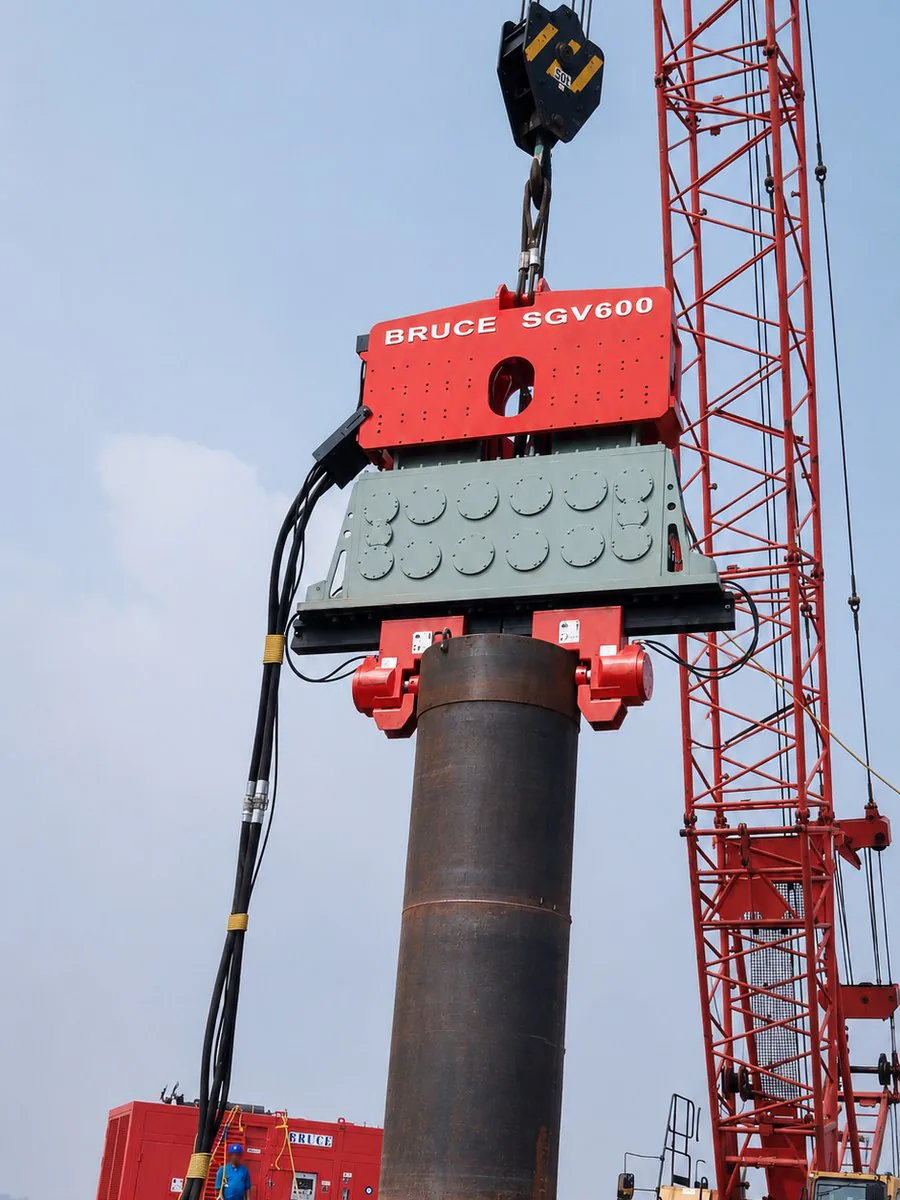
BRUCE SGV600 vibratory hammer with its clamps at the top of a steel tube
Clamps on the BRUCE SGV600 grip the rim of the steel tube.

Equipment review

Discuss your casing equipment

Send the casing drawing and tell us whether the job includes removal. The BRUCE Technical Team can review the hammer and clamp with you.

Discuss your project

Frequently asked questions

Does full-length casing guarantee a dry hole?

Water can still enter at the toe or through a leaking joint. Check the actual seal and water pressure before using the dry method. The project may require excavation and concrete placement under water or slurry.

Can a supplier select a casing clamp from the outside diameter?

The supplier also needs the wall thickness, head detail and condition, and the loads expected during installation or removal. Check those against the proposed jaws and attachment ratings.

Does permanent casing count as reinforcement?

Use the structural drawings. The engineer may design the steel casing to carry load and specify its connection, wall thickness and corrosion allowance. Leaving a tube in place does not give it that role.

What should the inspector record if the cage rises during withdrawal?

Record the cage elevation, casing toe and concrete level, along with the time and casing movement. Follow the site’s agreed response and report the movement so the responsible engineer can review the shaft.