BRUCE Technical Team
Vibratory Hammer Driving
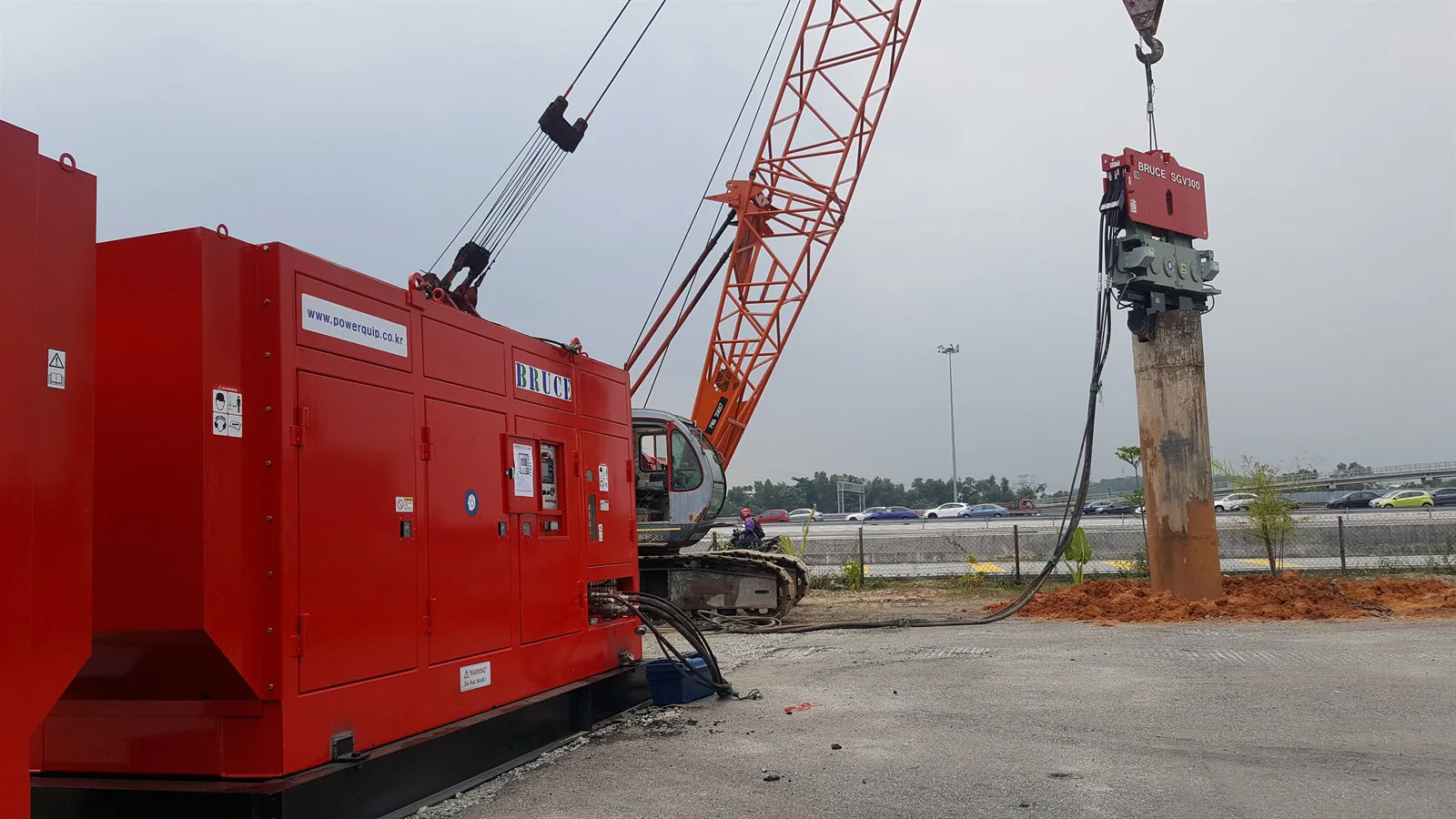
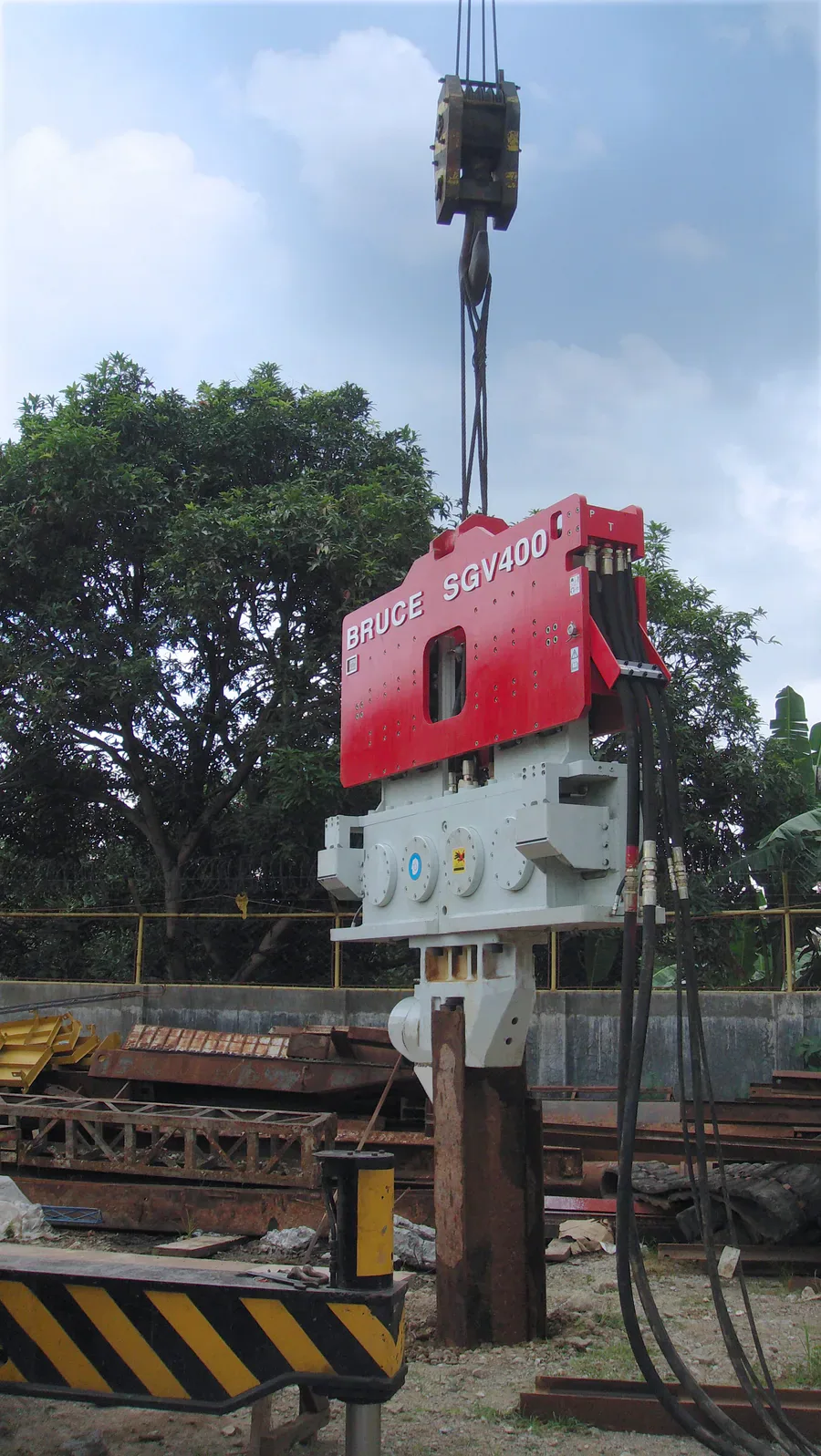
Pile Driving Methods
Vibratory Hammer Driving
A vibratory hammer uses counter-rotating eccentric weights to apply cyclic vertical force through a clamp to a pile. Crews use this method to install or extract suitable steel piles and casing, subject to ground conditions and project requirements.
Pile and purposeSteel pile or casing; installation or extractionGround and siteSoil profile, groundwater, obstructions, and nearby structuresEquipment and acceptanceModel limits, clamp, lifting, hydraulics, and specified testing
Technical guide
Direct answer
Vibratory Hammer Driving: engineering brief
- A vibratory hammer transmits cyclic vertical force to a pile through its clamp.
- Crews use vibration for suitable steel sheet piles, H-piles, open-ended pipe piles, and casing, subject to the ground conditions and project specification.
- Permanent bearing piles require the specified acceptance procedure. Vibratory penetration rate alone does not verify bearing resistance.
- Review the supplied hammer, clamp, crane, and hydraulic system against their operating limits and the site requirements.
Article information
Technical review policy. BRUCE prepares this reference from the cited material. Project-specific design and approval remain with the responsible project team.
Planning overview
Select a vibratory hammer using the pile dimensions, soil data, clamp fit, crane capacity, and hydraulic supply. Agree on installation and acceptance requirements before work starts.
BRUCE SGV specifications list frequency, eccentric moment, amplitude, extraction line pull, and hydraulic requirements by model. Confirm the operating limits for the supplied hammer and clamp.
Installation and extraction
Check the pile, ground, and equipment together
The project team must approve the method for the pile and site. A manufacturer’s equipment review does not replace the foundation design or lifting plan.
Driving
Monitor penetration, pile alignment, and site response against the approved method. If progress stalls or the pile response changes, the responsible team must review the cause before continuing or changing the method.
Extraction
Review pile condition, clamp grip, and the expected extraction load. Plan for sudden release and check ground movement, void treatment, and the condition of recovered elements.
Equipment and field checks
Confirm these items for the supplied equipment and the approved site method.
| Check | What to confirm | Important limit |
|---|---|---|
| Hammer | The exact SGV model, approved operating settings, eccentric moment, amplitude, and force. | Catalog force or frequency alone does not predict site penetration. |
| Clamp | Clamp model, rated gripping force, clamp-circuit pressure, jaw contact, and pile condition. | The hammer’s maximum hydraulic operating pressure does not establish clamp grip. |
| Crane and suspension | Working radius, crane load chart, rigging, suspension, pile handling, and extraction loads. | A hammer’s maximum extraction line-pull rating is not crane capacity or an approved pull for the complete setup. |
| Power pack and hoses | Required flow and pressure, cooling, hose length and route, couplings, restraints, and condition. | Confirm compatibility with the supplied hammer and follow the manufacturer’s operating procedure. |
| Site monitoring | Pile alignment, ground movement, nearby structures and utilities, and the specified monitoring limits. | Agree on action limits and restart approval before work begins. |
Stop and secure the equipment for clamp slip, damage, hydraulic leaks, overheating, abnormal movement, or a monitoring limit breach. The responsible team must assess unexpected refusal before work resumes. Follow the manufacturer’s procedure and the project’s approved method statement.
BRUCE field setup
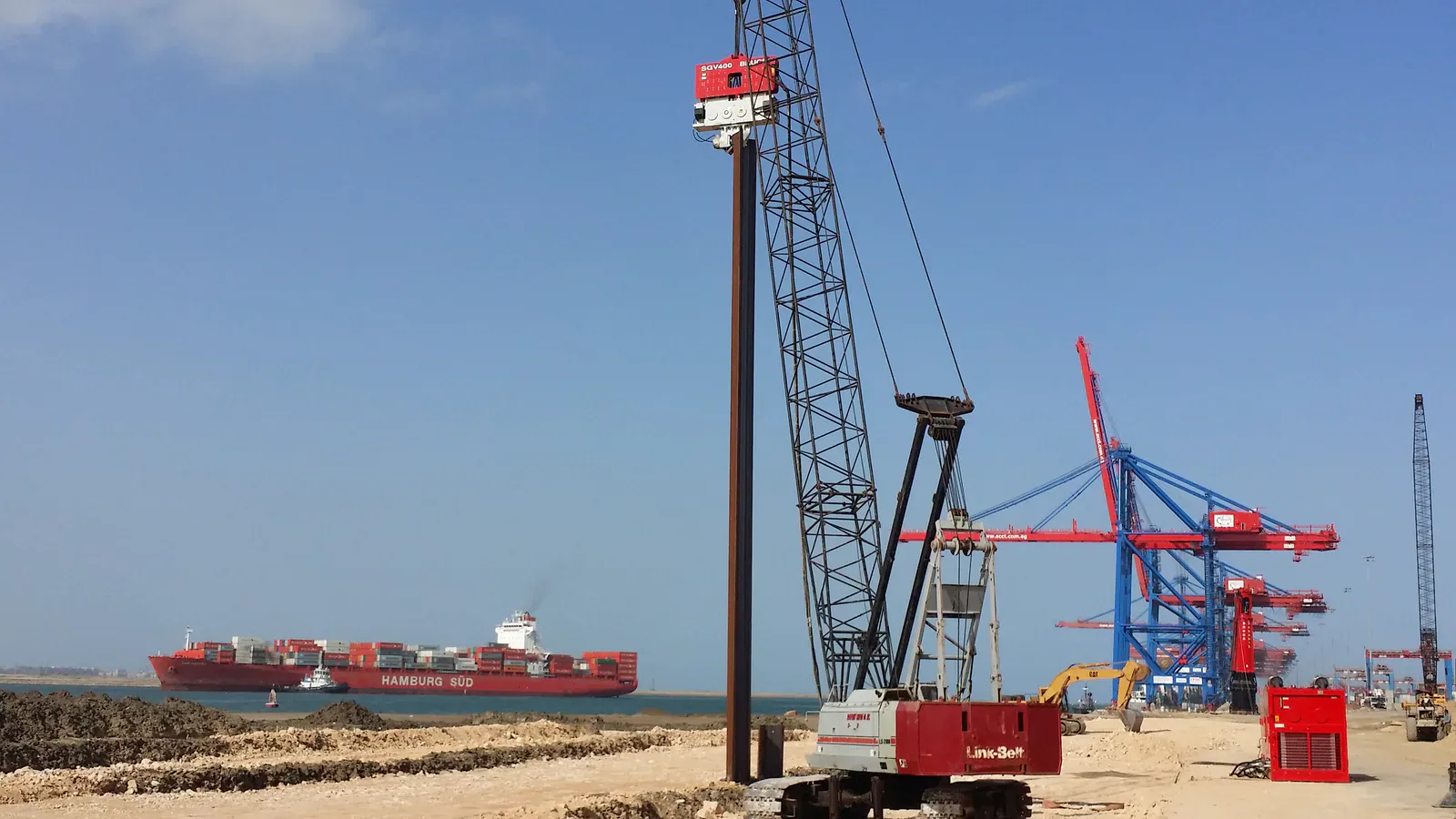
What is vibratory hammer driving?
The exciter contains eccentric masses that rotate in opposite directions. In the intended arrangement, their horizontal force components cancel and their vertical components combine. The hammer and clamp transmit the cyclic force to the pile. Vibration can reduce penetration resistance in suitable ground; the pile response depends on the ground, pile geometry, and equipment setup.
Typical applications
Crews use vibratory hammers for steel sheet piles, H-piles, open-ended steel pipe piles, and casing installation or extraction. These elements may form retaining walls, cofferdams, temporary works, or foundations. The engineer must assess each pile and ground combination.
Closed-ended displacement piles can be difficult to install with vibration because the toe must displace soil. FHWA advises against vibratory driving of precast concrete piles because of tensile or bending damage.
Soil response and uncertainty
Sands and other granular soils may respond to vibratory installation, but a soil label alone cannot predict penetration. Dense layers, cobbles, rock, cohesive soils, or damaged interlocks can limit progress. Review the investigation data, groundwater, pile dimensions, and previous site records. Soil resistance can change during installation and with time after driving; the direction and extent depend on the soil and installation history.
Pile acceptance and capacity checks
Permanent bearing piles require the project-specified acceptance procedure. Vibratory penetration rate alone does not verify bearing resistance. Where the specification permits it, crews may use vibration for initial installation before impact driving. Impact finishing is a construction step, not a substitute for the specified capacity verification. Engineers interpret final set and blow count with the driving system and soil response.
Engineers use high-strain dynamic testing during impact driving or restrike. They assess the measurements with the specified analysis, including signal matching where required. A static load test applies load to the pile and measures its displacement.
Environmental and safety control
Assess vibration and settlement risks for nearby structures and utilities before installation or extraction. In susceptible soils, vibration can cause densification and ground movement. Starting and stopping a vibratory hammer can also produce resonance effects. Set monitoring locations and action limits for the site. Assess noise and underwater sound where relevant. A vibratory method does not guarantee compliance with vibration or noise limits.
Frequently asked questions
What is vibratory hammer driving?
The hammer uses counter-rotating eccentric weights to produce cyclic vertical force. Its clamp transmits that force to a pile for installation or extraction where the pile and ground conditions allow.
Which pile types can use vibratory driving?
Common applications include steel sheet piles, H-piles, open-ended steel pipe piles, and casing. The project team must confirm the soil profile, pile dimensions, clamp fit, equipment limits, and site restrictions.
Can vibratory driving prove final pile capacity?
Vibratory penetration rate alone does not verify bearing resistance. The engineer specifies the acceptance criteria and required testing. Impact finishing and final-set records do not replace that assessment.
When should impact finishing be added after vibro driving?
Use impact finishing when the project specification requires it and the engineer approves the driving system. Stalled penetration calls for a review of the ground, pile, and equipment; it does not make impact driving suitable by default.
Technical basis
Sources supporting the technical claims above.
Discuss Your Piling Work
Send your pile drawing, available soil information, and installation or extraction requirements. BRUCE can review SGV hammer, clamp, and power-pack options.