BRUCE Technical Team
Extraction Methods
Pile Driving Methods
Extraction Methods
Pile extraction removes an installed pile by vibration, static jacking, or an approved pulling system. Choose the method from the pile condition, ground resistance, permitted equipment duty, and site limits. The removal plan must also address the ground left behind.
Technical guide
Article information
Technical review policy. BRUCE prepares this reference from the cited material. Project-specific design and approval remain with the responsible project team.
Planning overview
Choose a removal method after checking the pile’s role, condition, installation history, and ground resistance. The plan must cover the extraction load path, sudden release, handling, and nearby ground or structures.
Full extraction, approved partial removal, and leaving a pile in place produce different final conditions. Define the required outcome and ground treatment before selecting equipment.
Method comparison
Compare the removal mechanisms
The project team selects a method from the ground investigation, pile condition, equipment instructions, and permitted disturbance. This table does not rank speed or establish extraction capacity.
| Method | Possible application | Required checks |
|---|---|---|
| Vibratory extraction | Compatible piles where ground response and site vibration limits allow it. | Check the grip, hammer duty, upward tension, hydraulic supply, and ground monitoring. |
| Static hydraulic extraction | Jacks or an extraction-capable press-in machine with a designed reaction system. | Verify reaction direction and capacity, grips, stroke, access, and pile integrity. |
| Direct pull | Assessed short lead casings or elements already freed by another method. | Use equipment approved for this duty. An ordinary crane chart does not authorize breakout pulling. |
| Specialist impact extraction | Purpose-built extraction equipment under a task-specific method. | Check its extraction rating and load path; a driving-hammer rating is insufficient. |
| Cutting and partial removal | A project-approved removal limit or residual element. | Define cut elevation, handling, debris control, disposal, and residual survey. |
Technical basis and limits
The FPS extraction guide, Sections 3–5, addresses assessment, equipment duty, and extraction loads. Its direct-pull guidance distinguishes assessed short lead casings or freed elements from pulling embedded elements with a crane.
Hong Kong GEO Publication No. 1/2023, Section 3.2.2, discusses sheet-pile vibration, extraction settlement, and interlock constraints. OSHA 1926.1417 sets U.S. crane operating requirements; apply the local rules and manufacturer procedures governing the actual site.
Washington’s marine piling-removal rules illustrate site-specific debris, hole-treatment, and contaminated-pile controls. They are jurisdiction-specific examples, not worldwide requirements.
Check BRUCE’s SGV specifications and SGH specifications for their published ratings.
Define the required removal
This guide concerns removal of installed piles and casings. Withdrawing temporary casing during bored-pile concreting requires a separate procedure for concrete support and placement. The project team must state whether it requires full extraction or permits partial removal.
Define any approved cut elevation and residual location. Retaining a pile in place is an alternative disposition, not extraction. Obtain the responsible designer’s release before removing an element that provides support.
Check pile history and resistance
Review the pile drawing, embedment, installation record, time in the ground, splices, corrosion, damage, interlocks, and any concrete fill or attachments. Soil adhesion, setup, obstructions, and welded or damaged interlocks can resist removal. Geometry alone cannot establish the required breakout force. Inspect a sound grip zone and confirm the pile can carry the extraction and handling loads.
Vibratory extraction
A vibratory hammer transfers cyclic force through its clamp while the approved extraction system applies upward tension. In suitable ground, vibration can reduce resistance at the pile-soil interface. Engineers must confirm the pile profile, grip arrangement, ground response, and disturbance limits. Vibration can still cause ground movement, noise, or underwater sound. A stalled pile requires the planned hold and review procedure, not an automatic increase in pull.
Static jacking and press-in extraction
Hydraulic jacks or extraction-capable press-in equipment pull against a designed reaction system. The team must check the reaction capacity and stability, grip, stroke, access, pile integrity, and manufacturer-approved extraction configuration. Static extraction avoids hammer-generated vibration, but the associated plant and ground response still need review. Installation reaction capacity does not establish extraction reaction capacity; check the actual force direction and load path.
Direct pull needs explicit equipment approval
Direct pull is limited to assessed short lead casings or elements already freed by another method, using equipment approved for that duty. An ordinary crane load chart or overload limiter does not authorize pulling a stuck or embedded pile.
Do not side-pull or shock-load the crane. The lifting team must check operating radius, rigging, hook load, platform support, sudden release, and recovered-pile handling. Any excavation assistance also needs a review of services, excavation stability, and adjacent ground support.
Specialist equipment and cutting
Some removal plans use purpose-built impact extractors or cutting equipment. Their ratings and procedures require a separate review. A standard impact-driving hammer specification does not establish upward-impact extraction capability. Cutting also needs an approved lift and debris-control plan; underwater work requires task-specific access, environmental, and residual-survey controls.
Keep equipment ratings separate
Centrifugal force describes the hammer’s cyclic excitation. Maximum line pull, clamp force, and crane capacity describe different limits; do not add them together or treat any one as the available breakout force. Confirm the manufacturer’s limits for the complete extraction configuration, including the clamp, suspension, lifting equipment, power pack, and hoses.
State the permitted extraction force in the lift plan; if the pile remains stuck at that limit, stop and review the method. Set project-specific monitoring and stop criteria before work starts.
Void backfill, settlement, and environmental control
Pile removal can disturb the surrounding ground and leave voids that contribute to settlement or water movement. The designer must specify any backfill or grout, placement sequence, and verification needed for the site. Closely spaced piles, soft ground, nearby foundations, groundwater, and contamination require particular attention. Marine work may also need turbidity, debris, underwater-sound, and disposal controls under the applicable permits.
Where BRUCE equipment fits
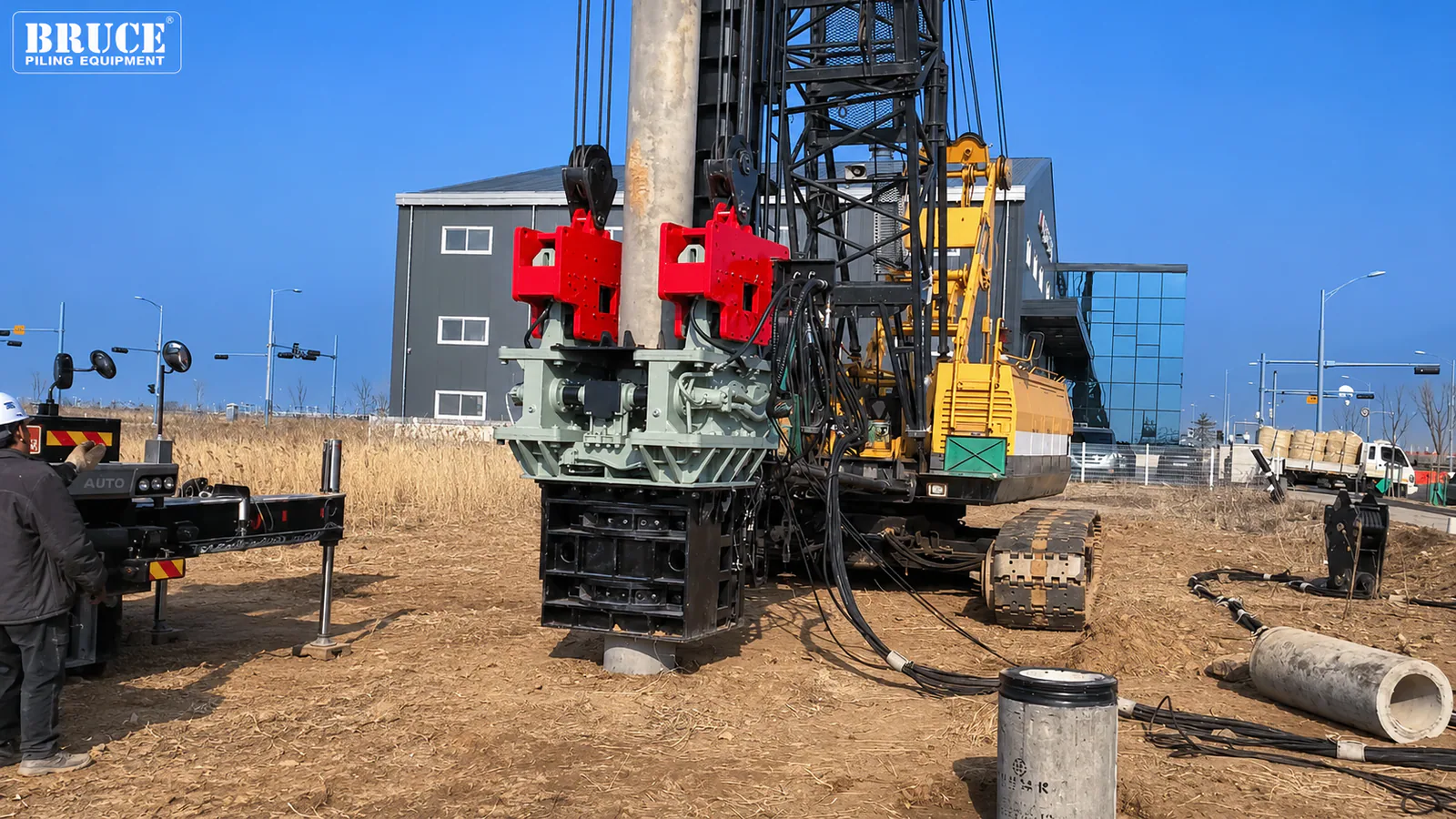
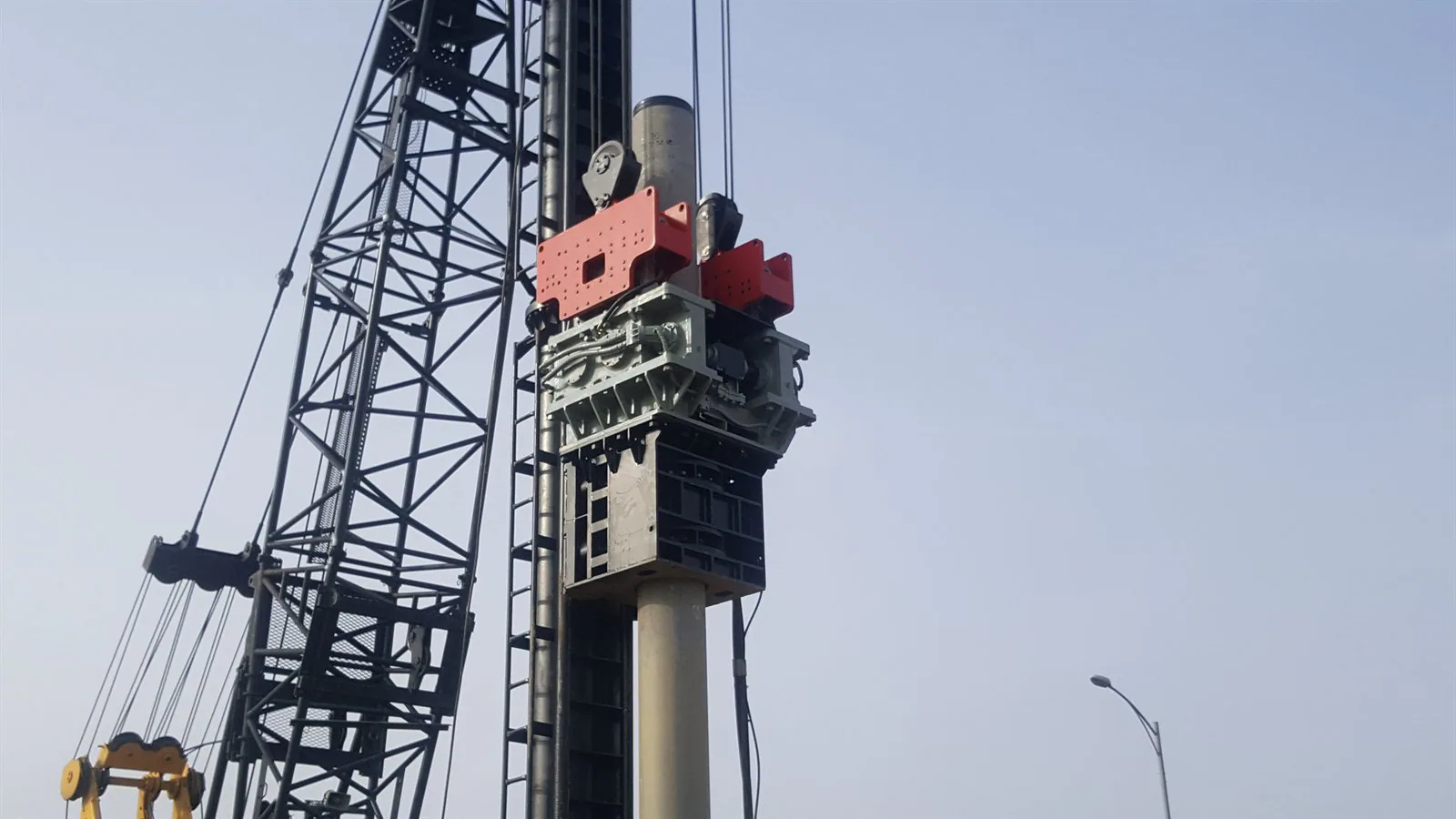
BRUCE SGV hydraulic vibratory hammers can support extraction of compatible piles where the pile, clamp, ground response, and equipment duty permit it. The public SGH impact-driving specification does not provide an extraction rating. Send a pile drawing, installation history, soil information, and site photo to start a package review. The project team remains responsible for the removal design, lifting plan, monitoring, and acceptance.
Frequently asked questions
Can a crane pull an embedded pile?
An ordinary lifting chart does not authorize extraction duty. Use the manufacturer’s approved equipment and procedure, supported by an assessment of breakout demand, the load path, and sudden release. Direct pull is limited to assessed short lead casings or elements already freed by another method.
Does a high line-pull rating prove a pile can be extracted?
No. Line pull, centrifugal force, clamp force, and crane capacity describe different quantities. The team must check actual resistance and the limits of the complete extraction system.
Is backfilling an extraction method?
Backfill or grout treats the void during or after removal where the design requires it. The designer specifies the material, sequence, and checks needed to manage ground loss, settlement, or water movement.
Can recovered piles be reused?
Reuse needs an engineering assessment under the applicable specification. Inspect material condition, section loss, straightness, connections, and damage; carry out any specified testing before accepting a new duty.
Discuss Your Extraction Equipment
Send a pile drawing, site photo, and the ground information you have. Tell us what must be removed so BRUCE can review the applicable equipment package.