BRUCE Technical Team
Press-in Method
Pile Driving Methods
Press-in Method
Press-in piling uses hydraulic jacks to push preformed piles into the ground. The machine needs an engineered reaction system to resist the jacking force. Engineers may consider this method near vibration-sensitive structures, but they must also check ground resistance, pile compatibility, access, and the installation and acceptance requirements.
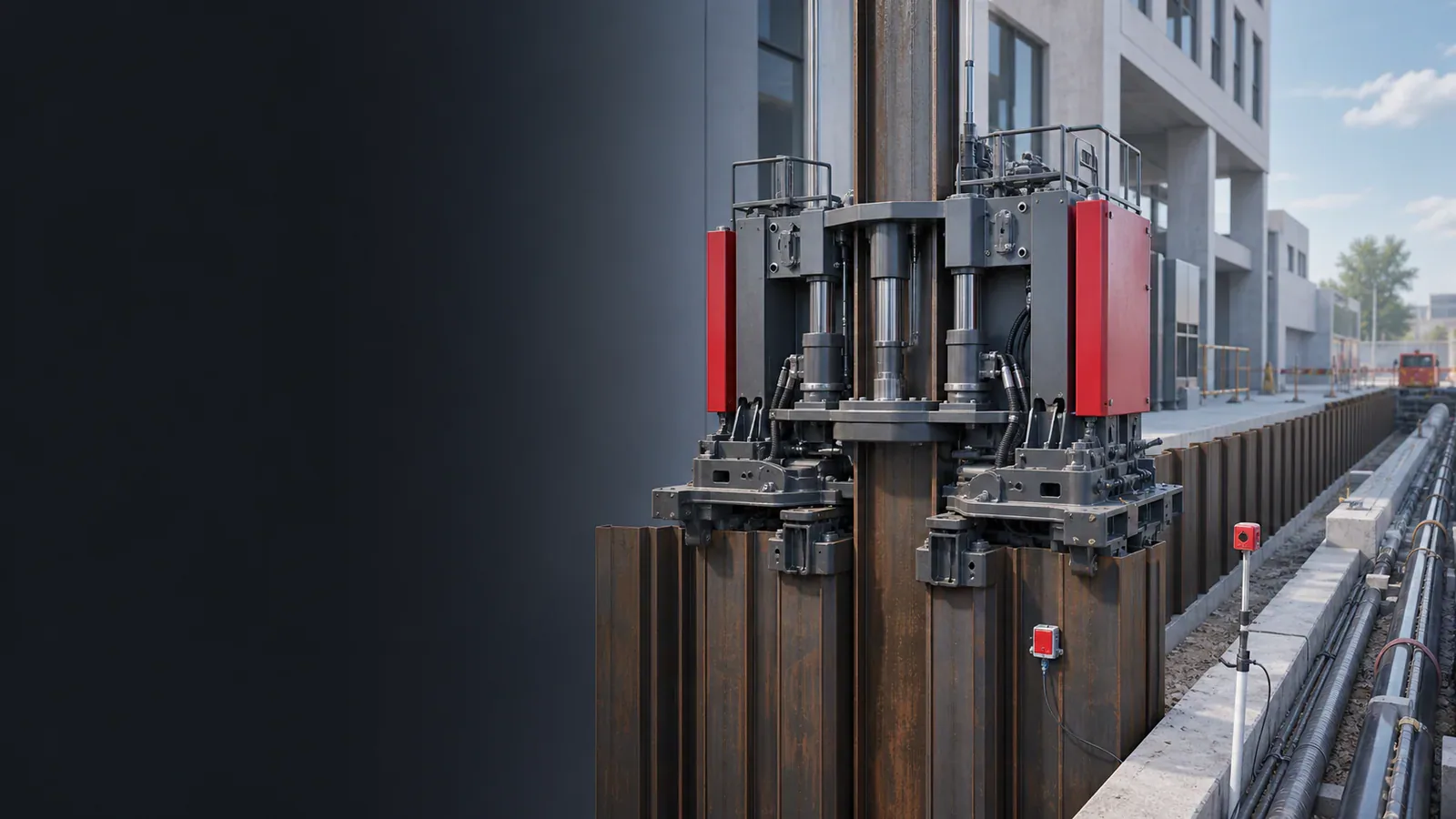
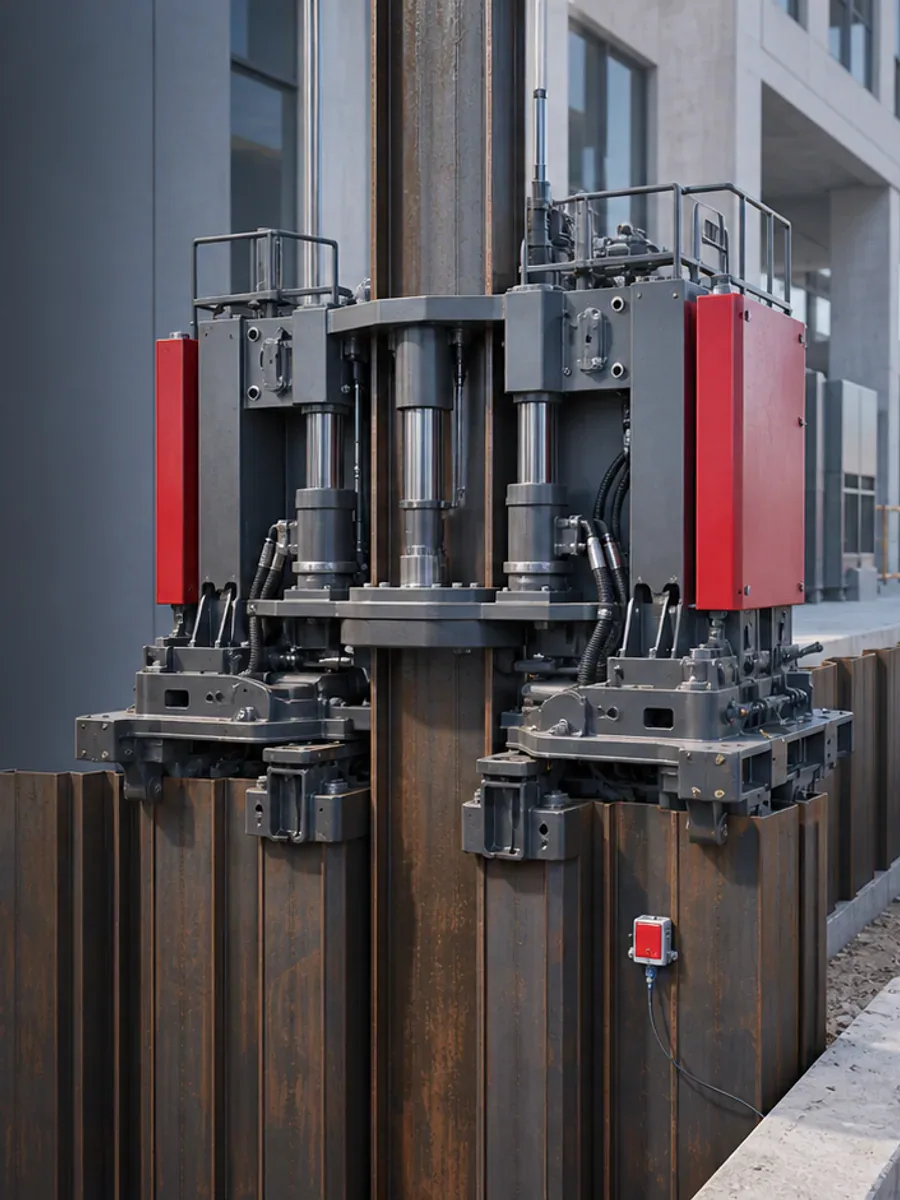
AI-generated conceptual illustration, not a BRUCE machine or project photograph.
Technical guide
Article information
Technical review policy. BRUCE prepares this reference from the cited material. Project-specific design and approval remain with the responsible project team.
Planning overview
Engineers compare press-in with other installation methods using the actual pile, ground investigation, and site limits. They check the reaction arrangement and startup procedure before relying on installed piles.
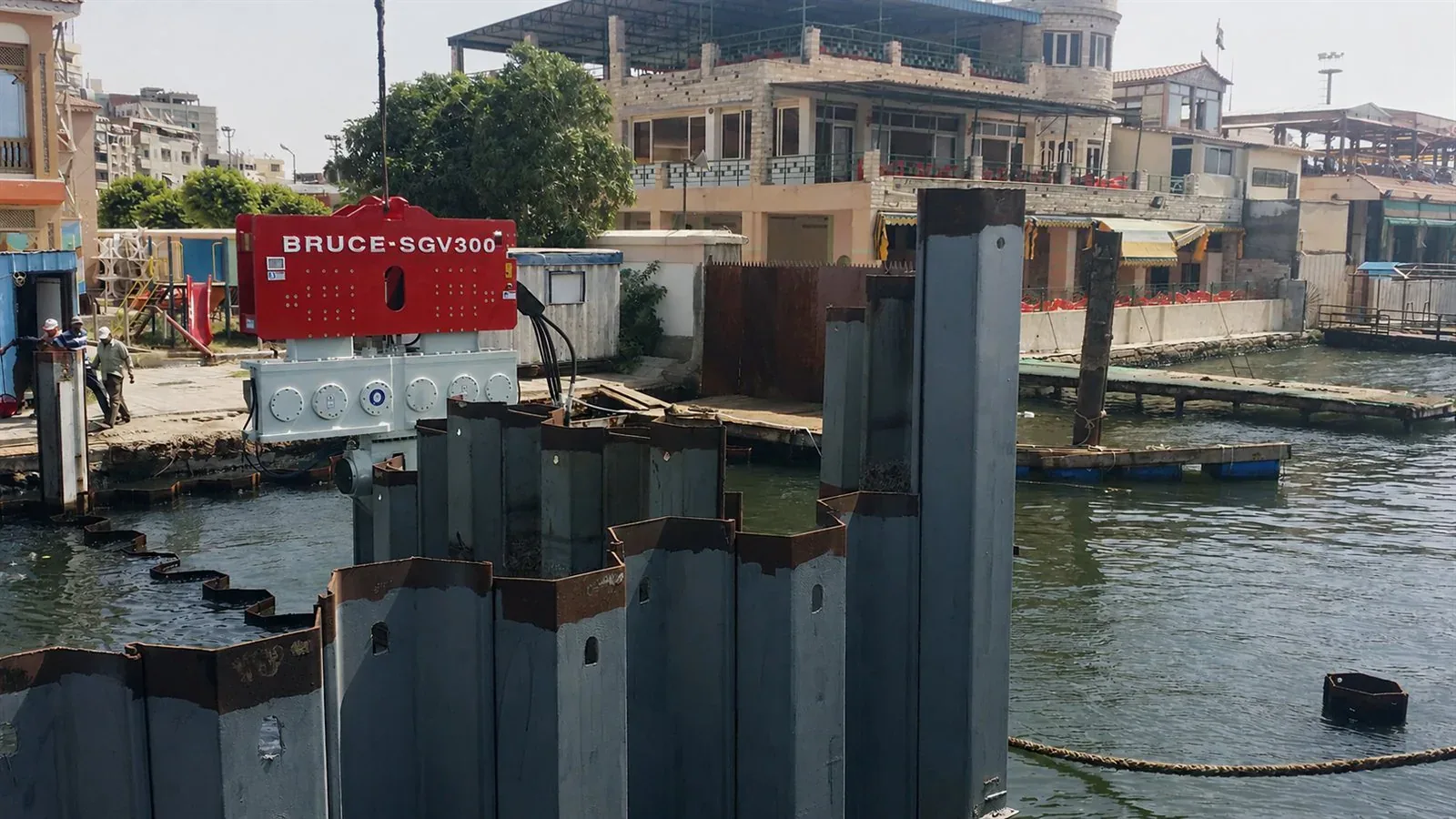
The BRUCE equipment discussed here covers SGV vibratory hammers and SGH hydraulic impact hammers. The photograph shows an SGV300 vibratory hammer as a different method, not a press-in installation.
Check the proposed system and site
These checks support method planning. They do not replace the machine instructions or the project’s design and acceptance procedure.
| Planning item | Information to confirm | Important limit |
|---|---|---|
| Reaction and startup | Selected reaction source, first-pile arrangement, and changes during the sequence. | Check the support and reaction at each stage; do not infer capacity from the presence of installed piles. |
| Pile and ground | Pile section and interlocks, ground investigation, obstructions, and proposed assistance. | Confirm compatibility and approved penetration limits before increasing jacking force. |
| Access and handling | Machine route, working support, lifting arrangements, and nearby services. | Plan the complete setup, including the startup stand or counterweights where required. |
| Monitoring | Pile alignment, reaction movement, nearby structures, and specified noise or vibration measurements. | Define action limits, responsible people, and the procedure for stopping and restarting work. |
| Acceptance | Installation records, as-built surveys, and project-specified testing. | Keep installation-force records separate from the engineer’s assessment of service bearing resistance. |
What is the press-in method?
A press-in machine applies hydraulic jacking force to the pile. In a self-reacting sheet-pile system, the machine takes reaction from previously installed piles. Other static jacking arrangements use an engineered frame, counterweights, or another reaction source. The available pile sections and machine movements depend on the equipment design.
A method suitable for an interlocked steel sheet-pile wall does not establish suitability for an isolated tubular or concrete pile. Engineers check the selected rig, pile geometry, reaction capacity, and ground conditions before specifying the sequence.
Reaction and startup
The reaction system must resist the forces generated during pressing and machine movement. Crews cannot assume that a completed pile wall provides enough reaction at every stage. The first piles need the specified startup arrangement before the machine can rely on installed piles. Engineers also check transitions, corners, interruptions, and removal stages where the available reaction may change.
Crews follow the manufacturer’s setup instructions and the approved temporary-works design. They check grip, alignment, support, and unexpected reaction-pile movement during work, using the project’s action and stopping limits.
Ground resistance and installation aids
Shaft friction, toe resistance, and sheet-pile interlock friction contribute to the force needed for penetration. Dense layers and obstructions can interrupt progress or exceed the approved equipment or pile limits. Engineers review ground investigation records and the proposed pile before selecting any assistance. Predrilling, augering, or water jetting may help in some conditions, but they can change ground support, groundwater conditions, soil movement, and the foundation’s design assumptions.
Crews must use the approved assistance and record where they apply it. Increasing jacking force is not a general remedy for an unexplained obstruction or loss of alignment.
Noise, vibration, and ground movement
Static press-in piling can reduce noise and vibration compared with dynamic installation in suitable conditions. It does not make the complete operation disturbance-free. The power unit, pile handling, interlock contact, and any drilling or jetting assistance also affect the site. Displacing soil can cause ground movement even without repeated hammer blows.
The project team surveys nearby structures and utilities, defines permitted movement and environmental limits, and specifies monitoring where required. Crews follow the approved response to alerts. A conceptual illustration or a low-vibration method label cannot establish compliance at a particular site.
Installation records and pile acceptance
Crews record pile identification, depth, jacking force, alignment, interruptions, and any installation aid at the specified intervals. Interlock friction can contribute to sheet-pile installation force as well as resistance from the ground. These records help engineers investigate changes in penetration resistance and check the construction sequence. A machine’s rated pressing force or a measured installation force does not establish the completed pile’s design bearing resistance by itself.
Installation resistance and resistance under service loading can differ, including after soil conditions change with time. The project specification defines surveys, load testing, and other acceptance checks required for the pile’s intended role. Impact finishing, if approved, remains a construction step and does not replace the specified verification.
Extraction and equipment alternatives
Some press-in machines can extract compatible piles. Check the selected machine, grip, extraction force, pile condition, and approved removal sequence. The support and reaction needed for extraction differ from those during pressing and require a separate review. Engineers also assess ground movement and void treatment during removal. Where the project permits vibration or impact, the team may compare those methods or approve a combined sequence.
No method has a universal production-rate advantage. BRUCE can review SGV vibratory hammers, SGH hydraulic impact hammers, and associated packages for those approved alternatives. This guide covers BRUCE vibratory and hydraulic impact equipment; equipment review does not replace the project’s design, lifting plan, monitoring requirements, or acceptance approval.
Frequently asked questions
Is press-in piling vibration-free?
No. Static jacking can reduce vibration compared with dynamic installation, but pile handling, power units, penetration assistance, and ground movement still need site-specific assessment.
Does jacking force prove pile capacity?
No. Engineers interpret installation-force records with the pile, soil, installation history, and specified verification. Final jacking force alone is not a universal measure of service bearing resistance.
Can a press-in machine extract piles?
Some machines can extract compatible piles. Check the selected machine, grip, extraction force, reaction and support, pile condition, and approved removal sequence.
How do BRUCE hammers relate to press-in piling?
The SGV and SGH families discussed here use vibration or impact. The project team may consider them for an approved alternative or combined method where site limits permit.
Discuss an Approved Equipment Alternative
If your project permits vibratory or impact driving, send the pile details, available soil information, and site limits. BRUCE can review SGV or SGH equipment options for that method.