BRUCE Technical Team
Predrilling
Pile Driving Methods
Predrilling
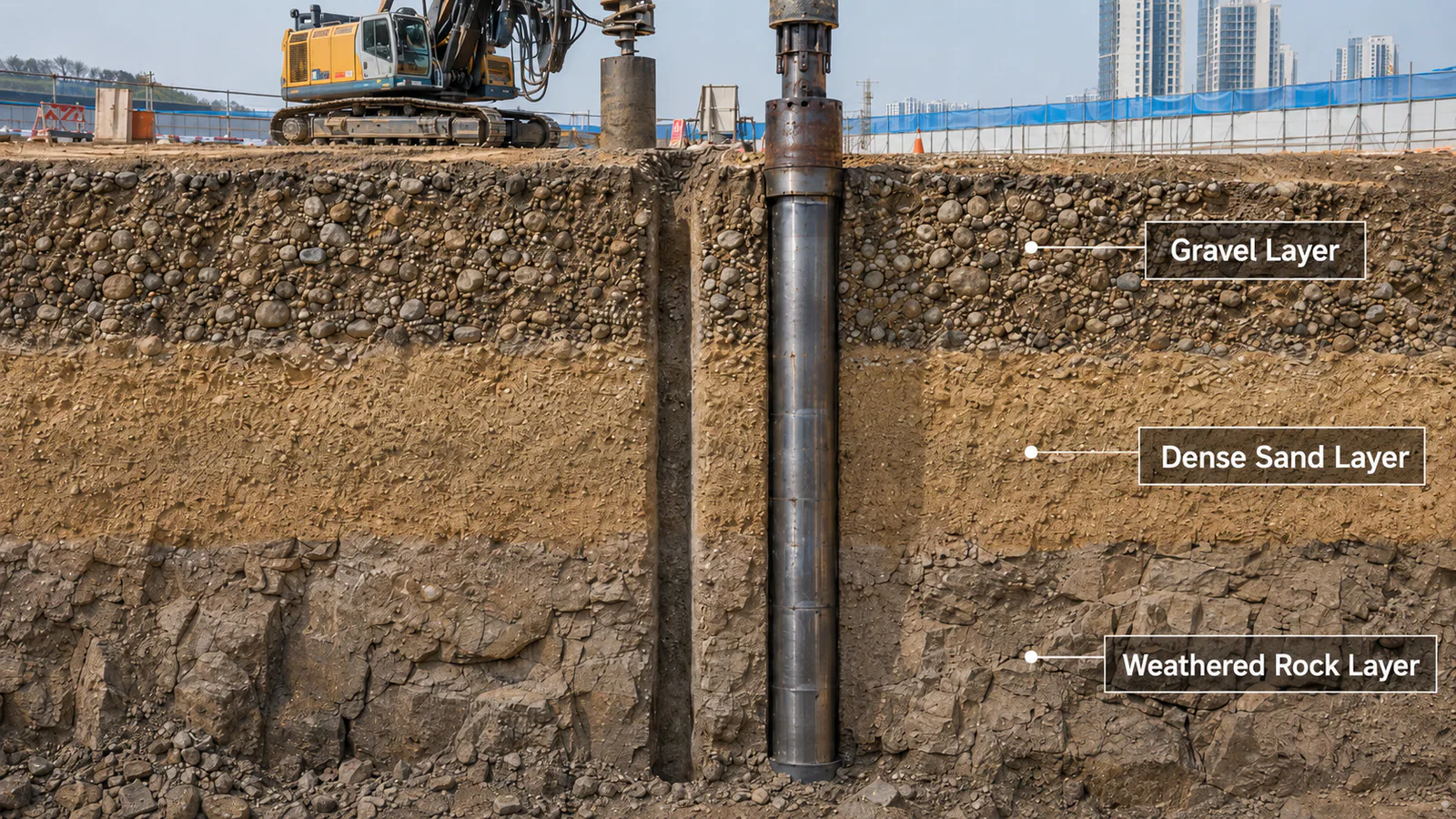
Crews predrill a hole before installing a prefabricated pile to reduce resistance in a defined layer or address an installation constraint. The designer must assess how the hole changes shaft resistance, toe support, and lateral behavior, then specify the drilling and pile-acceptance procedure.
AI-generated conceptual cutaway, not a BRUCE machine or project photograph. Ground layers and equipment are illustrative.
Technical guide
Article information
Technical review policy. BRUCE prepares this reference from the cited material. Project-specific design and approval remain with the responsible project team.
Planning overview
The project team defines the problem layer, hole geometry, and design treatment of the drilled zone before selecting a drilling method. They also plan bore support, spoil handling, and the change to pile installation.
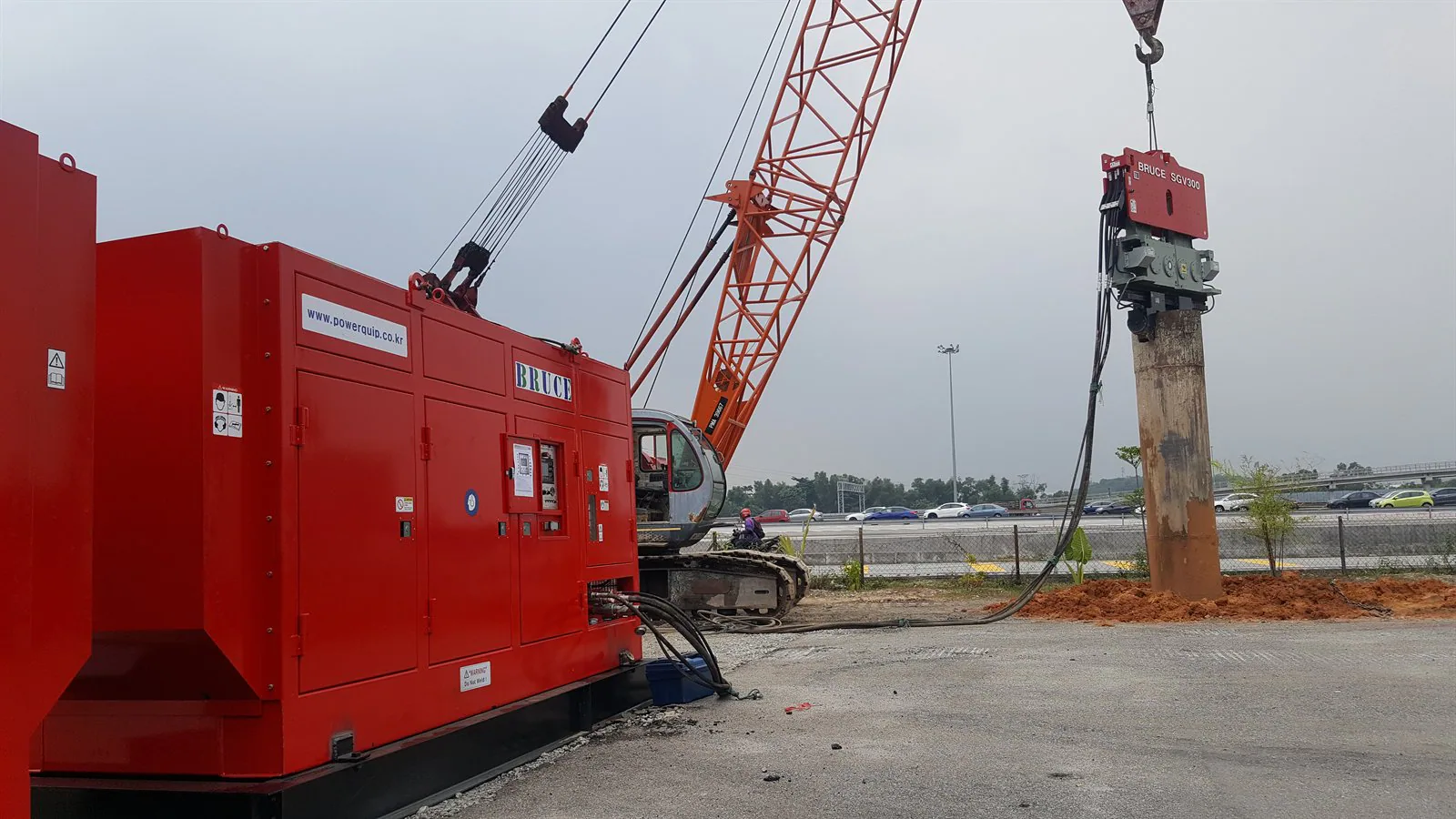
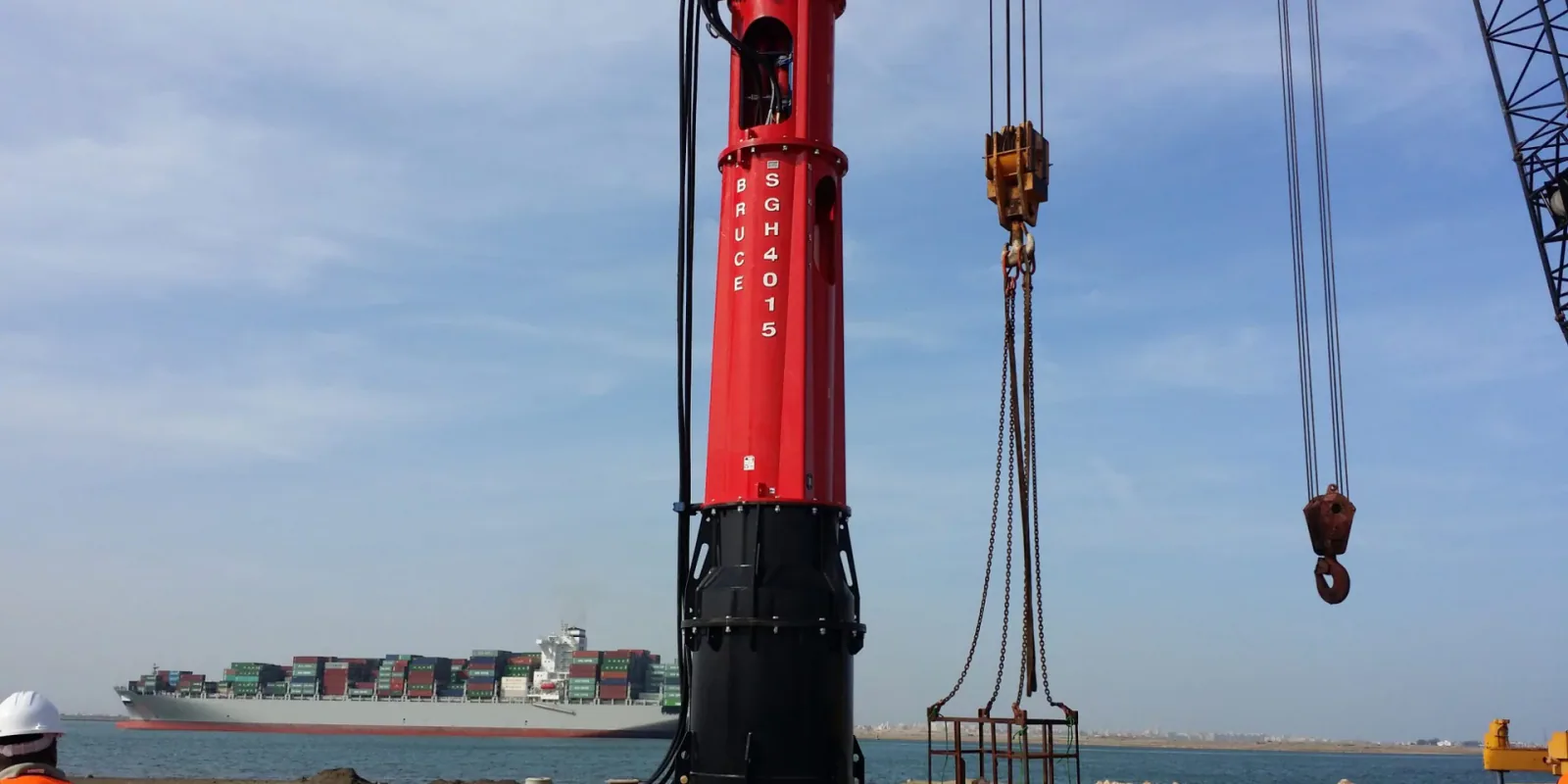
The field photographs show BRUCE vibratory and impact equipment that a project may use in a later installation stage. They do not document a predrilling operation or its results.
Confirm the drilling and pile-installation plan
Use the project specification and the engineer’s approved method for hole dimensions, ground support, and acceptance.
| Planning item | Information to confirm | Important limit |
|---|---|---|
| Ground and objective | Problem-layer depth, ground investigation, groundwater, and the reason for predrilling. | Investigate unexplained refusal or an unknown obstruction before changing the method. |
| Hole geometry and design | Approved location, diameter, depth, tolerances, and resistance credited within the drilled zone. | The designer must account for changes to shaft resistance, toe support, and lateral behavior. |
| Bore stability and spoil | Tooling, support, water control, cleanout, spoil disposal, and time before pile insertion. | Stop for bore collapse, uncontrolled ground loss, or other project-defined triggers. |
| Pile installation | As-drilled condition, lifting plan, pile interface, hammer or press-in system, and sequence. | Obtain approval for deviations; do not enlarge or deepen the hole as an undocumented field adjustment. |
| Records and acceptance | Linked drilling and pile logs, as-built survey, monitoring, and specified analyses or tests. | Final set or impact finishing alone does not establish the pile’s load-bearing capacity. |
Predrilling guidance
FHWA GEC 12, Volume II, section 15.25 discusses predrilling purposes and geometry. Section 14.2.6, clause X.06A.2 gives an example specification; apply the requirements issued for your project.
- FHWA GEC 12, Volume II: predrilling and installation controls
- FHWA Drilled Shafts, Chapter 3: general bore-stability guidance, not a predrilling specification.
- Caltrans Foundation Manual, Chapter 8: Static Pile Load Testing and Pile Dynamic Analysis: installation criteria and testing.
Define the hole before selecting equipment
Specifications use terms such as predrilling, preboring, and pilot hole in different ways. State the tool, hole diameter relative to the pile section, depth, and soil-removal or loosening procedure. Do not assume that a narrow pilot hole, an augered hole, and a cored rock hole have the same effect on the foundation. FHWA treats spudding as a separate installation aid that requires approval.
Match the method to the problem layer
Engineers may consider predrilling through dense or cemented layers, compacted fill, or identified obstructions when direct installation could cause refusal, pile damage, or excessive ground movement. They must check layer depth and variability, groundwater, the pile design, and suitable tooling. Unknown obstructions need investigation and an approved response; increasing drilling depth or diameter without review can remove ground that the design relies on.
Account for the drilled zone in the design
Removing or loosening soil can change shaft resistance and lateral support. Drilling depth and the condition beneath the pile toe also affect the design assessment. The designer must define the resistance credited within the drilled zone and specify annulus treatment where needed. Use the project requirements for hole dimensions and termination; a diameter ratio or depth from another specification is not a universal design rule.
Keep the bore stable and control ground loss
Crews may use augers, rotary drills, or rock-coring equipment, with support where the ground requires it. An open hole can collapse or lose ground in unstable soil, including saturated granular material. The method plan must address groundwater and any casing or drilling-fluid support, along with spoil handling, cleanout, and the interval before pile insertion.
Prompt insertion alone does not establish bore stability. Check the drilling platform, buried services, and exclusion zone before work starts.
Plan the change from drilling to pile installation
The project team specifies the pile-insertion sequence and any vibratory, impact, or press-in stage. Check the as-drilled depth and condition before inserting the pile, and define who can approve a change if the hole deteriorates.
For impact work, select the hammer and driving assembly using the pile, ground, driveability, and stress requirements. For vibratory work, confirm pile-clamp compatibility and the ground response. Predrilling does not remove these checks.
Separate installation observations from acceptance
Record hole dimensions and drilling observations against each pile ID, then record the final installation response. Penetration rate, blow count, final set, and practical refusal describe installation behavior; none provides a universal measure of load-bearing capacity. Impact finishing remains a construction step. The responsible engineer specifies the analysis, restrike procedure, dynamic testing, static load testing, or other evidence needed for acceptance.
Monitor the surrounding ground
Predrilling may reduce displacement-related heave or driving resistance in some conditions. Drilling can also cause ground loss, settlement, water movement, noise, or vibration. Set monitoring and action limits for the site, including adjacent piles and sensitive structures where required. Crews should stop and seek the specified review if they encounter unexpected material, bore instability, or a monitoring trigger.
Keep a traceable record
Record hole and pile IDs, location, tool, diameter, depth, encountered materials, water observations, support, cleanout, timing, and deviations. Include any specified backfill or grout treatment and the final pile position. Link these records to installation logs, monitoring results, tests, and the engineer’s acceptance decision.
BRUCE equipment for a later installation stage
The BRUCE equipment discussed here covers SGV vibratory hammers and SGH hydraulic impact hammers for suitable pile-installation stages. Review the selected hammer, clamp or driving assembly, hydraulic power pack, hoses, and lifting arrangement against the approved method. Send the pile drawing, ground report, proposed hole geometry, and intended installation method to start an equipment discussion. This review does not replace foundation design or project acceptance.
Frequently asked questions
Does predrilling reduce pile capacity?
It can change shaft resistance, toe support, and lateral behavior. The designer must assess hole geometry, ground disturbance, and any specified annulus treatment, then define the resistance and verification basis.
Does a smaller pilot hole preserve the original design assumptions?
Do not assume it does. The designer must assess the tool, depth, pile section, and ground conditions. Use the approved project dimensions and obtain review before changing them.
Can crews drive piles after predrilling?
Yes, where the approved method allows it. Crews may use vibratory, impact, or press-in equipment suited to the pile and ground. The engineer still specifies the installation criteria and evidence required for acceptance.
Does predrilling guarantee lower vibration or settlement?
No. It may reduce driving resistance or displacement-related heave in some conditions, but drilling and ground loss can create other disturbances. The project team must assess nearby receptors and define monitoring and action limits where required.
Discuss the Next Installation Stage
Send your pile drawing, available ground report, and proposed predrilling dimensions. Tell us which installation method your project permits so BRUCE can review the applicable hammer package.