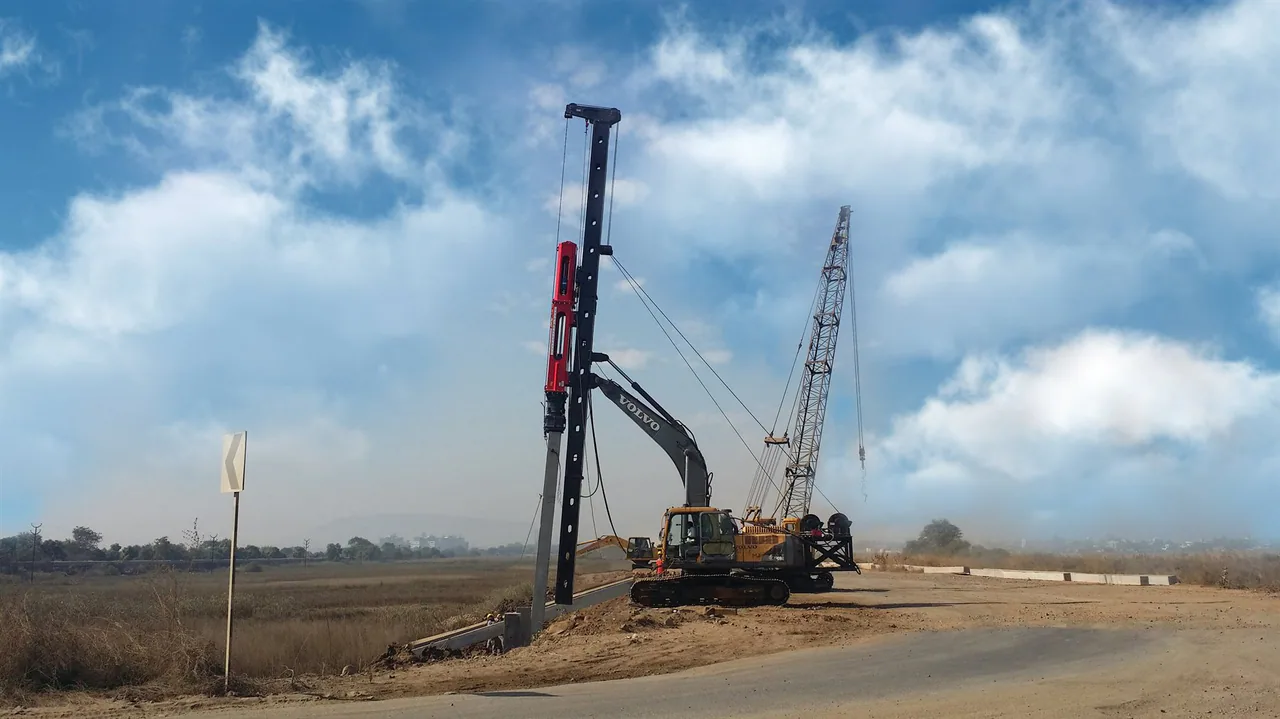
Impact hammer on a leader over a concrete pile, with a tracked excavator and crane behind

Knowledge CenterPile Types

Concrete Pile Guide

A precast pile arrives on site as a hardened concrete member. For a drilled shaft, the crew may still be checking the bottom of the hole when the concrete truck arrives. The drawings should identify which system the job calls for before anyone selects a hammer or drilling rig.

Compare pile types

Direct answer

What is a concrete pile?

A concrete pile carries foundation loads into the ground. Under axial compression, resistance can develop along its sides and at its base. The crew can drive a precast member, drive a shell and fill it, or place concrete in a drilled hole. The design identifies which parts of the finished pile carry the structural loads.

Last updated
Prepared byBRUCE Technical Team
ScopeDriven and cast-in-place systems

Concrete pile types and installation checks

What to check for each pile type
Pile type Construction method Installation checks
Driven precast pile The crew handles and drives a concrete member that has already hardened. It may contain conventional reinforcement or prestressing steel. Check the required concrete strength, lifting points, pile-head detail and pile cushion against the approved drawings and driving plan.
Driven cast-in-place pile The crew drives a shell or tube before placing the concrete. A permanent shell stays in the ground. Some systems use a recoverable tube. Check the toe and shell joints. For a recoverable tube, review the concrete placement and withdrawal sequence.
Bored pile or drilled shaft The crew excavates the shaft before placing reinforcement and concrete. Unstable ground or groundwater may call for casing or drilling fluid. Record how the crew supported the excavation, checked the base and placed the concrete.
Continuous flight auger (CFA) pile The crew pumps grout or concrete through a hollow-stem auger as it withdraws the tool. The specified reinforcement goes into the fresh material. Review the pumping and withdrawal records together. Check that the crew can install the reinforcement to its design depth.
Concrete-filled steel pipe pile Steel pipe can remain as a structural member after filling. The design determines how the pipe and its concrete core share load. Confirm the pipe section, extent of fill and connection at the pile head. Check the corrosion provisions for the exposed steel.

References: 1, 3, 4

01

Handling and driving a precast pile

Check the pile identification and concrete strength before lifting. Use the lifting and support points shown on the approved handling drawing. A long member can crack in bending between supports before it reaches the driving rig.

During impact driving, a helmet guides the hammer blow onto the pile head. The pile cushion sits between the helmet and the concrete. Its material, thickness and condition affect the stress the pile receives. Inspect the cushion during driving and replace it as the approved driving plan requires.

The blow sends a compression wave down the pile. A reflected wave can put part of the concrete in tension, particularly during easy driving with little toe resistance. An engineer can use wave equation analysis to estimate driving stress for the proposed hammer, cushion, pile and ground conditions. Record cracking or head damage and follow the project’s stop and review criteria.
References: 1, 2

02

Driving a shell and filling it with concrete

In one common driven cast-in-place system, the crew drives a closed-ended steel shell and leaves it in place as a form. Some thin shells need an internal mandrel to transmit the driving force. The shell detail determines where the equipment applies that force.

Before filling a permanent shell, inspect it as specified for damage, obstructions or water. Follow the approved placement procedure and fit any reinforcement the drawing calls for. Where the method uses a temporary driving tube, the crew must coordinate withdrawal with placement to keep the pile continuous.

On a drawing for a concrete-filled steel pipe pile, look for the steel wall and the connection to the pile cap. The structural design defines what load the steel and concrete can carry together. Filling a pipe alone gives no basis for assuming full composite action.

References: 1, 2

03

Supporting the excavation for a bored pile

A conventional drilled shaft needs a stable hole until the concrete replaces the excavation. In suitable ground the crew may work dry. Loose or water-bearing layers can require casing, drilling fluid or a combination of the two. Temporary casing protects the length it covers.

Before placing concrete, verify the shaft depth, base condition and reinforcement position against the approved criteria. For a wet excavation, use the specified tremie or pump procedure and maintain embedment of the discharge in fresh concrete once placement is under way.

As the pour progresses, compare the measured concrete level with the volume placed in the shaft. If the crew removes temporary casing through fresh concrete, it must maintain enough workable concrete above the casing toe to resist the external fluid pressure. Record casing movement and any change in cage elevation.

References: 3, 5

04

Pumping and reinforcement for CFA piles

Conventional CFA construction uses a hollow-stem auger. Soil held on the flights helps support the bore until grout or concrete replaces the auger. At the specified depth, the crew starts pumping grout or concrete through the stem and controls the withdrawal rate to maintain the required supply and pressure.

The inspector reviews auger depth alongside the pumped volume and pressure. A total volume at the end of the pile can hide a shortfall over one interval. Record interruptions with the depth at which they occurred so the engineer can assess the affected section.

The crew normally installs the specified reinforcement after pumping, while the material can still accept it. Record how deep the cage or bar reached. If it stops short, report the actual depth for review.

References: 4, 5

05

What the installation record can establish

For an impact-driven pile, log the hammer, stroke or energy setting, blow counts over the specified penetration intervals and final toe elevation. Note cushion changes, splices and interruptions. If the pile stops high, report the depth and observed condition before changing the driving plan.

For a cast-in-place pile, identify the installation method on the record. A drilled-shaft inspector can document the open excavation and base inspection. A CFA inspector relies on drilling, pumping and withdrawal records for the interval the auger occupies. Keep the concrete or grout delivery and reinforcement records with the pile identification.

An integrity test can help locate a suspected discontinuity. A static load test measures how the tested pile moves under the applied load. The project engineer selects the required checks and reviews the results with the construction records before accepting the work.

References: 5, 2, 4

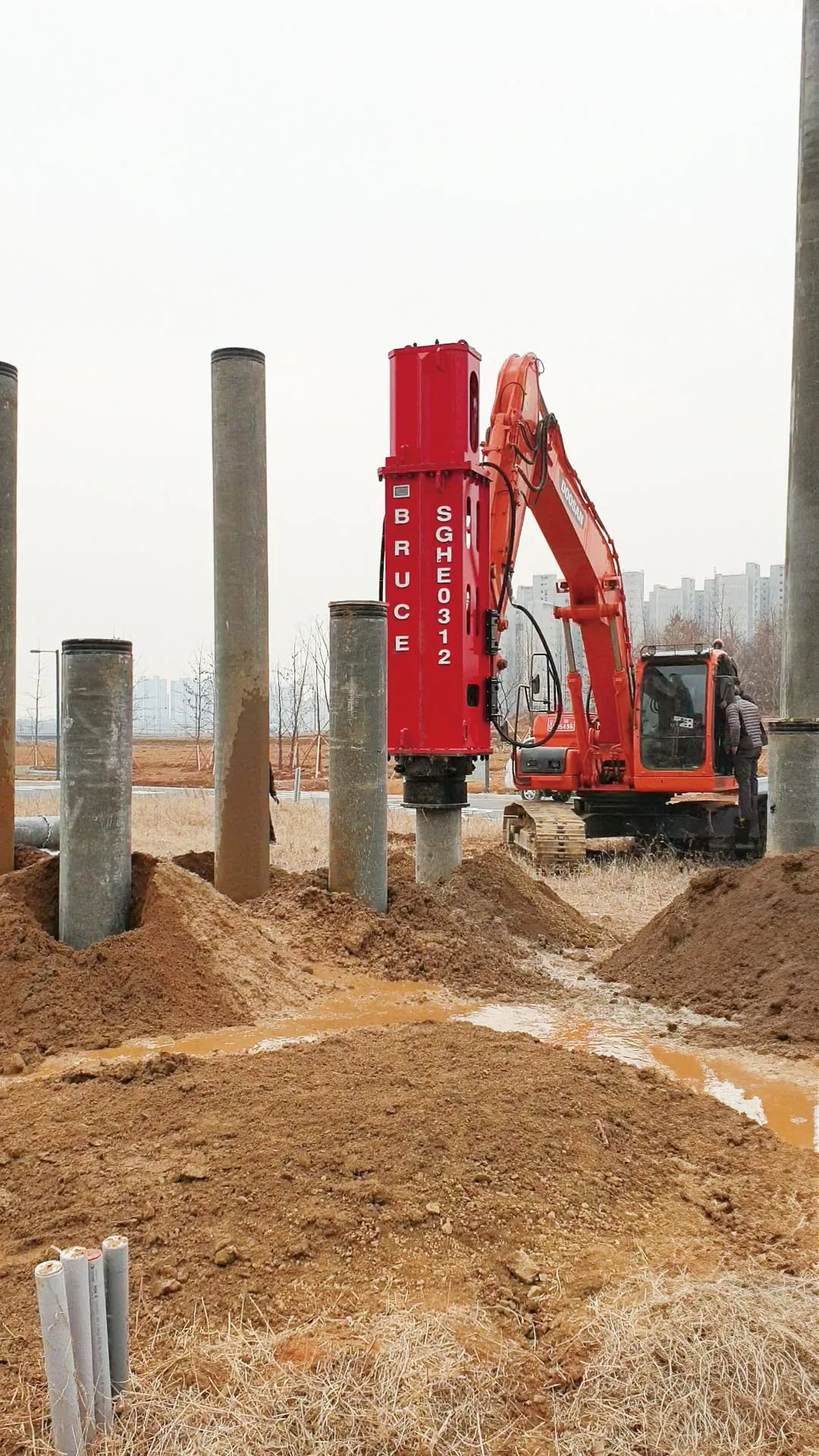
BRUCE SGHE0312 impact hammer on the head of a round concrete pile
A BRUCE SGHE0312 sits on the pile head. Other round concrete piles are visible beside the excavator.

Equipment review

Choosing a hammer for a precast pile

Send the pile drawing and the ground information you have. The BRUCE Technical Team can review the proposed hammer and driving head with you.

Discuss your project

Frequently asked questions

How does the crew distinguish a pile cushion from a structural pile cap?

The pile cushion protects the head of a concrete pile during driving. A structural pile cap connects the installed pile or group of piles to the supported structure. Check which detail the drawing or equipment request refers to.

Can a vibratory hammer form a drilled concrete shaft?

A suitable vibratory hammer can install or recover steel casing on a drilled-shaft job. The drilling and concrete crews still have to excavate, inspect and fill the shaft according to the approved method.

Does a CFA reinforcement cage go in before pumping?

For a conventional CFA pile, the crew pumps grout or concrete as the auger comes out, then inserts the specified cage or bar into the fresh material. Check the method statement for the required depth and permitted installation time.

Does a high blow count prove a precast pile has reached its design resistance?

The engineer interprets blow count with the hammer setting, pile condition, ground profile and project driving criteria. Depending on the specification, a restrike, dynamic measurements or a load test may be needed.