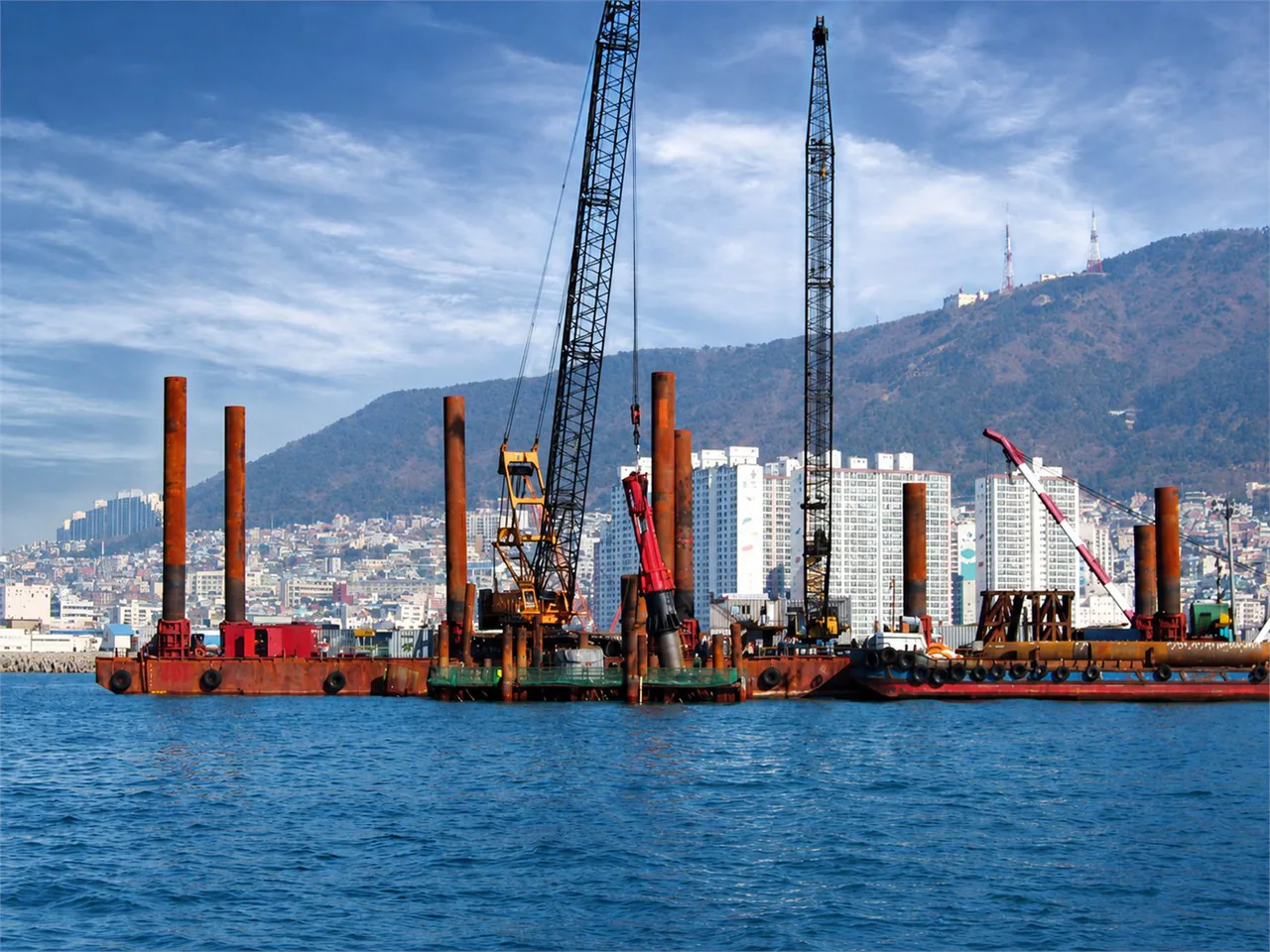
Cranes and upright steel tubes on work barges near a built-up shoreline

Knowledge CenterPile Types

Offshore Pile Types

A steel tube beneath a pier can carry the deck. A similar tube at the foot of an offshore jacket can anchor one leg of the frame. The foundation drawings show what the tube supports and how it connects to the structure.

Compare foundations

Direct answer

Which pile types do offshore structures use?

Marine structures can stand on driven steel pipe piles. A piled jacket uses several piles connected to a steel frame, while some offshore wind turbines stand on a single large tubular pile called a monopile. A jacket can also sit on suction caissons. These hollow foundations have a closed top and an open skirt that penetrates the seabed.

Last updated
Prepared byBRUCE Technical Team
ScopeOffshore and waterfront foundations

Piles and suction caissons

Foundation details and installation checks
Foundation type Foundation detail Installation checks
Steel pipe pile An open-ended pipe can admit soil during driving. A closed-ended pipe has a closure plate or closed driving point that keeps soil out. Identify the toe detail and the required penetration on the pile drawing.
Jacket pile A pile connects to a jacket leg or a sleeve at the foot of the frame. Check whether the drawings call for the piles or the jacket to go in first.
Suction caisson The caisson’s weight pushes its skirt into the seabed. Pumping water out of the chamber can draw it deeper. Review seabed conditions and the permitted pressure difference for the installation.
Drilled and grouted pile A borehole receives a steel pile. Grout fills the space between the pile and the borehole wall. Check the founding material, socket dimensions and grouting requirements.

References: 1, 2, 3

01

Open-ended and closed-ended steel pipe piles

As an open-ended pile advances, soil can rise inside the pipe. If that soil moves with the pile during driving, it acts as a plug. The toe detail alone does not tell an engineer how much plugging to expect in a given layer.

On a waterfront project, a pipe pile may remain as part of a pier foundation. A steel casing at a drilled shaft can look much the same from the deck. The shaft drawings specify whether that casing stays in place and whether the design counts it as part of the finished section.
References: 3, 5

02

Connecting piles to a jacket

A jacket is a steel frame with legs spaced around its base. On a post-piled installation, the crew sets the frame on the seabed, then installs piles through the legs or through separate sleeves. Where the connection calls for grout, the grout transfers load between the pile and the frame.

A pre-piled installation reverses the order. A template can guide the piles before the crane lowers the jacket onto them. Their surveyed positions and top elevations matter because the jacket must fit the piles already in the seabed.

References: 1, 2

03

How suction caissons enter the seabed

Once the skirt has penetrated far enough to form a seal, a pump removes water from inside the caisson. The water pressure outside then exceeds the pressure inside. That difference pushes the lid down and helps the skirt penetrate farther.

The installation design sets the allowable pressure difference. For example, in permeable sands, water flowing around the skirt tip can disturb the soil inside. A caisson installation therefore needs a soil profile and pressure limits specific to the site.

References: 1, 2

04

When the design calls for a drilled and grouted pile

At some rock sites the plan calls for a drilled socket. The crew places the steel pile in the borehole and fills the annular space with grout. The installation record identifies the rock encountered, the socket depth and the grout placed.

Check which connection a grouting note refers to. Grout between a jacket sleeve and a steel pile connects two structural members. Grout between a pile and a rock socket connects the pile to the ground.

References: 2, 1

05

What the driving record should show

Record the pile identifier, hammer, start and finish times, interruptions and toe elevation against the project’s stated datum. For impact driving, record blow counts over measured penetration intervals and the hammer stroke or energy setting. A later reviewer needs both the counts and the hammer information to interpret a change in resistance.

If driving stops above the specified toe elevation, record the depth and the conditions at the stop. The project engineer can compare the log with the driving criteria and the soil investigation before deciding how to proceed.

References: 4

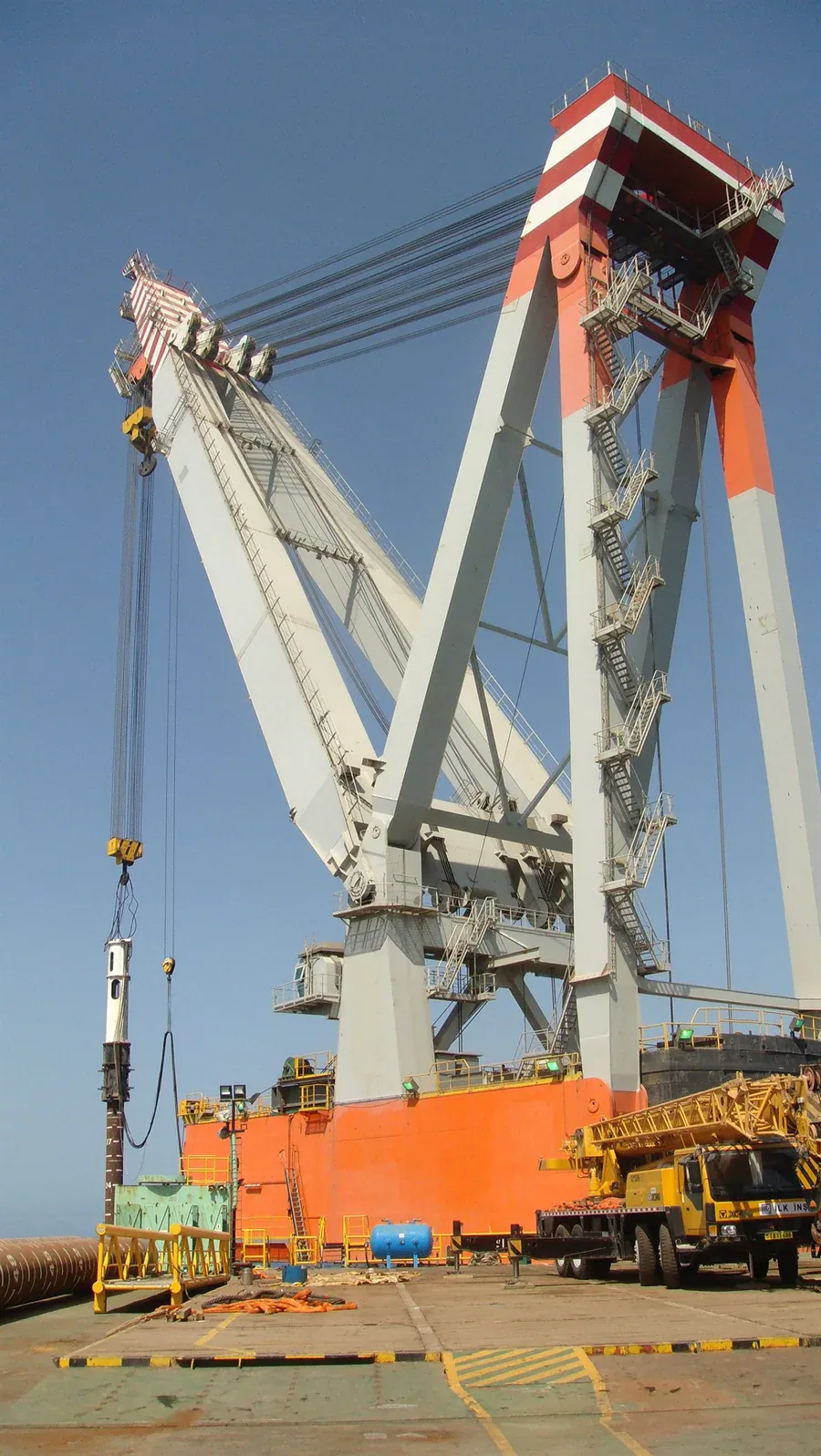
Crane-suspended pile hammer and looped hose at a steel tube on the waterfront
A pile hammer hangs from the crane hook at the head of the steel tube. A hose loops alongside it.

Equipment review

Equipment for marine piling

Send the pile drawing and the ground information you have. The BRUCE Technical Team can review the proposed hammer and pile-head connection with you.

Discuss your project

Frequently asked questions

Does a jacket always have driven piles?

Some jackets use driven piles. Others use drilled and grouted piles or suction caissons. The foundation drawings identify how each leg connects to the seabed.

What is the difference between a jacket sleeve and a pile?

The sleeve forms part of the jacket and receives the pile. The pile extends into the ground. The connection detail shows how loads pass from the sleeve into the pile.

How do you tell if a steel tube is permanent casing?

Check the shaft schedule and the casing detail. A permanent casing stays in the finished shaft. The designer specifies whether the steel contributes to the structural section.

Which records help explain a sudden increase in blow count?

Compare the driving log with the soil profile. Check the depth, stroke or energy setting and any interruption before the increase. A high blow count on its own cannot identify a rock layer.