BRUCE Technical Team
Granular Soil vs Cohesive Soil
Soil and Ground Conditions
Granular Soil vs Cohesive Soil
Compare the measured properties of each soil layer before choosing a pile-driving method. Grading, plasticity, density or strength, groundwater and drainage affect the response during installation and after a pause. Review them with the pile drawing, site limits and project acceptance procedure.
Soil propertiesGrading, plasticity, density and strengthWater and timeGroundwater, drainage and pore-pressure responseInstallation reviewPile details, operating limits and acceptance
Technical guide
Article information
Technical review policy. BRUCE prepares this reference from the cited material. Project-specific design and approval remain with the responsible project team.
Planning overview
Read classification results with the loading period, groundwater and layer sequence. Two layers with the same soil name can respond differently during driving.
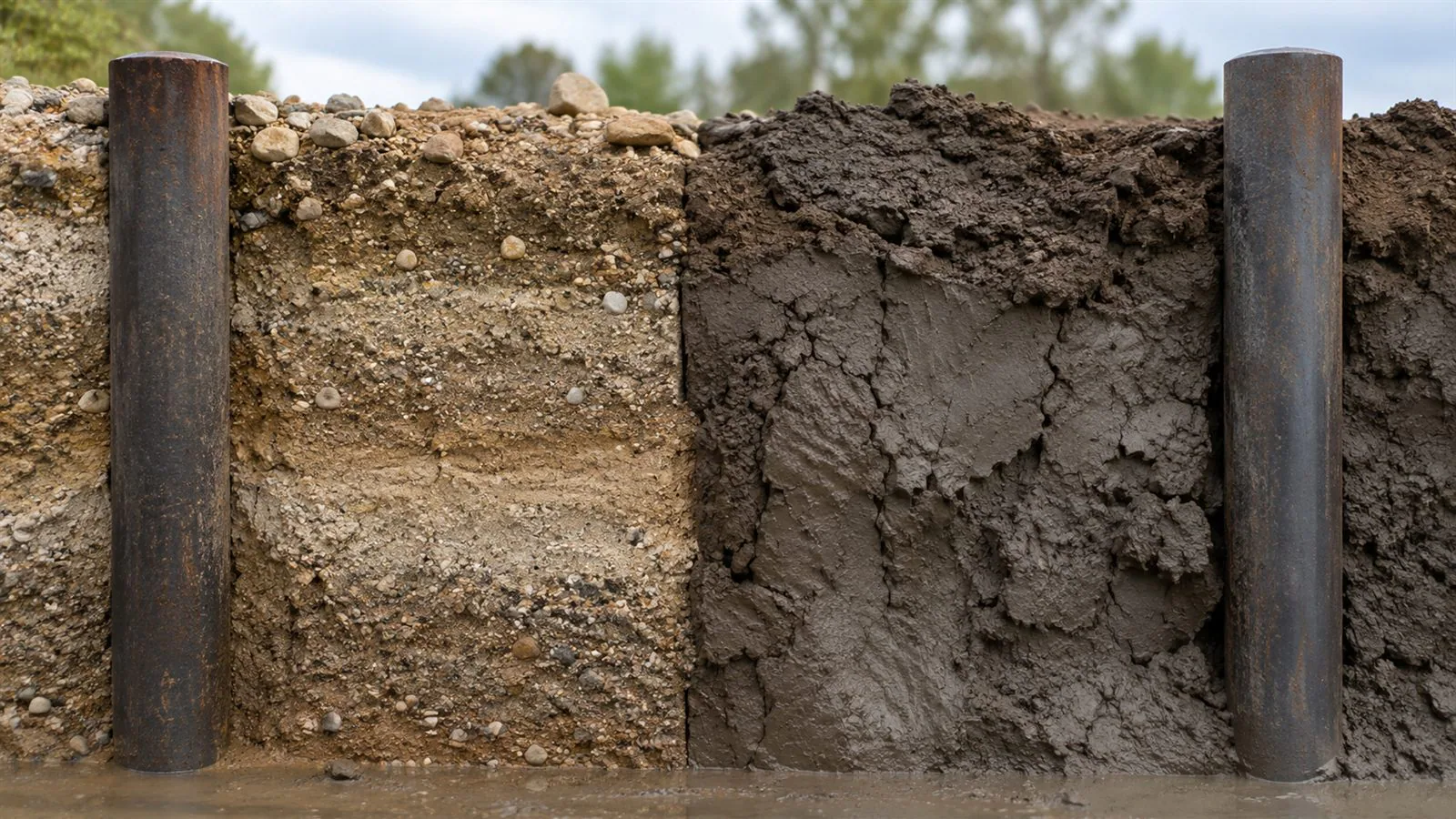
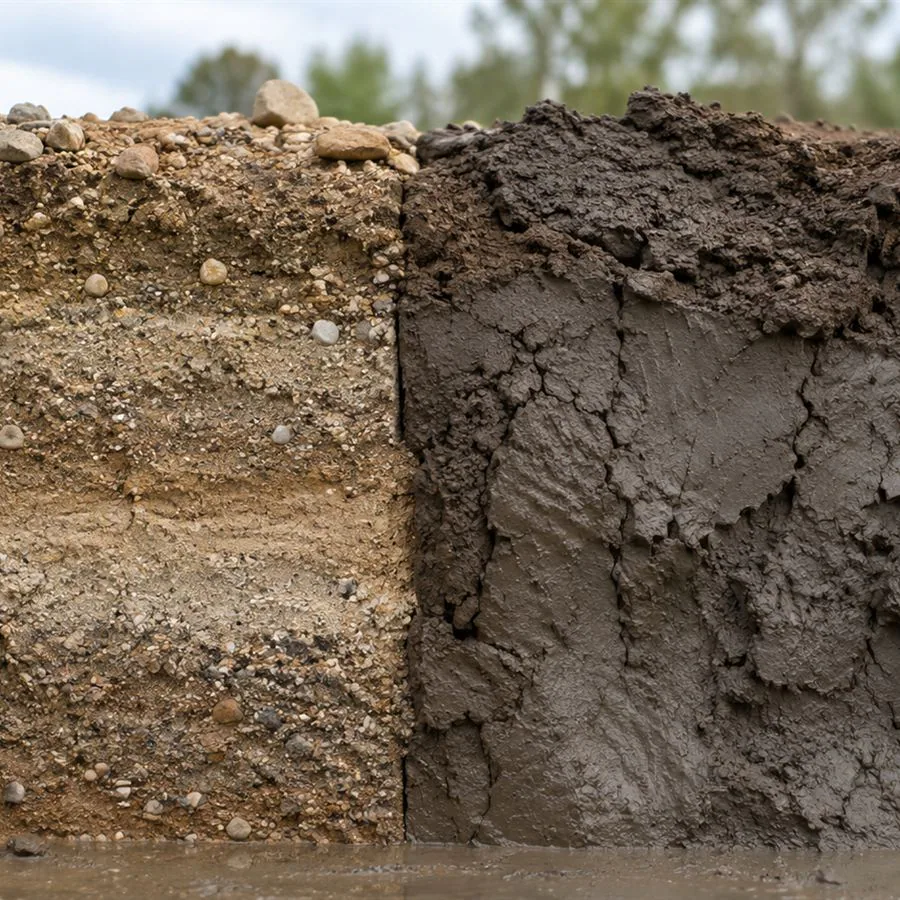
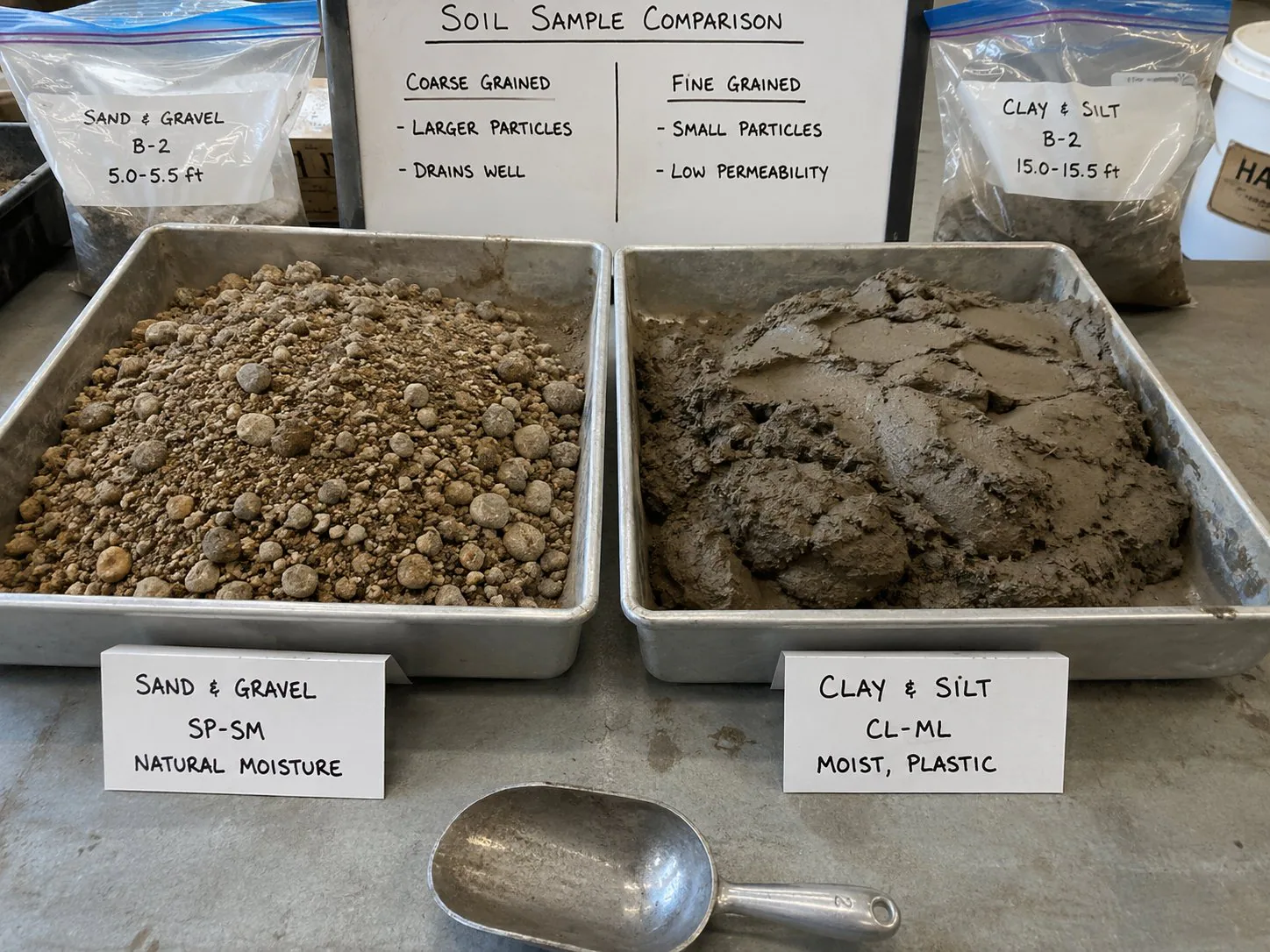
The soil images are illustrations. Sample IDs, depths and classification labels are examples, not project records or verified test results. Appearance cannot establish classification, permeability or strength.
Ground behavior
Compare properties using the ground investigation
Use the descriptions with measured properties and the project ground model.
Sand and gravel
Review grading, fines content, density, stress level, cementation and groundwater. Clean coarse-grained layers can permit drainage, while fines or rapid loading can change the response.
Clay and plastic fine-grained soils
Review plasticity, strength, sensitivity, stress history and drainage. Classify silt and mixed soils from test results before applying either description.
Investigation and field checks
| Review item | Granular soil | Cohesive soil |
|---|---|---|
| Classification | Grading, fines content and the specified engineering classification | Plasticity, grading and the specified engineering classification |
| Density or strength | Density, effective stress, particle shape and cementation | Strength, sensitivity, stress history and water content |
| Drainage | Permeability, fines, saturation, loading duration and drainage paths | Permeability, saturation, drainage paths and loading duration |
| Installation response | Penetration, resistance changes, settlement and pile condition | Penetration, remolding, heave, ground movement and pile condition |
| Time effects | Changes in resistance after driving; verify the direction and timing | Changes in resistance after driving; verify setup or relaxation assumptions |
| Acceptance | Specified installation records, monitoring, waiting periods and tests | Specified installation records, monitoring, waiting periods and tests |
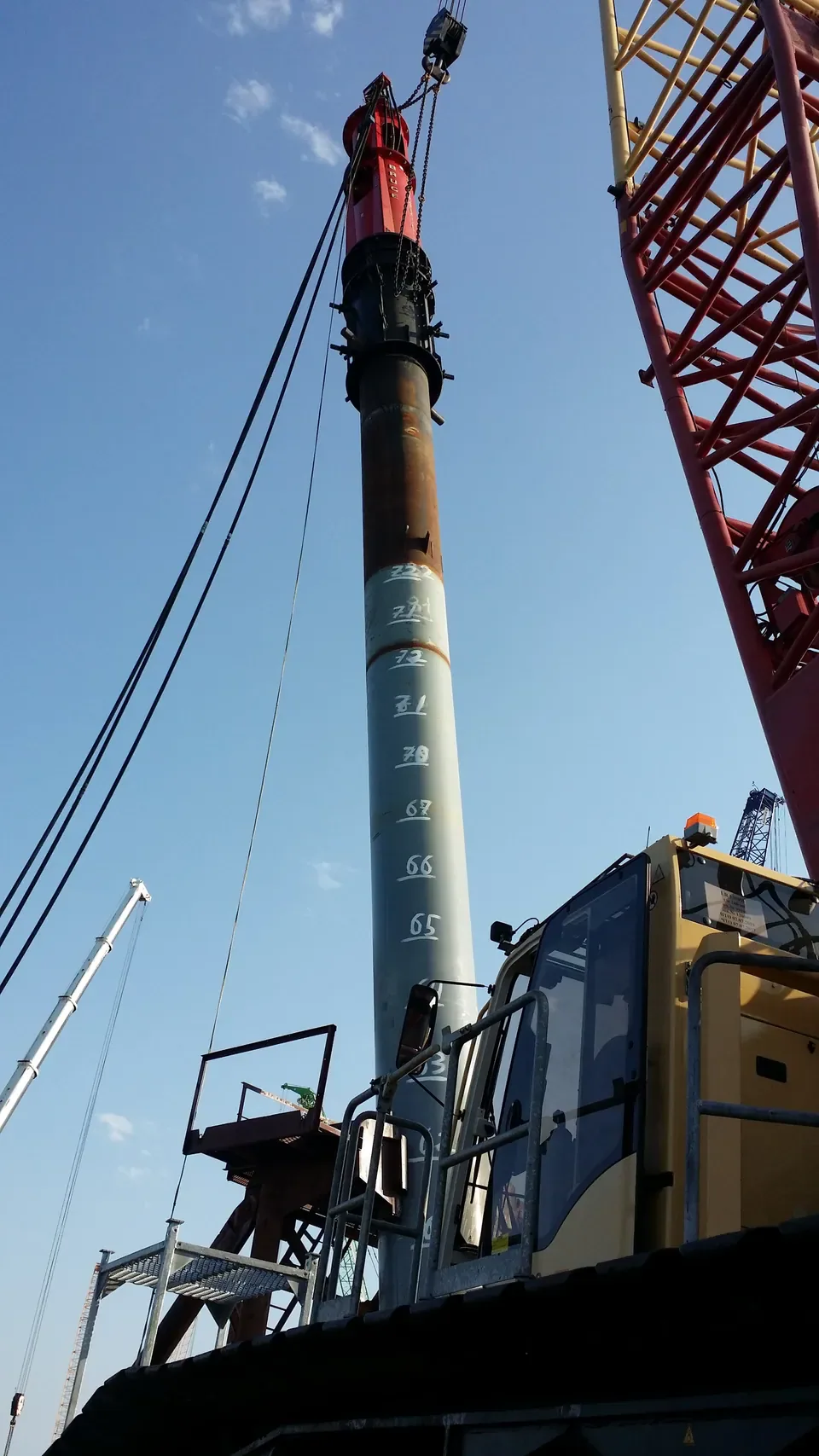
Equipment arrangements in the field
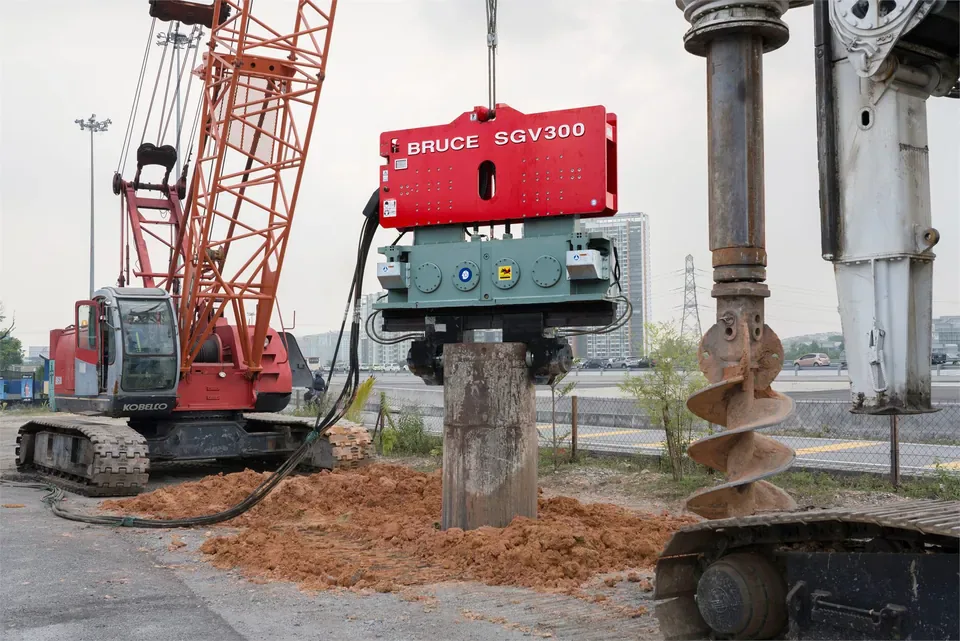
The photographs show visible equipment arrangements. They do not establish the soil classification, equipment ratings or suitability for another project.
Classification and measured behavior
Sand and gravel are coarse-grained materials whose shear resistance depends on particle friction, interlock and effective stress. Clay and plastic fine-grained soils require review of plasticity, strength, sensitivity and stress history. Silt can have plastic or nonplastic behavior; use the specified classification system and test results. A granular or cohesive description does not establish drainage, strength or equipment suitability.
Engineers use grain-size distribution and Atterberg limits where applicable to classify soil. Atterberg limits describe plasticity, not shear strength by themselves. Interpret field tests with samples, laboratory results and the ground profile. SPT or CPT data do not provide a complete ground model, and CPT soil-behavior types are not sampled USCS classifications.
Drainage during pile installation
Clean sand and gravel can permit faster drainage than low-permeability clay. Fines content, layering, drainage paths, saturation and loading duration can change that response. Saturated granular soil can develop excess pore pressure during rapid cyclic loading; a sand description alone does not establish drained behavior.
Driving can disturb clay and generate excess pore pressure. The engineer must assess whether the relevant response is drained, partly drained or undrained. Keep short-term undrained shear strength separate from drained effective-stress parameters. The parameters and drainage assumptions must match the analysis and loading period.
Resistance, movement and time effects
Density, stress level, cementation and particle size affect penetration in granular layers. Vibration can reduce interface resistance in suitable conditions, while dense or cemented layers and coarse obstructions can limit penetration. Loose saturated granular ground may densify or develop excess pore pressure under cyclic loading. Assess possible settlement and effects on nearby structures. Clay can remold during driving, and piles or surrounding ground may heave or move.
Resistance after installation may differ from resistance during driving. Setup can increase pile resistance with time, including in some granular soils; relaxation can reduce resistance in other conditions. The direction, magnitude and timing need project evidence. Assess immediate and longer-term settlement using the ground model and loading conditions. Compressible layers can also contribute to downdrag. Installation resistance alone does not establish service capacity or settlement performance.
Review the installation method and equipment
Review BRUCE SGV vibratory hammers for compatible pile profiles where the ground response, handling arrangement and site vibration limits permit. Review BRUCE SGH hydraulic impact hammers against the expected resistance, driving assembly and allowable pile stresses. A soil name does not select a hammer family or model. Confirm the pile dimensions, material, joints, toe and target depth with the proposed clamp or driving head, crane arrangement and hydraulic supply. For impact driving, review pile-head protection and cushions where specified.
Use the manufacturer’s approved configuration, component ratings and operating instructions. An impact finish is not a universal requirement after vibratory installation. Mixed profiles may need a combined sequence or a revised method. Predrilling, jetting, probing, pile changes or other assistance need the responsible project team’s review and approval where proposed. These measures can change the ground and pile resistance. Additional hammer energy alone does not resolve an unknown obstruction.
Investigation, field records and acceptance
Read boring logs, sample recovery, test procedures and groundwater observations together. Apply the corrections and interpretation required for the selected SPT procedure. Gravel or a local cobble can distort a result or cause refusal; one refusal does not prove a continuous bearing layer. CPT and CPTu interpretation also needs the test context and independent ground information. Review driveability before work, including pile stresses and the expected resistance profile. Agree penetration, blow-count, monitoring and stop criteria with the project team.
Keep records of depth, hammer settings, penetration or blows, interruptions, pile condition and the specified monitoring results. The responsible engineer defines the acceptance procedure, waiting periods, restrike observations and dynamic or static load testing where required. Target depth, penetration rate or final set alone does not establish service capacity. Confirm any setup or relaxation allowance through the specified project procedure.
Project responsibility
The responsible project team approves the geotechnical and structural design, installation sequence, working platform, lift plan, permits, monitoring and acceptance requirements. Confirm the manufacturer’s limits for the complete hammer, interface and hydraulic package. Stop and obtain review if pile condition, ground movement, penetration response or monitoring results fall outside the approved limits.
Frequently asked questions
Can sand or clay determine the hammer type?
Review the measured ground properties, pile details, installation method and site limits. Both soil groups can present difficult driving conditions. Confirm the permitted method and candidate equipment with the responsible engineer and manufacturer.
Does granular soil always drain during driving?
Assess permeability, fines content, saturation, drainage paths and loading duration. Saturated granular soil can develop excess pore pressure during rapid cyclic loading; the soil name alone does not establish the drainage condition.
Does setup occur only in clay?
Pile resistance can change with time in clay and in some granular soils. Setup can increase resistance, while relaxation can reduce it in other conditions. Use the project investigation, waiting or restrike requirements and testing to verify the allowance.
Does final set confirm pile capacity?
Apply the specified acceptance procedure. Target depth, penetration rate or final set alone does not establish service capacity. The engineer defines the records, monitoring and dynamic or static load testing required for the project.
Technical basis
Sources supporting the technical claims above.
- FHWA GEC-12, Design and Construction of Driven Pile Foundations, Volume I
- FHWA GEC-12, Design and Construction of Driven Pile Foundations, Volume II
- FHWA GEC-5, Geotechnical Site Characterization
- USDA NRCS National Engineering Manual, Engineering Classification of Soils
- Caltrans Foundation Manual, Chapter 7: Driven Piles
- Caltrans Foundation Manual, Chapter 8: Static Pile Load Testing and Pile Dynamic Analysis
Discuss your soil and pile details
Send the ground report, pile drawing and a site photo. BRUCE can review a candidate equipment package and identify the additional information needed.